
Pleotrichocladium leaf spot
Pleotrichocladium opacum
Description
Symptoms
Symptoms of the disease initially appear as small, isolated spots on the leaves, which gradually increase in size as the fungal infection progresses throughout the plant.
The lesions frequently exhibit a dark, necrotic appearance, often surrounded by a chlorotic halo caused by the secretion of fungal toxins into the surrounding tissue.
Under magnification, a dense, velvety layer of conidiophores and spores can be observed on the undersides of the leaves, confirming the presence of the pathogen.
In advanced stages, leaves turn yellow, wilt, and may experience premature senescence and abscission, significantly reducing the plant's overall canopy health.
Infection is not limited to the leaves; it can also affect petioles and stems, resulting in stunted development of the entire affected plant part.
Pathogen
The disease is caused by the imperfect fungus Pleotrichocladium opacum, a pathogen that primarily affects the foliage and reproductive organs of susceptible host plants.
The pathogen utilizes asexual reproduction through conidia, which are efficiently dispersed by wind currents, rain splashes, and human activity within agricultural fields.
It exists as a facultative parasite, often surviving in the soil and on crop debris, waiting for environmental conditions that favor its rapid proliferation and infection.
The fungus colonizes plant tissues by penetrating the epidermis, subsequently establishing a mycelial network that draws nutrients from the host's cells.
Molecular studies suggest that the pathogen's ability to remain latent in plant tissues allows it to persist even when symptoms are not immediately visible to the human eye.
Conditions for development
The development of Pleotrichocladium opacum is strongly correlated with high relative humidity levels, usually exceeding 80 percent in the canopy microclimate.
Optimal temperatures for fungal growth and sporulation generally fall within the range of 20 to 25 degrees Celsius, providing ideal conditions for epidemic spread.
Inadequate spacing between plants restricts air circulation, leading to prolonged leaf wetness, which is a critical prerequisite for successful fungal spore germination.
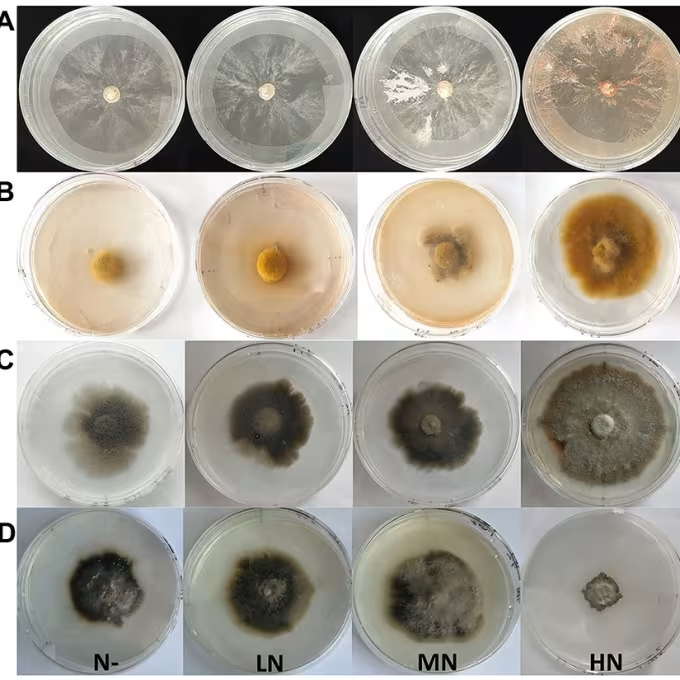
Heavy nitrogen fertilization creates succulent plant tissues that are inherently more susceptible to rapid colonization by the fungal mycelium.
Periods of frequent rainfall or heavy morning dew are particularly hazardous, as they facilitate the transfer of spores from the soil or infected debris onto healthy plant tissues.
Why it matters
The primary impact of the disease is a drastic reduction in photosynthetic efficiency, as the destruction of leaf tissue cripples the plant's metabolic functions.
This impairment inevitably leads to stunted growth, poor crop vigor, and a substantial decrease in the quantity and quality of the final harvestable yield.
Infested plants are often compromised in their ability to tolerate external stressors, such as heat, drought, or attacks by opportunistic secondary pathogens and pests.
Economic losses are compounded by the necessity of frequent fungicide applications, which increase production costs and potentially impact environmental sustainability.
Furthermore, infected produce often demonstrates reduced shelf life and poor storage quality, rendering it unsuitable for long-term commercial trade and distribution.
Protection
Integrated pest management strategies begin with rigorous crop rotation practices, which help disrupt the life cycle of the fungus by eliminating its primary host plants.
Sanitation measures, including the systematic removal and destruction of crop residues post-harvest, are essential to reduce the primary inoculum load for subsequent seasons.
Selecting and planting resistant or tolerant cultivars remains the most effective and sustainable long-term solution for managing this fungal infection in diverse climates.
Strategic fungicide applications, based on monitoring weather conditions and local infection pressure, can effectively suppress the pathogen during high-risk periods.
Improving cultural practices, such as optimizing plant density and ensuring proper drainage, helps modify the microclimate to be less favorable for fungal reproduction.
Discussion
No discussions yet — be the first.