
Pleosphaerulina leaf spot of soybean
Pleosphaerulina sojicola
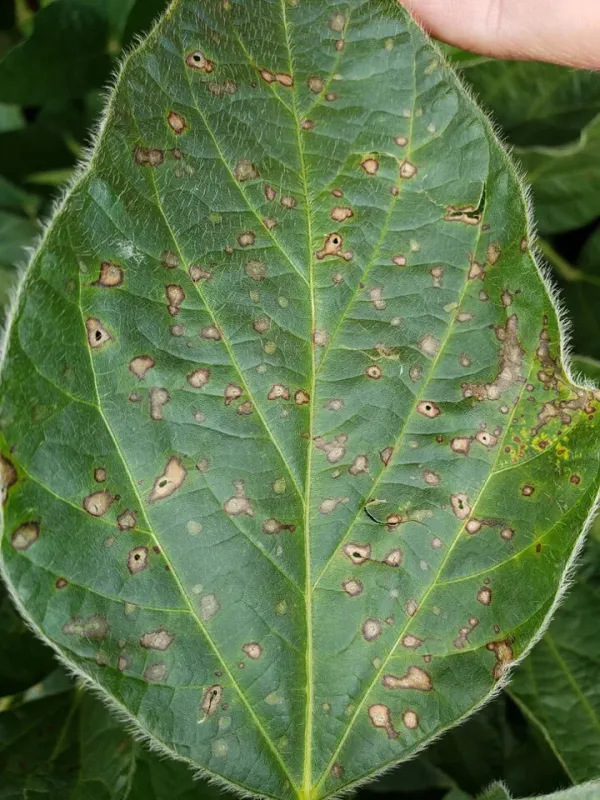
Description
Symptoms
The initial symptoms appear as small, light-brown or gray circular spots on leaves, which are typically surrounded by a distinct dark-brown margin.
As the infection progresses, the lesions may enlarge significantly, leading to necrosis of larger parts of the leaf tissue and eventual defoliation.
Small black dots, known as pycnidia, often appear in the centers of these necrotic lesions and act as the primary source of secondary inoculum.
Symptoms can also appear on stems and petioles, manifesting as elongated necrotic areas that weaken the integrity of the plant structure.
Under heavy infestation, the entire canopy may exhibit signs of chlorosis, which significantly limits the plant's photosynthetic capacity.
Pathogen
The disease is caused by the fungus Pleosphaerulina sojicola (syn. Phyllosticta sojaecola), which belongs to the class of Ascomycetes.
The fungus survives the off-season by overwintering in infested soybean debris or in the soil, forming specialized structures like pseudothecia and pycnidia.
During the growing season, spores are released and dispersed by wind, rain splashes, and irrigation water, facilitating the spread of the pathogen across fields.
The biological cycle of the pathogen is highly dependent on environmental moisture, allowing for multiple infection cycles within a single growing season.
Infection is initiated when spores land on susceptible leaf tissue and penetrate the epidermis under favorable humidity conditions.
Conditions for development
Development of Pleosphaerulina leaf spot is highly favored by high humidity (RH > 85%) and frequent rainfall events throughout the summer.
Moderate temperatures, ranging between 20°C and 25°C, are considered optimal for the rapid germination and colonization of the fungus on soybean leaves.
Dense crop canopies, which restrict air circulation and maintain high moisture levels in the lower leaf layers, significantly increase disease pressure.
Fields with a history of soybean monoculture or minimum tillage practices tend to have higher pathogen loads due to the presence of surface residue.
Prolonged dew periods and cloudy weather create an ideal microenvironment for the pathogen to successfully infect and thrive on the host plant.
Why it matters
The primary damage caused by this disease is the destruction of leaf tissue, which drastically reduces the energy production required for seed development.
Severe infections result in reduced plant vigor, stunting, and a significant decrease in the number of pods per plant during the reproductive stages.
Yield loss is further compounded by reduced seed weight and quality, making the harvested soybean less desirable for commercial or seed purposes.
Early-season outbreaks can cause stunted growth in young seedlings, while late-season infections shorten the grain-fill period, limiting overall yield.
Economic losses arise not only from reduced yields but also from the added cost of chemical control programs required to mitigate the damage.
Protection
Crop rotation remains the most effective long-term management strategy, ideally involving a break of at least 3 years without planting soybeans.
Deep plowing or burying of crop residues is essential to accelerate decomposition and reduce the survival rate of the fungal spores in the soil.
The application of registered foliar fungicides is recommended when environmental conditions are conducive to disease and symptoms are detected.
Selecting resistant or tolerant soybean varieties is a critical component of integrated pest management (IPM) to minimize chemical dependency.
- Use high-quality, fungicide-treated certified seed.
- Maintain appropriate planting density to improve canopy aeration.
- Monitor fields regularly to identify and treat infection foci early.
- Manage weeds that may harbor the fungus outside of the crop season.
Discussion
No discussions yet — be the first.