
Phoma stem canker
Plenodomus fallaciosus
Description
Symptoms
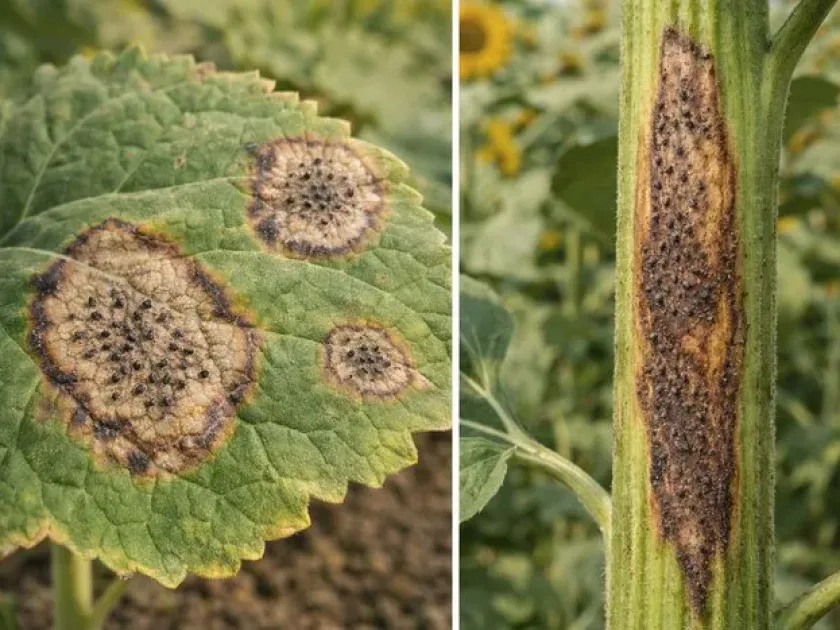
Early symptoms appear as dark, slightly sunken lesions at the base of the stem. These lesions gradually turn greyish-brown with a distinct dark margin, making them easily identifiable in the field.
A diagnostic characteristic of the disease is the development of numerous tiny black dots, known as pycnidia, within the affected areas. These structures contain the fungal spores and are visible upon close inspection.
The foliage also shows signs of infection through circular or irregular greyish-brown spots. These spots may lead to leaf necrosis and subsequent leaf drop, which reduces the plant's overall photosynthetic capacity.
As the infection progresses into the inner stem tissue, the stems become brittle and weak, leading to lodging, particularly during windy weather or as the plant approaches maturity.
In severe cases, the entire root system may decay, causing stunted growth and the eventual death of the affected plant.
Pathogen
The causative agent of this disease is the fungus Plenodomus fallaciosus, belonging to the class of deuteromycetes. While historically associated with the Phoma genus, it is now identified as a specialized pathogen primarily affecting Brassicaceae crops.
The fungus persists in the soil and on crop debris as pycnidia and mycelium for several years. During the growing season, it propagates via pycnidiospores, which are spread by rain splash, wind, and agricultural machinery movement across the field.
The infection cycle initiates when spores infect plants through minor wounds or natural openings on the stem and leaves. Once inside, the fungus colonizes the internal tissues, disrupting the plant's structural integrity.
The specialized nature of Plenodomus fallaciosus allows it to adapt to various environmental conditions, making it a persistent threat in regions with intensive brassica cultivation.
Continuous monitoring of this pathogen is crucial due to its ability to remain viable in the soil, which necessitates integrated management strategies to minimize crop losses.
Conditions for development
The disease thrives in humid environments with moderate temperatures ranging from +18 to +25 degrees Celsius. Frequent rainfall provides the necessary moisture for spore germination and rapid spread throughout the field.
Dewy mornings and high humidity in the canopy create an optimal microclimate for the fungus to establish itself on healthy plant tissues.
Poor crop rotation practices, specifically planting rapeseed on the same land too frequently, lead to a high accumulation of the pathogen in the soil, significantly increasing infection risk.
Densely planted fields with limited airflow trap humidity, which serves as a catalyst for the rapid colonization of Plenodomus fallaciosus across the plantation.
The presence of wild cruciferous weeds acts as a reservoir for the fungus, allowing it to survive and propagate even in the absence of the primary host crop.
Why it matters
The primary economic impact of this disease is a significant reduction in yield, which can reach 30–50% in heavily infested fields. Weakened stems lead to crop lodging, making mechanical harvesting inefficient and causing high grain losses.
Infected plants have reduced weight of thousand seeds, and seed quality is compromised, showing lower germination rates and poor seedling vigor for subsequent growing seasons.
The internal necrosis of the stem interrupts nutrient flow, leading to improperly filled pods and lower oil content in oilseed crops.
Damage to the root neck and lower stem reduces the winter hardiness of the crop, making plants more susceptible to frost damage and winter-kill in cooler climates.
The accumulation of infected crop material in the soil increases the long-term management burden and requires repeated investments in protective chemicals.
Protection
- Selection of resistant or tolerant cultivars and hybrids.
- Implementation of a 4-year crop rotation to break the disease cycle.
- Thorough incorporation of crop residues into the soil to promote decomposition.
- Application of systemic fungicides at the onset of symptoms to mitigate further spread.
- Effective control of cruciferous weeds to eliminate pathogen reservoirs.
Discussion
No discussions yet — be the first.