
Plenodomus leaf spot
Plenodomus confertus
Description
Symptoms
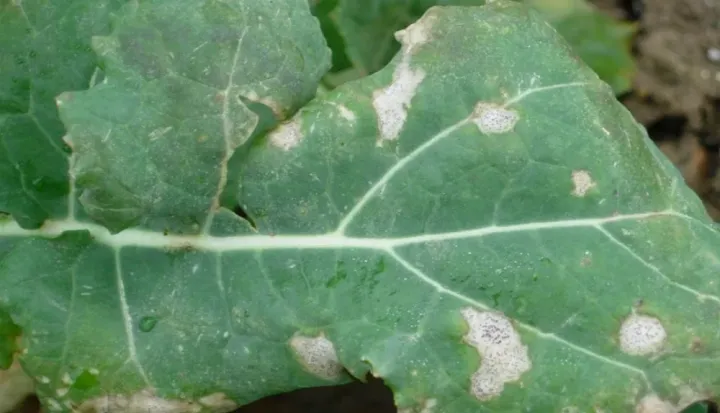
Initial symptoms typically appear as small chlorotic spots on the lower, older leaves of the plant. As the infection progresses, these spots expand, darkening to a reddish-brown or dark-brown color.
A distinctive feature of this leaf spot is the presence of tiny, black, dot-like pycnidia distributed within the necrotic lesions. These structures are essential for accurate field diagnosis of the disease.
Stem infections can occur, presenting as elongated lesions that may merge over time. These lesions can cause structural weakness in the stem, leading to potential lodging or breakage.
Under persistent high-humidity conditions, the lesions may develop a grayish or dusty appearance due to the formation of abundant spore-bearing structures. Severe cases often result in rapid leaf senescence.
The overall appearance of infected plants includes stunted growth and premature yellowing of leaves. In some cases, the tissue around the lesion may become dry and brittle, leading to the formation of holes as the dead tissue falls away.
Pathogen
The disease is caused by the fungus Plenodomus confertus, formerly associated with the genus Phoma. It is a soil-borne pathogen that thrives on decaying plant material, utilizing it as a reservoir during non-cropping seasons.
The fungus produces pycnidia, which are specialized structures containing asexual spores (conidia). Under conditions of high humidity, these spores are released and dispersed to healthy plant tissues by wind or rain splashes.
The life cycle of the pathogen is highly dependent on environmental moisture, which is necessary for the discharge and germination of spores. Once inside the plant tissue, the fungus develops an extensive mycelial network.
This pathogen has a significant ability to persist in the soil for several years. Even in the absence of a host crop, it remains viable through the production of durable resting structures.
The genetic diversity of Plenodomus confertus strains contributes to its persistence in various climatic zones, making it a challenging pathogen to manage globally in susceptible crop species.
Conditions for development
Development is favored by cool to moderate temperatures ranging from 15°C to 25°C. High relative humidity (80% or greater) is crucial for both spore germination and lesion expansion.
Frequent rainfall during the vegetative growth phase accelerates the spread of the disease within the crop canopy. Water splashing is the primary mechanism for moving the fungus from the soil to the plant foliage.
Dense plant populations limit airflow, keeping the microclimate within the canopy moist for longer periods. This extended wetness is optimal for infection and colonization by the pathogen.
Reduced tillage practices, while beneficial for soil health in many contexts, can promote disease pressure by leaving infected crop residues on the surface. These residues act as primary sources of inoculum for subsequent seasons.
Plants under nutrient stress, particularly those lacking sufficient potassium or micronutrients, show increased susceptibility to Plenodomus infections compared to well-nourished crops.
Why it matters
The disease causes significant damage by reducing the photosynthetic capacity of the plant. A decrease in green leaf area directly correlates with lower biomass accumulation and diminished grain filling.
Severe infections can lead to premature plant death, which cuts the grain filling period short. This results in reduced yield and lower test weight of the harvested crop.
In addition to quantitative losses, the quality of the harvest is often compromised. Infected grains may have lower oil or protein content, and seed viability can be negatively affected for future planting.
Field lodging due to weakened stems causes mechanical harvesting difficulties. This results in further losses as mature grains may be shattered or missed by the harvesting equipment.
Economic damage is exacerbated by the need to implement long-term crop rotation changes, effectively limiting the choice of profitable crops for several years in infested fields.
Protection
The foundation of management is the use of high-quality, fungicide-treated seeds. This provides essential early-season protection during the critical stages of seedling establishment.
Strict crop rotation is necessary to break the cycle of the fungus. A period of at least 3 to 4 years between planting susceptible crops is recommended to reduce soil inoculum levels.
Sanitation measures, such as deep plowing to bury crop residues, help to accelerate the decomposition process and reduce the availability of the pathogen for future infections.
Foliar application of fungicides, specifically those containing triazoles or strobilurins, is effective if applied during the early onset of symptoms. Constant monitoring is required to time applications correctly.
- Selection of resistant or tolerant cultivars as a long-term strategy.
- Using crop residue decomposers to reduce the pathogen's survival site.
- Managing irrigation systems to avoid prolonged wetness on foliage.
- Effective weed management to eliminate alternative host plants.
Discussion
No discussions yet — be the first.