
Pisolithus
Pisolithus
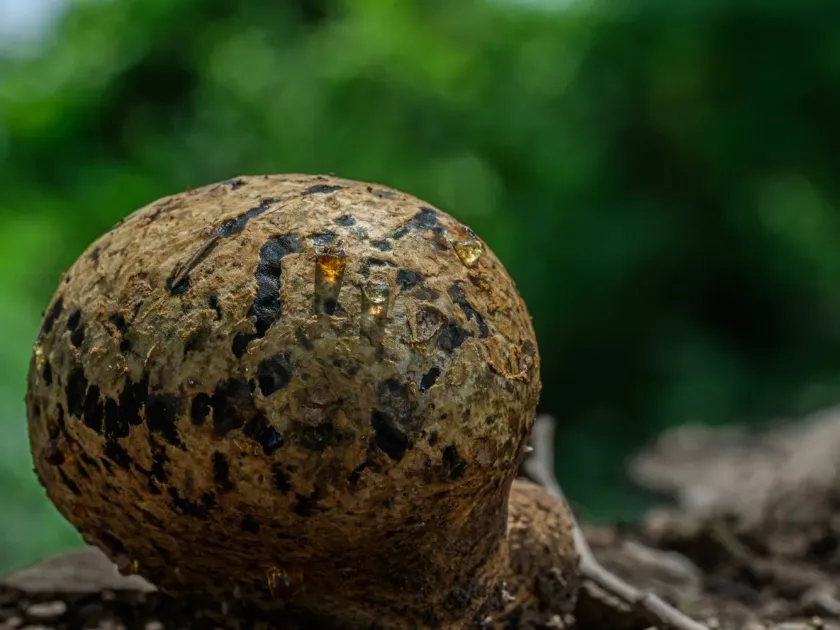
Description
Pathogen
Pisolithus tinctorius is a fungus in the Sclerodermataceae family. It is vital to clarify that it is not a plant disease, but a beneficial ectomycorrhizal fungus.
The fungus produces distinctive, earthball-like fruiting bodies that contain dark, powdery spores. These structures are often found in association with tree roots.
Its biological function is to form a symbiotic relationship with tree species, where the fungal hyphae sheath the roots, increasing the surface area for nutrient uptake.
The plant provides carbohydrates to the fungus, while the fungus provides water and essential minerals gathered from the surrounding soil.
Because of this symbiotic nature, categorizing it as a pathogen is scientifically incorrect; it is a vital contributor to forest health.
Conditions for development
Pisolithus is exceptionally hardy and excels in harsh, nutrient-poor, or degraded soils where other mycorrhizal species fail.
It thrives in warm, well-drained soils and is frequently found in reforestation projects on reclaimed mine sites or industrial wastelands.
The spore dispersal is primarily wind-driven, allowing the fungus to colonize new areas effectively across diverse landscapes.
Environmental stress, such as low nitrogen levels, often triggers the fungus to form more extensive mycorrhizal networks.
Its persistence in extreme climates makes it one of the most successful forest fungi in global reforestation efforts.
Why it matters
Pisolithus does not harm plants. On the contrary, trees infected with this mycorrhiza exhibit increased survival rates and higher growth vigor.
There is no evidence of phytotoxicity or degradation of root tissues associated with the presence of this fungus.
Confusion regarding its classification as a disease often stems from the unconventional appearance of its fruiting bodies.
No agricultural or forest production loss is associated with the presence of Pisolithus in the root zone.
In nurseries, it is sometimes perceived as an unwanted addition simply due to the physical space its fruiting bodies occupy in containers.
Protection
Control measures are unnecessary as Pisolithus provides a net benefit to host trees, particularly in forestry and landscape restoration.
If management is required to eliminate it from a nursery container, modifying the soil pH or adjusting fertilizer levels is sufficient.
Proactive management usually involves inoculation of seedlings to ensure they acquire the benefits of the fungal symbiosis early in development.
There are no chemical pesticides recommended for this fungus, as it is a natural and beneficial part of the ecosystem.
- Inoculate nursery seedlings for better outplanting success.
- Monitor soil fertility to manage root association levels.
- Accept the presence of the fungus as a sign of healthy soil-plant interaction.
Discussion
No discussions yet — be the first.