
Pilgeriella anacardii
Pilgeriella anacardii
Description
Symptoms
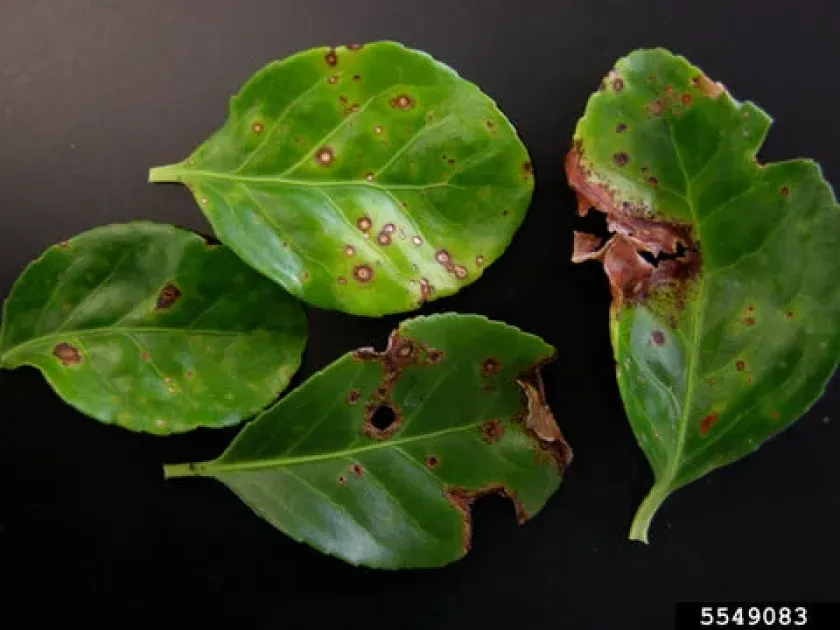
Symptoms of infection manifest as localized spots on the leaves, which gradually darken and expand in size over time.
The center of these lesions often reveals the presence of tiny fruiting bodies, which are characteristic of this fungal pathogen.
Affected foliage tends to yellow and curl, eventually leading to premature defoliation that severely impacts the plant's health.
In cases of severe infestation, young stems and developing shoots may also show signs of stunted growth and surface deformation.
The progression of the disease is visible through the steady increase in necrotic patches across the canopy of the affected tree.
Pathogen
The disease is caused by the fungus Pilgeriella anacardii, which is known to be a pathogenic agent affecting specific tropical vegetation.
This fungus operates by infiltrating the host plant tissue, extracting essential nutrients and producing reproductive structures known as spores.
The life cycle of the pathogen is intricately linked to environmental factors, particularly the presence of ambient humidity and water on plant surfaces.
It can persist on fallen leaf litter and plant debris, making the sanitation of the growing environment a critical factor in disease management.
Scientific studies indicate that the fungus disperses efficiently via airborne spores, allowing it to move across fields and infect adjacent hosts.
Conditions for development
High relative humidity and consistent rainfall are the primary drivers for the germination and spread of Pilgeriella anacardii spores.
The fungus thrives in tropical temperature ranges, typically between 22 and 28 degrees Celsius, where it can rapidly colonize plant tissue.
Poor airflow within dense plant canopies creates a microclimate that prevents foliage from drying, thereby facilitating the infection process.
Insufficient maintenance, such as failure to prune or remove debris, promotes the buildup of the fungus and increases the inoculum pressure.
Environmental stress, combined with poor cultural practices, makes the plants significantly more susceptible to the onset of the disease.
Why it matters
The primary impact of the infection is the drastic reduction in photosynthetic capacity due to the loss of leaf surface area.
Weakened plants show reduced vigor, leading to poor fruit set and lower overall yield quality for agricultural producers.
In addition to economic losses, the disease can cause long-term damage to the plant's structural integrity, increasing its susceptibility to secondary threats.
Young plants or seedlings exposed to the pathogen may experience significant growth retardation, delaying their maturation and production timelines.
If left unmanaged, the cumulative effects can lead to the widespread degradation of entire plantations, requiring significant investment for recovery.
Protection
Integrated pest management strategies begin with rigorous sanitation, including the removal and destruction of all infected plant parts.
Pruning techniques aimed at opening the canopy significantly improve air circulation, making the environment less favorable for fungal growth.
Applying appropriate fungicides, particularly during rainy seasons, is a standard approach to curbing the spread of the fungal infection.
Balanced fertilization supports the plant's natural immune system, helping it to better withstand and recover from pathogen attacks.
Constant vigilance and systematic monitoring are essential to identify early symptoms and contain the spread before it reaches epidemic levels.
Discussion
No discussions yet — be the first.