
Strawberry red stele
Phytophthora fragariaefolia
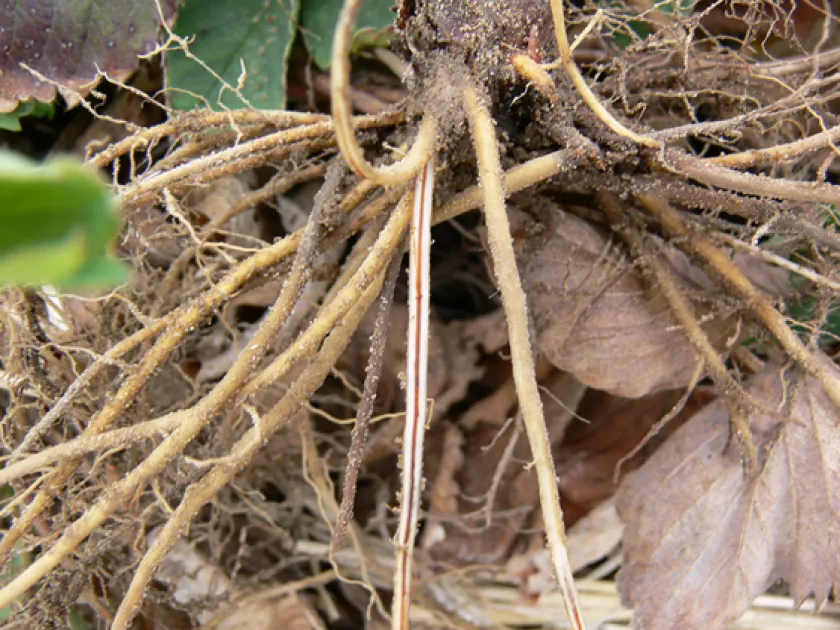
Description
Symptoms
The first symptoms often appear in the spring when the plants resume active growth. The foliage may show stunted growth, lack luster, and eventually turn dull green, yellow, or reddish-brown.
The most reliable diagnostic sign is found by digging up the roots and cutting them lengthwise. The core (stele) of the root will exhibit a distinct reddish-brown decay, while the outer cortex may look relatively normal for a time.
As the disease progresses, the fine root system (lateral roots) dies off, giving the main roots a "rat-tail" appearance. This lack of root system severely hampers the plant's ability to absorb water and nutrients.
Plants often wilt suddenly during the heat of the day, even if the soil is moist, because they can no longer draw water. This leads to the eventual collapse and death of the plant.
- Reddish-brown discoloration of the root core
- Sudden wilting of the whole plant
- Death of lateral feeder roots
- Stunted growth and yellowing leaves
- "Rat-tail" appearance of the main root
Pathogen
The causal agent of red stele disease is the oomycete Phytophthora fragariae. This pathogen is highly specialized and targets the vascular tissues within the roots of strawberry plants.
The fungus spreads via zoospores that swim through water-saturated soil. These spores are capable of infecting root tips, especially during periods of wet weather or poor drainage.
Phytophthora fragariae produces resting spores known as oospores, which can survive in the soil for up to ten years or more, making long-term control extremely difficult.
The pathogen thrives in cool, damp conditions. Its lifecycle is strictly dependent on soil moisture, which allows the mobile zoospores to migrate and find healthy host roots.
Spread occurs primarily through infected nursery transplants, movement of infested soil via machinery, or contaminated runoff water from higher ground.
Conditions for development
Red stele is essentially a disease of cold, wet conditions. The pathogen is most active when soil temperatures are between 10 and 15 degrees Celsius (50-60°F).
Poorly drained, heavy clay soils provide the perfect environment for the zoospores to move and infect strawberry roots. Soil saturation for even a few days can trigger a severe outbreak.
Early spring rainfall is the primary driver of infection cycles. Areas with poor water management, such as low-lying spots in a garden or farm, are highly susceptible.
The pathogen is easily introduced into previously clean fields by planting infected runners. Once established, it is nearly impossible to eradicate from the soil.
Cool, persistent spring moisture creates the ideal window for the pathogen to colonize the root system before the plant can establish strong growth.
Why it matters
The economic impact of strawberry red stele is severe, often resulting in total crop failure. Infected plantings usually have to be destroyed entirely to prevent spread.
Once the soil is infested with Phytophthora fragariae, it cannot be used for strawberry cultivation for many years, significantly restricting land use.
The disease reduces fruit yield to zero because the plants fail to survive long enough to produce, or they produce only small, misshapen berries before dying.
The hidden nature of the pathogen, which lives within the roots, means that growers might inadvertently spread the disease while trying to propagate healthy plants.
The loss of capital investment in nursery plants, soil preparation, and irrigation infrastructure makes this one of the most feared strawberry pathogens globally.
Protection
The most important control measure is the use of certified, disease-free nursery stock. Avoid purchasing plants from unreliable sources or moving runners from infested gardens.
Site selection is critical. Plant strawberries only in well-drained soil with excellent water management. Raised beds can help reduce the risk of root saturation.
Crop rotation is mandatory. Do not plant strawberries in the same soil for at least 5 to 7 years after the detection of the disease to allow the resting spores to die off.
Sanitation practices, such as disinfecting tools and preventing runoff from infested areas, are vital for preventing the migration of zoospores.
In cases of confirmed infection, remove the entire plant and the surrounding soil immediately. Fungicides may provide some management but are not a cure for established infections.
Discussion
No discussions yet — be the first.