
Phyllosticta leaf spot
Phyllosticta foliorum
Description
Symptoms
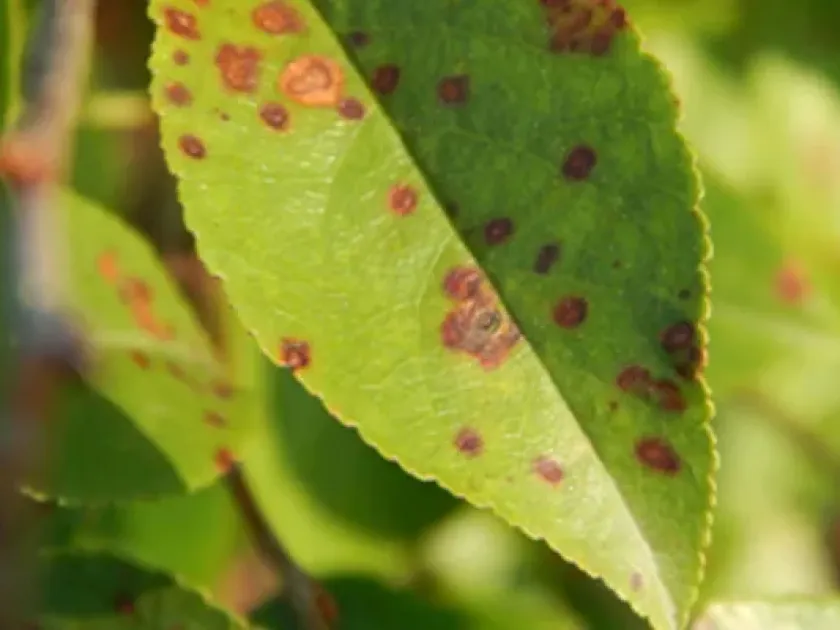
The most recognizable symptom is the development of distinct spots on leaves. These spots vary in color—often tan, brown, or gray—and are frequently surrounded by a dark, defined margin.
As the infection progresses, the centers of the spots often dry out and may turn necrotic. The size and shape of the spots are often restricted by the veins of the leaf, giving them an angular appearance.
A key diagnostic feature is the presence of small, black, pinhead-sized structures called pycnidia scattered within the necrotic tissue. These are easily seen with the naked eye or a hand lens.
In severe cases, individual spots coalesce to cover large portions of the leaf surface, which can cause the leaf to turn yellow (chlorosis) and eventually abscise prematurely.
While primarily a foliage disease, under very high humidity, the fungus can also infect leaf stalks (petioles) and soft, immature green stems.
Pathogen
Phyllosticta leaf spot is caused by fungi of the genus Phyllosticta, which are classified as imperfect fungi. These pathogens are opportunistic and can infect a wide range of woody and herbaceous plants.
The pathogen primarily overwinters in infected plant debris, such as fallen leaves, surviving as pycnidia or dormant mycelium. These structures provide the primary inoculum for the next season.
Under moist conditions, the pycnidia release spores that are disseminated by water splash, wind, or mechanical movement. Once they land on a susceptible host leaf, they germinate and penetrate the tissue.
The fungus colonizes the leaf tissue intercellularly, secreting enzymes that break down plant cell walls. This physiological disruption leads to the formation of localized necrotic lesions.
The life cycle is polycyclic, meaning the fungus can produce multiple rounds of spores during a single growing season, leading to rapid spread if environmental conditions remain favorable.
Conditions for development
Moisture is the primary driver for the development and spread of Phyllosticta. High humidity, frequent rainfall, or overhead irrigation significantly increase the risk of infection.
The fungus thrives in moderate to warm temperatures, typically between 20°C and 25°C. In these conditions, the incubation period is shortened, leading to rapid symptom manifestation.
Poor air circulation, often found in dense or poorly pruned plantings, maintains a high-humidity microclimate around the foliage, which is ideal for fungal spore germination.
Plants under physiological stress—due to nutrient deficiency, root damage, or pest infestation—show increased susceptibility to the fungus, as their natural defense mechanisms are weakened.
The presence of old plant debris left on the ground under the plant canopy ensures that a high concentration of spores is available for infection at the start of each spring.
Why it matters
The disease causes significant damage by reducing the photosynthetic capacity of the plant. A large percentage of dead leaf area leads to reduced sugar production and stunted growth.
Premature defoliation weakens the plant, making it more vulnerable to winter injury and environmental stress. This is particularly dangerous for fruit trees and perennial ornamentals.
Chronic annual infection can significantly decrease the yield and quality of fruit-bearing plants, as the tree lacks the energy reserves needed for proper fruit development.
Ornamental plants suffer primarily from aesthetic degradation. For nurseries and landscape companies, heavily spotted foliage renders plants unsellable and diminishes their visual value.
Repeated stress from leaf spot infections over several years can lead to gradual decline and dieback of woody plants, potentially killing the plant or making it susceptible to secondary pests.
Protection
Sanitation is the most effective management strategy. Removing and disposing of all fallen leaves during autumn and throughout the season reduces the primary inoculum source for the following year.
Pruning should be done to increase airflow throughout the canopy. This helps the foliage dry quickly after rain, which prevents spores from successfully germinating on the leaf surface.
Chemical control involving copper-based fungicides or systemic triazole fungicides can be used as a preventative measure during the early stages of the growing season.
Avoid overhead watering methods that wet the leaves. Instead, utilize drip irrigation systems to deliver water directly to the root zone, keeping the foliage dry.
- Apply mulch to cover debris and prevent spores from splashing onto leaves.
- Ensure plants are properly spaced to facilitate rapid leaf drying.
- Maintain optimal nutrient levels to support plant health.
- Remove and destroy severely infected branches or foliage during the season.
Discussion
No discussions yet — be the first.