
Phyllosticta leaf spot of cordyline
Phyllosticta cordylinophila
Description
Symptoms
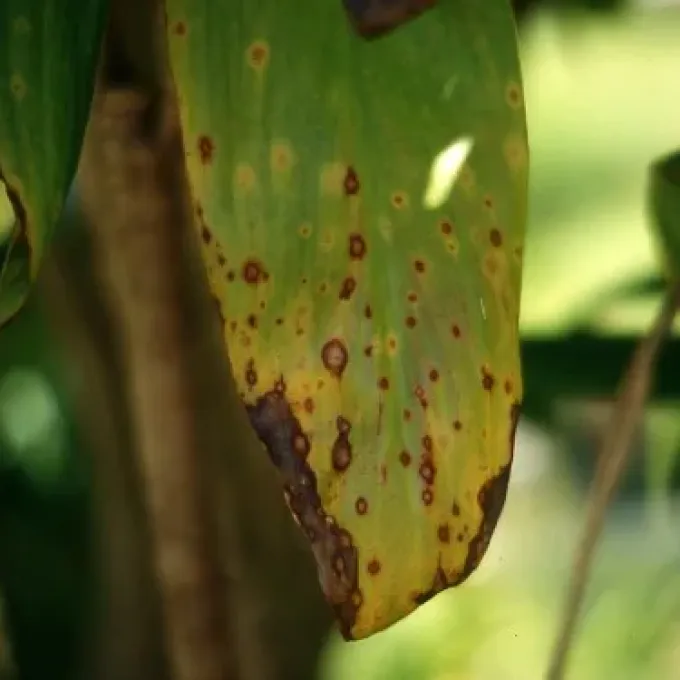
Symptoms typically begin as small, circular or irregular spots on the foliage. These spots are often light brown or tan in the center and are surrounded by a distinct dark reddish-brown border.
As the infection progresses, the lesions enlarge and may merge, eventually leading to large necrotic areas. Small black dots, representing the pycnidia, appear in the center of the spots.
Severely affected leaves exhibit yellowing (chlorosis) and may wither prematurely. In many cases, the leaf tips start to dry out, and the entire leaf tissue eventually collapses.
The aesthetic value of the plant declines rapidly, as the spots persist even if the fungus is successfully eradicated. In humid environments, faint fungal growth may be visible.
Differentiating this from physiological disorders is key; the presence of black, pimple-like pycnidia is a hallmark of this fungal disease, setting it apart from simple nutrient deficiencies.
Pathogen
The disease is caused by the fungus Phyllosticta cordylinophila, an ascomycete pathogen specifically known for infecting plants of the Asparagaceae family, particularly Cordyline species.
The fungus propagates through the formation of pycnidia, small flask-shaped fruiting bodies that develop within the infected leaf tissues. These structures produce numerous pycnidiospores.
The pathogen survives on dead leaf litter or necrotic tissues, acting as an inoculum source for new infections when environmental conditions become suitable for fungal growth.
Dissemination is primarily driven by water splash, such as overhead irrigation or rainfall, which carries the spores to healthy leaves. Wind currents can also play a minor role in spreading the spores within confined spaces.
Infection occurs when spores land on leaves and penetrate through stomata or wounds caused by handling, insects, or environmental stress, initiating the colonization of plant tissue.
Conditions for development
The development of Phyllosticta leaf spot is heavily dependent on high relative humidity levels, usually exceeding 70%, which facilitates rapid spore germination.
Warm temperatures ranging from 20°C to 28°C create an ideal microclimate for the pathogen to thrive and complete its infection cycle within a short period.
Poor ventilation and overcrowded plant arrangements prevent proper drying of leaf surfaces, allowing water films to persist and providing perfect conditions for fungal invasion.
Inappropriate watering practices, such as getting water on the leaves or overwatering the growing medium, can increase the risk of infection by stressing the root system and plant health.
Low light intensity also predisposes the plant to infection, as it weakens the plant's natural defenses and slows down its metabolic processes, making the leaf tissue more susceptible.
Why it matters
Phyllosticta leaf spot significantly impairs the plant's ability to photosynthesize by destroying large portions of the leaf surface, which can lead to stunted growth.
Chronic infections can cause progressive defoliation, leaving the Cordyline with a bare stem and ruining its appearance. This is especially damaging for plants kept in interior landscapes.
If left uncontrolled, the fungus can spread to other nearby susceptible plants, potentially leading to a collection-wide outbreak in nurseries or home interiors.
Secondary pathogens may opportunistically colonize the weakened plant tissue, leading to more complex problems like stem or root rot, further threatening the plant's survival.
The financial impact includes the loss of plant inventory, the cost of fungicide applications, and the labor-intensive process of sanitizing the growing environment.
Protection
Immediate isolation of infected plants is the first step in control. Avoid misting or overhead watering, as this is the primary mechanism for spore dispersal between plants.
Sanitation is critical: remove and dispose of all infected leaves promptly. Always sanitize pruning tools between plants to prevent the accidental transfer of fungal spores.
Application of fungicides containing copper or systemic compounds (such as triazoles) can help suppress the disease. Rotate fungicides to prevent the fungus from developing resistance.
- Remove and destroy infected leaves.
- Improve air circulation and reduce humidity.
- Use systemic or contact fungicides.
- Disinfect tools and isolate symptomatic plants.
Ensuring optimal light conditions and avoiding leaf wetness are the best preventative measures to maintain plant vigor and prevent future outbreaks of this disease.
Discussion
No discussions yet — be the first.