
Phyllosticta leaf spot
Phyllosticta concentrica
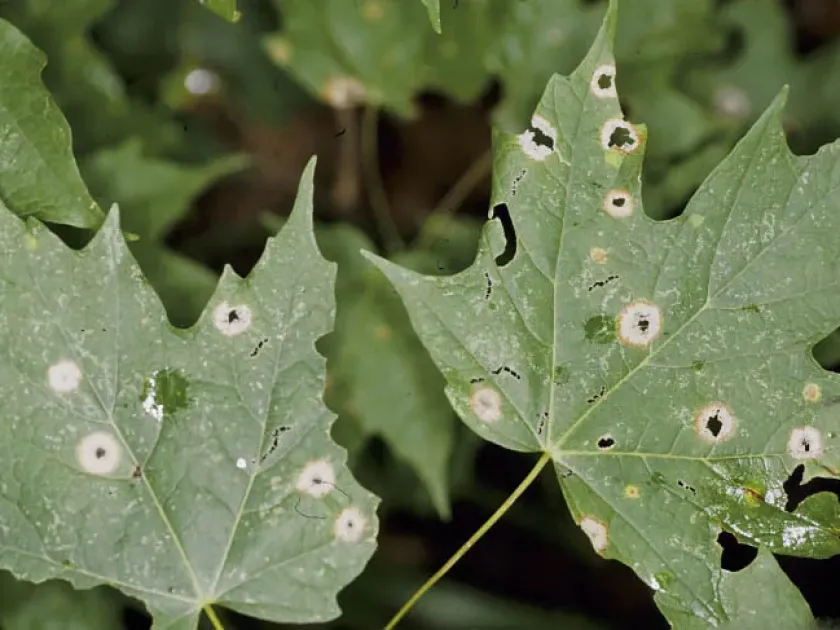
Description
Symptoms
The most visible symptoms of the disease are localized spots on leaves, which initially appear as small, brownish discolored areas before expanding.
As the name concentrica suggests, the spots often develop distinct, concentric rings of varying shades, which is a key diagnostic feature of this particular pathogen.
The margins of the lesions are usually defined by a darker, often purplish or dark brown border that separates diseased tissue from healthy green leaf matter.
Tiny, black, pinhead-sized structures called pycnidia appear in the center of the spots. These structures are the reproductive organs of the fungus and can be easily seen with the naked eye or a hand lens.
In severe cases, infected leaves may develop large, necrotic patches that coalesce, causing the leaf to curl, dry out, and drop prematurely from the plant.
Pathogen
The disease is caused by the fungus Phyllosticta concentrica, an anamorphic member of the Coelomycetes class. This pathogen is a common cause of foliage damage in a wide variety of deciduous trees and shrubs.
The fungus overwinters primarily within pycnidia found on fallen leaves or in infected twigs, remaining dormant until favorable spring weather conditions trigger its activation.
When moisture is present, pycnidia release spores known as conidia. These are disseminated through splashing raindrops, wind currents, and mechanical contact during maintenance activities.
The pathogen initiates infection by penetrating the leaf surface through stomata or wounds caused by pests or environmental damage.
Once inside, the fungal mycelium colonizes the mesophyll tissue, disrupting normal leaf function and eventually resulting in the characteristic necrotic symptoms.
Conditions for development
High humidity and consistent rainfall are the primary environmental drivers for the development and rapid spread of Phyllosticta concentrica in the garden.
Warm temperatures, generally ranging from 20 to 25 degrees Celsius, provide the ideal metabolic environment for the fungus to produce spores and infect new foliage.
Poor airflow, often caused by overly dense planting or lack of pruning, leads to persistent leaf wetness, which is essential for spore germination.
Plants that are weakened due to drought, nutritional deficiencies, or root stress are significantly more susceptible to infection by this opportunistic pathogen.
The presence of decomposing leaf litter under the plant canopy serves as a continuous reservoir for spores, making sanitation a critical aspect of disease management.
Why it matters
By causing leaf lesions and premature defoliation, the disease significantly reduces the plant's total photosynthetic area, hindering its ability to produce energy.
The resulting physiological stress weakens the host, making it more vulnerable to secondary pests, environmental extremes, and harsh winter conditions.
In ornamental plants and landscape specimens, the aesthetic damage caused by spotting and early leaf drop is often the most significant economic and social impact.
Continued infection cycles over several consecutive growing seasons can lead to severe plant decline, characterized by dieback of twigs and reduced overall vigor.
For commercial nurseries, the presence of this disease can result in unmarketable stock and the need for costly management practices to prevent further spread.
Protection
The most effective strategy is rigorous sanitation, which involves raking up and destroying all fallen leaves at the end of the season to remove the overwintering inoculum.
Pruning should be performed to improve light penetration and air circulation throughout the canopy, which helps leaves dry faster and reduces the risk of infection.
Preventative applications of copper-based fungicides or other labeled protectants can be used during the early spring as buds begin to open to inhibit spore germination.
Healthy plant management, including proper irrigation and soil fertility, helps the plant maintain natural resistance to fungal pathogens.
- Remove and dispose of infected plant debris promptly.
- Prune branches to encourage better airflow and sunlight.
- Apply protective fungicides if the history of disease is known.
- Ensure adequate spacing between plants during installation.
Discussion
No discussions yet — be the first.