
Phyllachora leaf spot
Phyllachora sylvatica
Description
Symptoms
Early symptoms appear as small, chlorotic or yellowing spots on the upper leaf surface. Over time, these spots darken, becoming brown or necrotic.
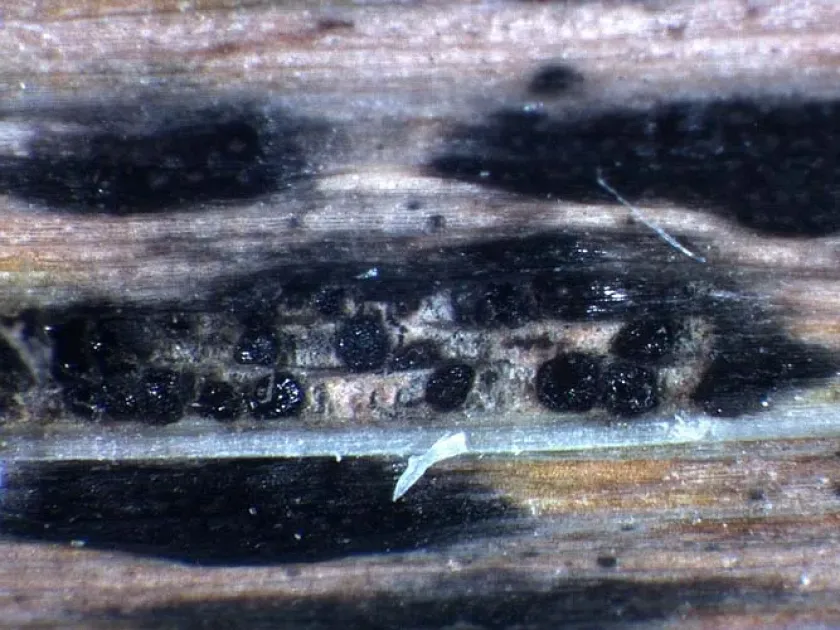
The most distinctive feature is the emergence of small, raised, coal-black spots or pads known as stromata. These often cluster together, giving the leaf a speckled appearance.
As the infection progresses, the lesions may coalesce into larger blotches, causing the leaf tissue surrounding the spots to wither and die prematurely.
Severe infestations often lead to premature leaf drop, which can significantly alter the tree's canopy density by late summer or early autumn.
While the spots are usually most visible on the top of the leaf, faint discoloration can sometimes be detected on the underside directly beneath the fungal stromata.
Pathogen
The disease is caused by the ascomycete fungus Phyllachora sylvatica. It is a specialized parasitic fungus that primarily attacks the foliage of various broad-leaved trees.
The fungus develops internally within the host's leaf tissues. It eventually produces characteristic black, shiny stromata that burst through the leaf epidermis to release spores.
Its life cycle relies on the production of ascospores. These spores are disseminated by wind or splashing rain during the growing season to infect healthy leaves.
The pathogen overwinters as mycelium or as dormant fruiting bodies within fallen, infected leaves on the forest floor, awaiting favorable spring conditions.
It is considered a biotrophic parasite, meaning it draws nutrients from living host cells, maintaining a delicate balance that allows it to persist on the tree for extended periods.
Conditions for development
High humidity and moisture are the primary drivers for Phyllachora development. Frequent rainfall and persistent dew provide the surface moisture required for spores to germinate.
Warm temperatures (typically ranging from 15°C to 22°C) during the late spring and early summer accelerate the growth of the fungus and the production of secondary spores.
Poor air circulation within dense canopies or overcrowded forest stands prevents leaves from drying out quickly, creating an ideal microclimate for infection.
The accumulation of leaf litter under infected trees is a critical factor, as it acts as the primary inoculum source for the following season's outbreak.
Stressed trees, particularly those suffering from nutrient deficiencies or environmental factors, are more susceptible to colonization by the fungus.
Why it matters
The main damage results from the reduction of healthy leaf surface area, which hinders photosynthesis and limits the tree's ability to produce necessary energy reserves.
Frequent and severe defoliation can cause significant growth stunting, reducing the annual biomass production of the affected timber or decorative trees.
Trees weakened by the disease are more vulnerable to secondary stressors, including other pathogens and opportunistic bark-boring insects.
For nursery production, the disease significantly lowers the aesthetic value and commercial viability of young saplings, often rendering them unfit for sale.
In mature stands, chronic infection may lead to branch dieback and an overall decrease in the tree's vitality, making it less resilient to drought or cold winters.
Protection
The most effective management practice is the systematic removal and destruction of fallen leaves during autumn to eliminate the overwintering inoculum source.
Pruning out heavily infected branches can help reduce the localized disease pressure within the canopy, improving air circulation around the remaining healthy leaves.
In cases of severe infection, protective fungicide applications during the bud-break period can prevent initial primary infections from establishing on new growth.
Maintaining adequate tree spacing and thinning dense stands ensures better ventilation, which keeps the leaf surface drier and less conducive to fungal spore germination.
Promoting tree health through appropriate fertilization and soil management strengthens the host's natural defenses, potentially reducing the severity of Phyllachora attacks.
Discussion
No discussions yet — be the first.