
Phyllachora leaf spot
Phyllachora puncta
Description
Symptoms
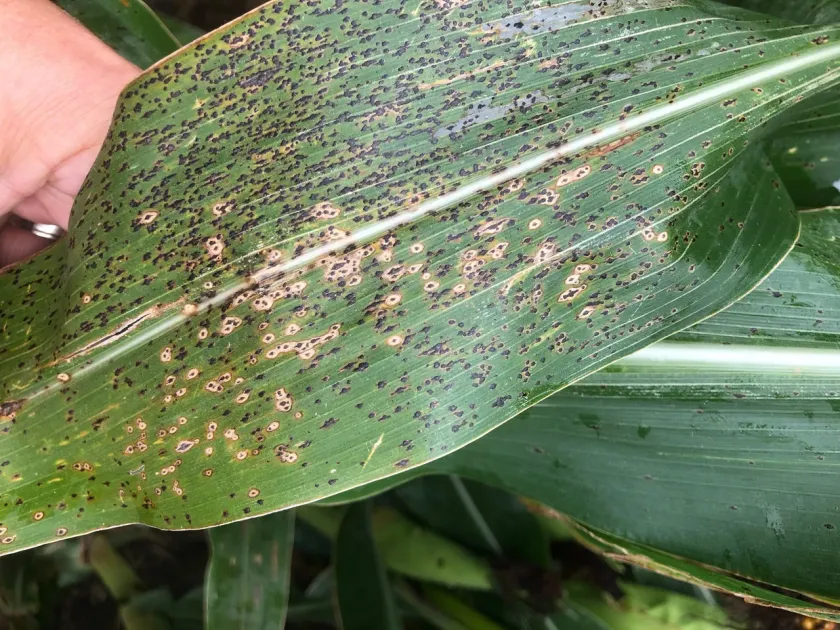
The most distinctive symptom of this disease is the development of shiny, black, raised spots or dots on the leaf surface, often referred to as tar spots.
These spots are generally circular or slightly irregular, clearly delimited, and are frequently surrounded by a chlorotic halo caused by the pathogen's toxins.
As the fungal fruiting bodies mature, they break through the leaf surface, creating a rough texture that can be felt by touch.
Severe infections lead to significant necrosis, causing the leaf tissue to turn yellow and eventually drop prematurely from the plant.
- Dark, shiny, punctate spots on foliage.
- Formation of chlorotic halos around lesions.
- Development of fruiting bodies within the spots.
- Premature leaf senescence and defoliation.
Pathogen
The causal agent of Phyllachora leaf spot is the fungus Phyllachora puncta, a member of the Ascomycota division. This pathogen specializes in parasitizing the leaf tissue of various host plants.
The fungus develops stromata within the host tissue, where ascospores are produced. These spores are responsible for primary infections in the spring when conditions are favorable.
The fungus overwinters primarily in the necrotic leaf litter, making the removal of debris a critical part of the disease cycle management.
Microscopic examination reveals dark, raised stromatic structures embedded in the epidermis, which are characteristic of this specific pathogen.
The biological cycle of Phyllachora puncta is closely synchronized with the host plant's development, allowing the fungus to persist over several seasons.
Conditions for development
The development of Phyllachora leaf spot is favored by prolonged periods of high humidity, frequent rainfall, or heavy dew on the leaf surfaces.
Moderate temperatures during the active growth phase provide an ideal environment for spore germination and fungal colonization of leaf tissues.
Poor air circulation within the plant canopy creates a microclimate with high relative humidity, which promotes the spread of the fungus.
Lack of sunlight or dense planting schemes can further exacerbate the susceptibility of plants to this fungal infection.
Wind and rain splashes act as the primary mechanisms for the dispersal of spores from infected leaf debris to healthy foliage.
Why it matters
Phyllachora leaf spot reduces the effective photosynthetic area of the leaves, which directly impacts the plant's metabolic capacity and overall vigor.
Weakened plants are significantly more susceptible to environmental stressors, such as drought, extreme cold, or secondary pests.
In ornamental settings, the visual damage caused by the black spots ruins the aesthetic value, leading to severe economic losses in landscaping.
Long-term infestation drains energy reserves in perennial plants, eventually leading to stunted growth or a reduced ability to flower and fruit.
In nurseries, high infection rates may result in the rejection of plant batches due to poor quality and compromised health.
Protection
The most effective strategy is strictly prophylactic: remove and destroy all fallen leaf debris to eliminate the primary source of overwintering inoculum.
Proper pruning practices should be implemented to ensure excellent air circulation throughout the plant canopy and reduce moisture retention.
Chemical control involving copper-based or systemic fungicides can be applied preventively during the early spring to protect emerging foliage.
Maintaining optimal soil fertility and plant vigor helps improve the plant's natural resistance to infection by various foliar pathogens.
Continuous monitoring during the growing season allows for early detection, enabling rapid intervention before the infection reaches a widespread stage.
Discussion
No discussions yet — be the first.