
Pennisetum phyllachora
Phyllachora pennisetina
Description
Symptoms
Early symptoms of the disease appear as small, subtle chlorotic spots that progressively expand and darken, turning brown or deep black over time.
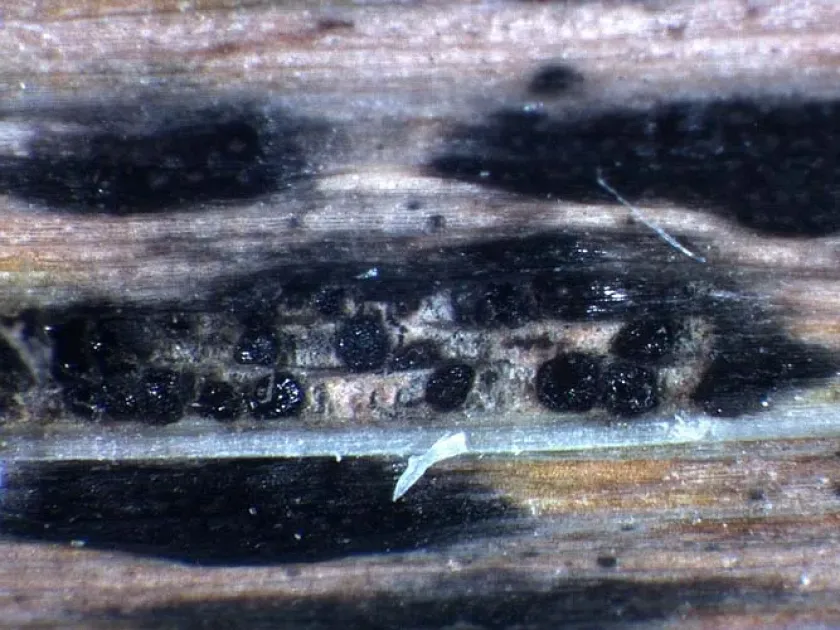
The most diagnostic feature is the presence of dense, shiny black stromata (fungal structures) that erupt through the leaf epidermis, often arranged in rows following the leaf veins.
Necrotic lesions frequently develop around these fungal structures, leading to the yellowing, wilting, and premature senescence of the entire leaf blade.
In highly humid environments, a fine gray fungal growth or conidial mass may be visible on the surface of the lesions, indicating active sporulation.
Severe infestations cause leaves to curl and drop prematurely, leading to significant dieback and a severely compromised plant structure.
Pathogen
The causative agent of this disease is the fungus Phyllachora pennisetina, an ascomycete specialized in parasitizing various species of the Pennisetum genus.
This pathogen develops specialized fruiting bodies called perithecia, which are embedded deep within the leaf tissues of the host plant to protect the developing spores.
The fungus typically overwinters in infected crop debris, which acts as the primary source of inoculum for the next growing season once conditions become favorable.
The mycelium grows intercellularly, colonizing the parenchyma tissues and gradually disrupting the plant's ability to maintain normal metabolic and physiological processes.
Sexual reproduction results in the formation of ascospores, which are forcibly ejected and dispersed by wind or rain splash to infect new healthy leaf surfaces.
Conditions for development
Warm and humid weather conditions are the primary drivers for disease development, providing the necessary moisture for ascospore germination and colonization.
The optimal temperature range for the pathogen's growth typically falls between 20°C and 28°C, provided that leaf wetness persists for several hours.
Poorly ventilated fields, high planting densities, and shaded environments significantly increase the risk of infection by keeping the leaf canopy damp for longer periods.
Excessive nitrogen fertilizer can result in lush, soft growth that is more susceptible to pathogen penetration and colonization by the fungal hyphae.
Frequent rain events or heavy irrigation cycles serve to facilitate the spread of spores throughout the crop, accelerating the progression of the disease to an epidemic level.
Why it matters
The primary damage caused by Pennisetum phyllachora is a drastic reduction in functional leaf surface area, which leads to a significant decrease in photosynthetic capacity.
For forage-producing grasses, this impact directly translates to reduced biomass yield and a decline in the overall nutritional quality of the fodder produced.
Plants weakened by this infection exhibit reduced vigor, making them more vulnerable to secondary stresses such as drought, frost, or other opportunistic pests.
Ornamental varieties suffer from aesthetic degradation, as the characteristic black spots and yellowing leaves render the plants unattractive for landscaping purposes.
Chronic infections can lead to stand thinning over consecutive years, resulting in long-term economic losses and the need for costly field rejuvenation or reseeding.
Protection
Sanitation remains the most critical management practice; removing and destroying infected plant debris is essential to eliminate primary overwintering inoculum.
Optimizing plant spacing to ensure adequate air circulation and sunlight penetration is an effective cultural method to reduce leaf wetness and disease pressure.
Practicing crop rotation with non-host species is highly recommended to break the life cycle of the pathogen and reduce the build-up of inoculum in the soil.
If environmental conditions favor disease spread, the targeted use of systemic or contact fungicides can effectively protect healthy foliage from new infections.
Maintaining a balanced fertility program, particularly focusing on potassium and phosphorus, helps improve plant cell wall integrity and overall disease resistance.
Discussion
No discussions yet — be the first.