
Phyllachora conica
Phyllachora conica
Description
Symptoms
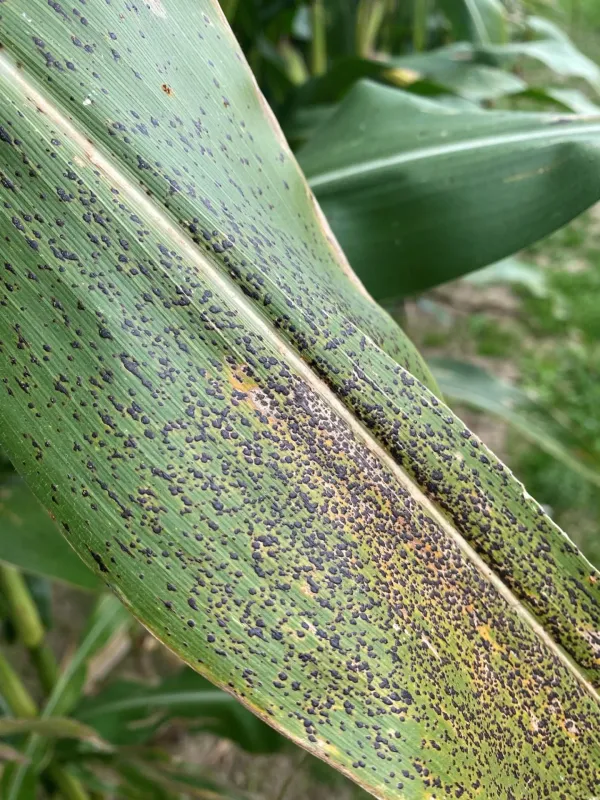
The first visual sign of the disease is the appearance of small chlorotic spots, which eventually darken and turn brown or black as the infection progresses.
Numerous conical protrusions form on the upper side of the leaf blades, representing the fungal stromata. These are often surrounded by a narrow light-colored halo, giving the plant a specific appearance.
Infection usually covers the leaf blade unevenly, but under high disease pressure, the spots may coalesce, causing extensive tissue necrosis.
When examined under magnification, the surface of the stroma appears smooth and dense, which distinguishes this phyllachora disease from many other common types of leaf spots.
In advanced cases, infected leaves turn yellow prematurely, curl, and drop, significantly reducing the total photosynthetic surface area of the plant.
Pathogen
The causative agent of this disease is the ascomycete fungus Phyllachora conica, which belongs to the Phyllachorales order. It is a highly specialized parasite that develops within plant host tissues, forming characteristic fruiting structures called stromata.
The fungus's life cycle is closely linked to the seasonal development of the host plant. It typically overwinters on fallen infected leaves, where perithecia containing ascospores are formed for primary infection in the spring.
During the growing season, the pathogen spreads through conidia, which are dispersed by wind or water droplets. This ensures rapid secondary infection of healthy plant parts when environmental conditions are favorable.
Morphologically, Phyllachora conica is characterized by the formation of black, shiny stromata that often protrude above the leaf surface, adopting a distinct conical shape.
This fungus is classified as an obligate parasite, requiring living tissues of specific plant species for its survival, which restricts its spread to the host plant's natural range.
Conditions for development
The main factor for disease development is high humidity and the presence of water droplets on leaves, which are essential for spore germination and infection.
The optimal temperature range for the pathogen's infection and mycelial growth is typically between +18°C and +25°C, characteristic of a moderately warm spring and summer.
Dense, poorly ventilated plantings create a microclimate with high humidity levels, providing ideal conditions for the rapid spread of Phyllachora conica.
Improper irrigation practices, where water is applied directly to the foliage, facilitate the spread of conidia within the agroecosystem and exacerbate the risk of an outbreak.
Prolonged rainy periods and overcast weather significantly increase the probability of mass plant infection, especially in weakened stands lacking essential micronutrients.
Why it matters
Phyllachora conica causes direct harm to plants by disrupting photosynthesis and general metabolic processes within the infected leaves.
Premature leaf drop leads to plant weakening, which reduces winter hardiness and the plant's ability to develop reproductive organs properly.
Under severe infection pressure, there is a substantial loss in the aesthetic value of the plant, which is critical for ornamental and fruit-bearing crops.
Chronic long-term infection exhausts stored nutrients, which may eventually lead to the death of individual branches or the entire plant.
Reduced photosynthetic activity negatively impacts the quality of fruits or seeds, worsening their organoleptic characteristics and lowering overall yields.
Protection
The most important preventive measure is the thorough removal and destruction of plant debris, which serves as the primary source of infection for the next season.
The application of fungicides from the triazole group or copper-based products at the beginning of the growing season effectively suppresses the development of primary infection.
Agronomic practices aimed at improving ventilation, such as proper pruning and timely thinning of canopy, reduce humidity levels in the leaf zone.
Maintaining a balance of mineral nutrition, particularly the application of phosphorus and potassium fertilizers, enhances the plant's natural resistance to the pathogen.
- Maintaining spatial isolation from infection sources.
- Using only certified healthy planting material.
- Regular monitoring of leaf conditions during critical growth periods.
Discussion
No discussions yet — be the first.