
American rose rust
Phragmidium americanum
Description
Symptoms
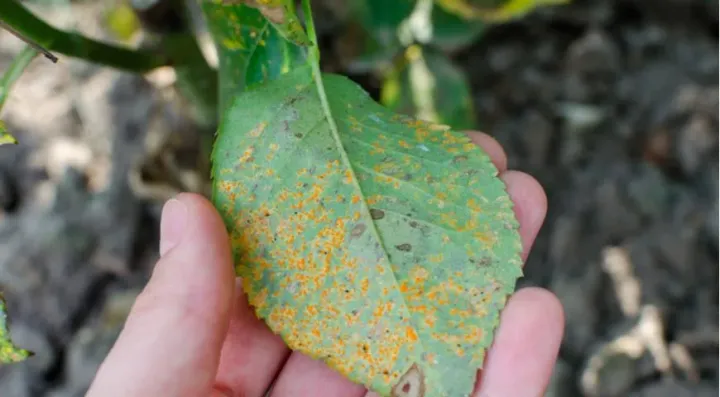
Early symptoms appear as small, chlorotic spots on the upper leaf surface. These spots are often barely noticeable until they transition into the next stage of fungal development.
The most distinctive sign is the formation of orange-yellow, dusty pustules on the underside of the leaves. These structures contain mass numbers of spores that can easily spread when brushed or blown by the wind.
As the season progresses and temperatures shift, the pustules may darken to brown or black, which represents the telial stage of the fungus preparing for the winter dormancy.
In addition to foliage, the fungus often targets stems and sepals, causing distinct swellings, blisters, and longitudinal splits. These stem infections can lead to girdling and subsequent death of the affected canes.
Severe infestations lead to premature defoliation, where leaves yellow and drop extensively. This results in a sparse, sickly appearance of the rose bushes and significantly weakens the plant's vigor.
Pathogen
The causal agent of this disease is the fungus Phragmidium americanum, an obligate parasite that belongs to the order Pucciniales. This pathogen is specialized in infecting species within the Rosa genus.
The fungus exhibits a complex life cycle, involving several types of spores including urediniospores, teliospores, and aeciospores. These stages allow the pathogen to survive in diverse environmental conditions and persist from year to year.
Primary infections often originate from overwintering teliospores located on fallen leaves or infected stems. During the growing season, wind-borne spores spread the disease throughout the rose garden.
The fungus penetrates the plant tissues primarily through the stomata or epidermal cells. Once inside, the mycelium colonizes the intercellular spaces, drawing vital nutrients from the host and causing tissue damage.
Due to its high degree of specialization, Phragmidium americanum can rapidly proliferate in commercial nurseries and private gardens, especially when susceptible rose cultivars are grown in dense clusters.
Conditions for development
High humidity and moisture are the primary drivers of this disease. Free water on leaf surfaces, caused by dew or frequent rain, is essential for spore germination and successful infection.
Optimal temperatures for the development of Phragmidium americanum typically range between 15°C and 20°C. In such conditions, the fungus can produce new generations of spores in a matter of days.
Poor air circulation within the canopy of the rose bush is a major risk factor. Densely planted roses or bushes that haven't been properly pruned maintain high local humidity, making them highly susceptible.
Overhead irrigation acts as a facilitator for disease spread, as splashing water moves fungal spores from lower infected leaves to higher, healthy tissues.
Plants under nutritional stress, particularly those lacking potassium or those with excessive nitrogen fertilization, are more prone to infections as their physiological defenses are lowered.
Why it matters
The main impact of American rose rust is the severe depletion of the plant's energy reserves. Massive defoliation prevents the rose from photosynthesizing efficiently during the peak summer months.
Weakened plants exhibit reduced winter hardiness, making them highly vulnerable to frost damage and winter kill. This leads to a higher mortality rate in affected gardens during the cold season.
The cosmetic damage is significant, rendering ornamental roses useless for landscaping or exhibition purposes. Flowers may fail to form, or those that do may be of poor quality due to the plant's struggle to survive.
Long-term colonization by the pathogen leads to a slow decline of the rose bush. If left unmanaged, the root system eventually suffers from the lack of carbohydrates, potentially leading to the death of the entire plant.
Furthermore, an infected garden becomes a reservoir for the fungus, making it increasingly difficult to cultivate new roses or maintain susceptible varieties in the vicinity.
Protection
Sanitation is the cornerstone of management. All fallen leaves and infected plant debris must be removed and destroyed (preferably by burning) to eliminate overwintering sites for the fungus.
Ensure proper spacing between rose bushes to promote air movement and reduce humidity within the foliage. Pruning should be performed to open up the center of the plant to sunlight.
Chemical control involves the application of fungicides, specifically those containing active ingredients like tebuconazole or myclobutanil. Preventive spraying is much more effective than curative efforts.
Applications should be timed with the onset of favorable weather conditions for the fungus, repeating as necessary according to the manufacturer's label to maintain a protective barrier.
- Use resistant cultivars to minimize the risk of infection.
- Avoid overhead watering; use drip irrigation instead.
- Disinfect pruning tools with a 70% alcohol solution between plants.
Discussion
No discussions yet — be the first.