
Pod blight
Phomopsis folliculicola
Description
Symptoms
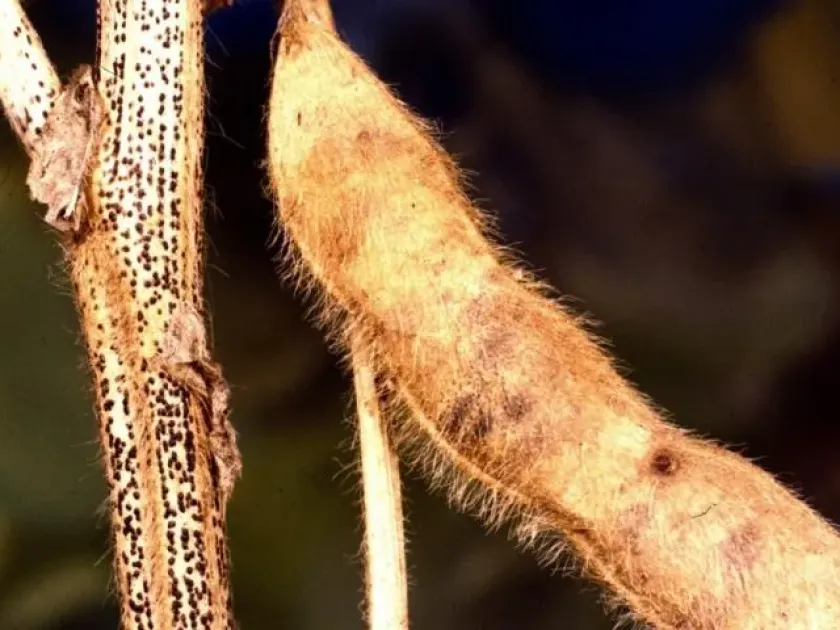
Initial symptoms manifest as small, brown, or dark-colored spots on the surface of the soybean pods. As the disease progresses, these lesions enlarge, eventually covering significant portions of the pod.
A hallmark sign of Phomopsis folliculicola is the formation of numerous tiny, black pycnidia scattered across the infected tissue. These structures are often visible to the naked eye as small bumps on the lesion surface.
Under conditions of high humidity, the pods may exhibit a grayish-white, fuzzy layer of fungal growth. The internal tissues of the pods often become discolored, softened, and eventually decay.
Seeds within infected pods are frequently shriveled, malformed, and may be covered in a white fungal mat. This internal infection significantly reduces seed viability and vigor.
Overall, affected plants show symptoms of premature wilting, stunted growth, and early senescence. In severe cases, the entire pod structure becomes brittle and may shatter prematurely.
Pathogen
The causal agent of this disease is the fungus Phomopsis folliculicola (syn. Diaporthe folliculicola), a member of the Ascomycota phylum. This pathogen survives in soil, crop debris, and within infected seeds.
The fungus is highly aggressive and capable of infecting various plant parts throughout the growing season. Its life cycle involves both sexual and asexual stages, contributing to its ability to persist and spread in agricultural ecosystems.
Pycnidia (fruiting bodies) act as the primary survival structures, allowing the pathogen to overwinter in infected stems and pods. Under favorable conditions, these produce large quantities of conidia for secondary infection.
Spore dissemination occurs primarily through rain splashing, wind, and insect vectors. Once spores land on the plant surface, they penetrate tissues, establishing a systemic infection that disrupts nutrient flow.
The fungus exhibits a high level of environmental adaptability, allowing it to thrive in diverse geographical regions where soybean and other legumes are cultivated.
Conditions for development
The development of pod blight is highly favored by warm, humid weather, especially during the R5–R7 growth stages (pod filling and maturation). Optimal temperatures for mycelial growth range from +20°C to +28°C.
Frequent rainfall and high relative humidity (above 80%) are critical drivers for spore dispersal and rapid disease colonization. A dense canopy that prevents air circulation exacerbates the infection rate.
Monoculture or tight crop rotations significantly increase the pathogen load in the field. Debris from previous crops serves as the primary reservoir for new infections in subsequent seasons.
Plant injury caused by insect feeding, hail, or mechanical damage provides easy entry points for fungal spores, drastically increasing the severity of the disease.
Poorly managed fields with high weed pressure create a favorable microclimate, trapping moisture near the soil surface and promoting the upward spread of the fungus.
Why it matters
The primary economic impact is a direct loss in yield due to reduced seed weight and quality. Infected seeds are often unfit for marketing or processing due to their poor physical condition.
Seed-borne infection leads to reduced germination rates, which causes poor stand establishment in the following season. This necessitates higher seeding rates or costly re-planting efforts.
Premature pod shattering before harvest results in significant grain loss in the field. Furthermore, the presence of diseased grain in storage can promote the development of secondary storage molds.
The disease reduces the nutritional value of the soybean crop, specifically affecting oil and protein content, which lowers the overall market value of the harvested product.
In regions with high disease pressure, pod blight can be responsible for yield losses exceeding 20-30%, posing a major threat to commercial soybean farming.
Protection
Integrated disease management starts with the use of certified, disease-free seed and high-quality fungicides for seed treatment to prevent early-season infection.
Crop rotation remains a fundamental strategy, with a recommended break of at least 3 years between soybean crops to allow for the natural degradation of fungal structures in the soil.
Deep tillage or residue management techniques that bury crop debris are essential to reduce the primary inoculum level in the field. Maintaining a balanced plant population also helps improve canopy ventilation.
Foliar application of systemic fungicides during the flowering or early pod-filling stage is recommended if environmental conditions favor disease development.
- Select resistant or tolerant soybean cultivars.
- Control insect pests that facilitate fungal entry.
- Harvest crops promptly to avoid excessive exposure to rain.
- Dry grain to 12-14% moisture content for safe storage.
Discussion
No discussions yet — be the first.