
Phoma leaf spot
Phoma pezizoides
Description
Symptoms
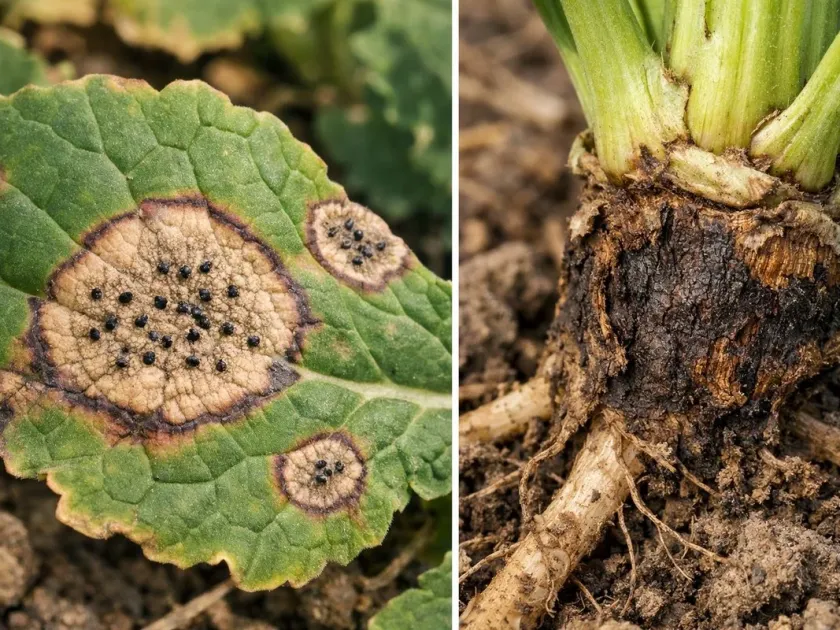
The first signs of the disease appear as small brown or gray spots on the basal part of the stem or the lower leaves of the plant. Gradually, these spots increase in size.
A characteristic diagnostic feature is the presence of numerous tiny black dots on the affected areas, which are the fungus's pycnidia. They are clearly visible to the naked eye upon inspection of the spot surface.
In cases of stem infection, characteristic darkening and cracking of tissues are observed, which disrupts nutrient transport and leads to the subsequent wilting of the upper part of the plant.
In affected seedlings, the disease often causes damping-off and death, manifested as black leg, involving the darkening of the stem base and the destruction of the bark.
At later stages of crop development, symptoms may cover the leaves, causing chlorosis, premature aging, and mass shedding of the leaf blade.
Pathogen
The causal agent of this disease is the imperfect fungus Phoma pezizoides, which belongs to the order Sphaeropsidales. This pathogen can survive for a long time in the soil and on crop residues in the form of pycnidia and mycelium.
The life cycle of the fungus includes the formation of pycnidia — dark fruiting bodies embedded in the tissues of the infected plant. Inside these, conidia are formed, which are spread by rain splashes, wind, or insects.
The fungus exhibits high plasticity, allowing it to adapt to various climatic conditions within the temperate zone. It affects both vegetative organs and seed material.
Initial infection of crops typically occurs in the spring from overwintered inoculum. The pathogen penetrates plant tissues through mechanical injuries or stomata, initiating active colonization.
The intracellular development of the fungus is accompanied by the secretion of toxins that suppress the plant's metabolic processes, leading to the gradual death of the affected tissue areas.
Conditions for development
High humidity, frequent rainfall, and moderate temperatures ranging from +18 to +25 degrees Celsius promote infection development.
Thickly sown crops that promote stagnant air and moisture retention in the lower canopy create ideal conditions for the rapid spread of the pathogen across the field.
Neglecting agronomic practices, such as failing to follow crop rotation and leaving crop residues on the soil surface, significantly increases the infectious background of the plot.
Early sowing dates or, conversely, adverse conditions for rapid crop growth weaken the plants' immunity, making them more vulnerable to the penetration of fungal spores.
Damage to plants by pests or mechanical trauma during field operations creates entry points for mycelial infection.
Why it matters
This disease poses a serious threat to agricultural productivity as it affects vital plant organs, disrupting photosynthesis and nutrient conduction processes.
Massive development of the disease leads to a significant decrease in total plant biomass and a substantial reduction in the thousand-kernel weight, directly impacting yields.
Damage also manifests as a sharp decline in seed quality, as infected seeds lose germination capacity and become carriers of infection for future plantings.
Due to stem damage, the susceptibility of crops to lodging increases, which significantly complicates harvesting operations and leads to inevitable grain losses in the field.
Indirect harm lies in the physiological stress of the crop, making plants less resilient to other environmental stressors.
Protection
The primary prevention measure is strict adherence to crop rotation, ensuring susceptible crops do not return to the same field for at least 3 to 4 years.
It is important to perform deep plowing to incorporate crop residues into the soil, which accelerates their decomposition and prevents the successful overwintering of fungal pycnidia.
Only high-quality, treated seed material that has undergone phytosanitary inspection in specialized laboratories should be used for sowing.
During the growing season, if the first signs of the disease appear, the application of systemic fungicides authorized for the current season is recommended.
Optimization of mineral nutrition, particularly the application of phosphorus and potassium fertilizers, contributes to increasing the natural resistance of plants to fungal pathogen infection.
Discussion
No discussions yet — be the first.