
Phoma leaf spot
Phoma petrakii
Description
Symptoms
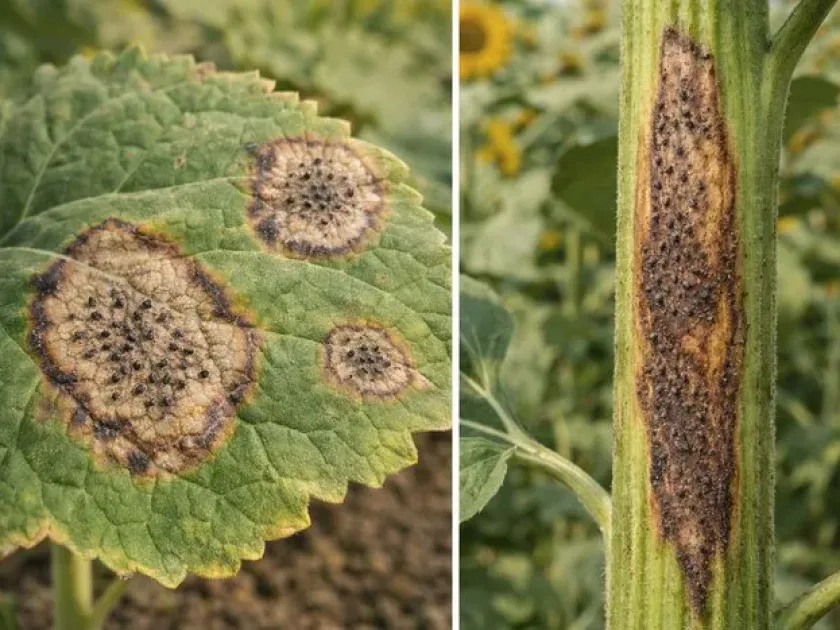
The initial symptoms are characterized by the appearance of small, irregular gray or brown spots on the leaves and petioles of affected plants.
As the infection progresses, these spots expand, often developing a darker margin, and small black dots (pycnidia) appear in the center.
Infected stems may lose their green color, become brittle, and show signs of splitting, which disrupts the transport of water and nutrients.
Severe infestations lead to premature yellowing, withering, and necrosis of leaves, which significantly damages the plant's overall health and appearance.
- Formation of characteristic black pycnidia on the spots.
- Cracking and structural damage to the stems.
- Premature leaf drop and generalized wilting.
Pathogen
The causal agent of this disease is the microscopic fungus Phoma petrakii, which is classified as a deuteromycete. This pathogen is highly adaptable and maintains viability under various environmental conditions.
It primarily affects ornamental and wild plants belonging to the Asteraceae family, causing necrotic damage to leaves and stems.
The life cycle of the pathogen is closely associated with plant debris, where the fungus overwinters as mycelium or in the form of pycnidia.
During the growing season, the disease spreads through pycnospores, which are easily transported by wind, rain splashes, or insects.
Phoma petrakii acts as a facultative parasite, successfully colonizing weakened plant tissues through wounds or natural openings.
Conditions for development
The development of Phoma leaf spot is favored by high humidity and prolonged rainfall, which provide essential moisture for spore germination.
The optimal temperature range for the active growth of Phoma petrakii mycelium is between +18 and +25 degrees Celsius.
Dense planting configurations that restrict airflow and increase local humidity contribute significantly to the rapid spread of the pathogen.
Plants weakened by poor soil nutrient status or pest damage are considerably more susceptible to colonization by the fungus.
Poor sanitation practices, such as failing to remove infected plant parts, ensure the survival of the inoculum for subsequent seasons.
Why it matters
Phoma petrakii causes significant damage to ornamental gardens by reducing the aesthetic quality and commercial value of plants.
Destruction of stem tissue compromises structural integrity, leading to plant collapse and vulnerability to environmental stressors.
A reduced photosynthetic leaf area impacts the plant's ability to store resources, resulting in stunted growth and decreased flowering.
In nursery environments, the disease can lead to substantial losses of young stock, requiring costly interventions to control the outbreak.
Overall, the persistent presence of the disease necessitates ongoing chemical or cultural control, adding to the costs of plant maintenance.
Protection
Sanitation is the most critical control measure, requiring the diligent removal and destruction of all infected plant materials.
Ensuring proper spacing and adequate aeration within plantings is essential to minimize humidity levels and prevent fungal growth.
Application of fungicides, particularly those containing copper or systemic agents, is effective when applied early in the disease cycle.
Maintaining optimal plant health through balanced fertilization and proper irrigation helps build resistance to infection.
Regular monitoring of plantings for early signs of spots allows for localized management and prevents large-scale epidemics.
Discussion
No discussions yet — be the first.