
Phoma leaf spot
Phoma macrostoma
Description
Symptoms
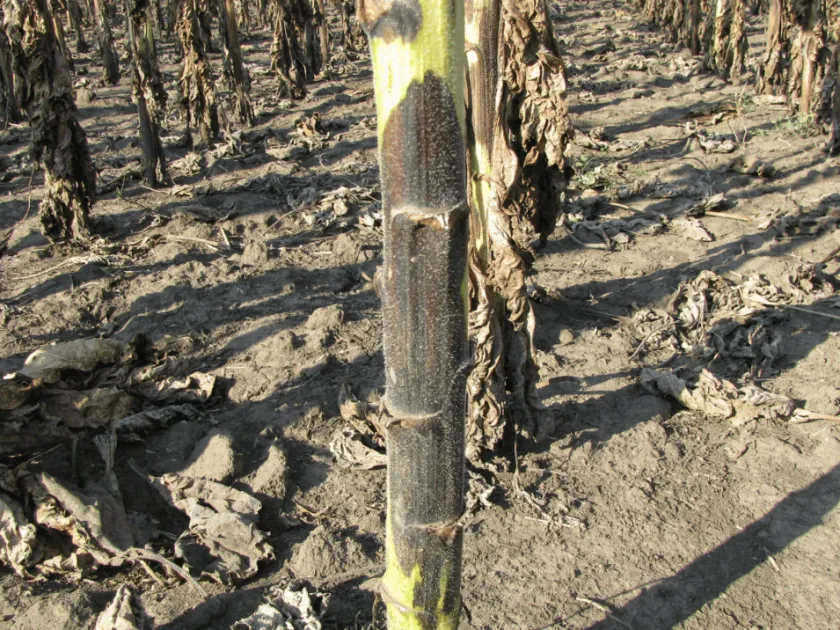
Early symptoms typically manifest as lesions on leaves and stems that appear as gray or brownish spots. These lesions are often surrounded by a darker margin.
A hallmark sign is the development of tiny, black, dot-like pycnidia within the necrotic lesions. These are most visible in the center of the dead tissue areas.
Stem infections lead to cracking and splitting of the tissue, which impairs nutrient transport and reduces the structural integrity of the plant. This makes the plant prone to lodging.
Root system infection presents as darkening and decay of the tissue. This severely limits the plant's ability to uptake water and essential minerals from the soil.
As the disease progresses, infected plants exhibit yellowing and wilting. In severe cases, the entire plant may collapse, leading to significant yield loss.
Pathogen
The causative agent of the disease is the fungus Phoma macrostoma, which belongs to the class of Deuteromycetes. It is a polyphagous pathogen capable of infecting numerous plant species.
The fungus survives in the soil and on crop debris in the form of pycnidia and mycelium. It possesses high biological resilience, allowing it to withstand adverse environmental conditions for long periods.
The life cycle involves the formation of pycnidia, which release conidia. These spores are the primary vehicles for infection spread throughout the growing season.
The pathogen is disseminated by rain splashes, wind, insects, and through contaminated tools or movement of soil. It can also be transmitted via infected seeds.
Beyond physical tissue degradation, the pathogen secretes metabolites that exert phytotoxic effects, suppressing the physiological functions of the host plant.
Conditions for development
The fungus thrives in conditions characterized by high humidity and moisture in both the air and soil. The optimal temperature range for development is +18...+25°C.
Dense crop stands create a stagnant microclimate with prolonged leaf wetness, which significantly accelerates disease spread. Poor ventilation is a major contributing factor.
Plant injuries caused by pests, hail, or mechanical handling serve as entry points for the pathogen. Healthy tissue provides natural resistance against initial colonization.
Continuous cropping of susceptible plants on the same site leads to a significant build-up of fungal inoculum in the soil, increasing the infection pressure for subsequent years.
Nutritional imbalances, especially high nitrogen levels, promote succulent tissue growth that is more susceptible to hyphal penetration and fungal proliferation.
Why it matters
Phoma leaf spot causes significant economic losses in agriculture by reducing both crop quantity and quality. Severe infestations can result in total crop failure.
Infected produce often suffers from reduced market value and poor storage longevity. The fungus can continue to develop in storage, leading to decay and spoilage.
Stem damage increases the risk of lodging, which complicates mechanized harvesting and results in substantial grain loss during the cutting process.
Seeds harvested from heavily infected plants often show poor germination rates and low vigor, necessitating expensive replacement of the seed stock.
The disease disrupts the photosynthetic process, leading to stunted plant growth and underdeveloped fruit or grain, which severely undermines the overall agricultural output.
Protection
Implementing a diverse crop rotation is a primary defense strategy. Avoiding susceptible crops on the same field for several years breaks the infection cycle.
The use of certified, fungicide-treated seeds is essential to protect seedlings during the critical early stages of growth, providing a robust defense against initial infection.
Thorough incorporation of crop residues into the soil during tillage promotes decomposition and reduces the availability of inoculum. Proper sanitation is key to disease management.
Fungicide applications during the growing season are effective if timed correctly based on disease monitoring. Preventive measures are always more effective than reactive treatments.
Integrated pest management helps maintain plant health, as controlling insect damage limits the entry points for the pathogen. A holistic approach is best for long-term success.
Discussion
No discussions yet — be the first.