
Phoma leaf spot
Phoma longirostrata
Description
Symptoms
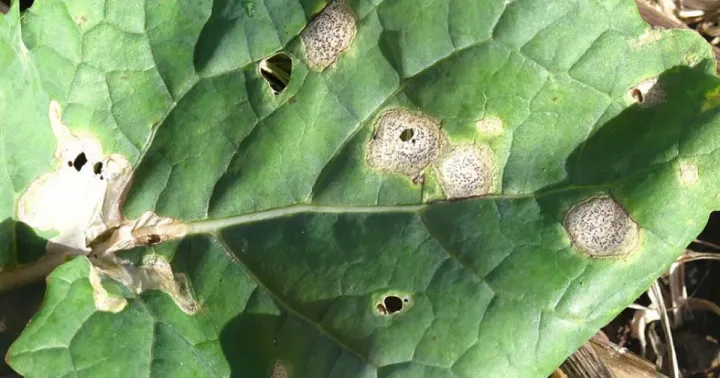
The main signs of Phoma leaf spot appear as dark, often grayish spots on the stems, leaves, and roots of affected plants. The spots may have a characteristic border, and small black dots—the fungus's pycnidia—form in their centers over time.
In many crops, necrosis of the root zone is observed, leading to wilting and subsequent death of the aerial part of the plant. Leaves turn yellow, curl, and drop prematurely when the infection is severe.
When stems are damaged, bark cracking is often observed, which opens the way for secondary infections. The stem form of the disease is particularly dangerous during the active maturation of fruits or seeds.
On roots, the pathogen causes dry rot, which leads to the destruction of conducting tissues. This impairs plant nutrition, causing chlorosis and eventually a complete halt in growth.
The appearance of the affected area is often characterized by patches, which is an important diagnostic feature for an agronomist when inspecting fields.
Pathogen
The disease is caused by the fungus Phoma longirostrata, which belongs to the imperfect fungi of the class Coelomycetes. This pathogen affects plant tissues by entering through mechanical wounds or natural openings such as stomata.
The pathogen's life cycle is closely linked to plant debris, where the fungus survives as mycelium or pycnidia during the winter season. Primary infection occurs when spores (pycnidiospores) are spread by rain splashes or wind.
The fungus is highly aggressive in humid environments, actively developing on weakened plants or those damaged by pests. The biology of the pathogen allows it to parasitize both field and vegetable crops.
Infection spreads throughout the growing season, with the fungus capable of producing new generations of spores under favorable weather conditions. The infection can also be transmitted through infected seeds, making disease management a complex task.
The pathogenic specialization of Phoma longirostrata allows it to quickly adapt to environmental conditions, which complicates the prediction of disease outbreaks in large agricultural areas.
Conditions for development
High air and soil humidity, especially at moderate temperatures ranging from 18 to 25 degrees Celsius, promote the development of Phoma. Prolonged rains during critical growth stages significantly increase the risk of an epiphytotic.
Dense, poorly ventilated stands create a favorable microclimate for fungal reproduction. Stagnant air in the lower canopy helps moisture remain on the leaf surface for a long time.
Mechanical injuries caused by pests or during agronomic operations act as entry points for fungal spores. Damaged tissues lose resistance to infection penetration.
A lack of mineral nutrition, particularly a potassium and phosphorus imbalance, reduces the natural immunity of plants. This makes them more vulnerable to Phoma longirostrata even with a moderate infection background.
Increased soil acidity can also indirectly contribute to a more severe course of the disease by inhibiting root system development and making the plant less viable.
Why it matters
Phoma causes significant economic losses, reducing total crop yields by 15–30%, and up to 50% in years with favorable conditions for the disease. The pathogen causes premature drying of reproductive organs.
Crop quality declines significantly: seeds lose viability, and vegetable produce becomes unsuitable for long-term storage. Affected fruits often rot during transportation.
Severe stem infection leads to lodging of crops, which makes mechanical harvesting extremely difficult. This results in additional losses of grain or produce during the harvesting process.
Systemic infection of the plant negatively affects the accumulation of nutrients in fruits, which reduces their nutritional value. This is critical for crops grown for human consumption.
The presence of the disease in crops limits the export potential of the produce due to phytosanitary restrictions existing in many regions of the world.
Protection
The protection strategy includes strict crop rotation, which excludes returning susceptible crops to the same field for at least 3–4 years. It is important to avoid proximity to related plant species prone to Phoma.
Using healthy, fungicide-treated seeds is the foundation of prevention. Seed treatment helps eliminate the infection present on the surface or inside the seeds.
Deep plowing of plant residues after harvest reduces the infection reserve in the soil. Thorough weed control is recommended, as weeds can act as reservoirs for the fungus during the off-season.
During the growing season, systemic fungicides are applied upon the first signs of the disease. The choice of the product depends on the specific crop and the stage of pathogen development.
- Adherence to optimal sowing dates.
- Optimization of plant stand density.
- Application of balanced doses of fertilizers.
- Use of Phoma-resistant varieties and hybrids.
- Timely control of vector pests.
Discussion
No discussions yet — be the first.