
Pholiota squarroso-adiposa
Pholiota squarroso-adiposa
Description
Symptoms
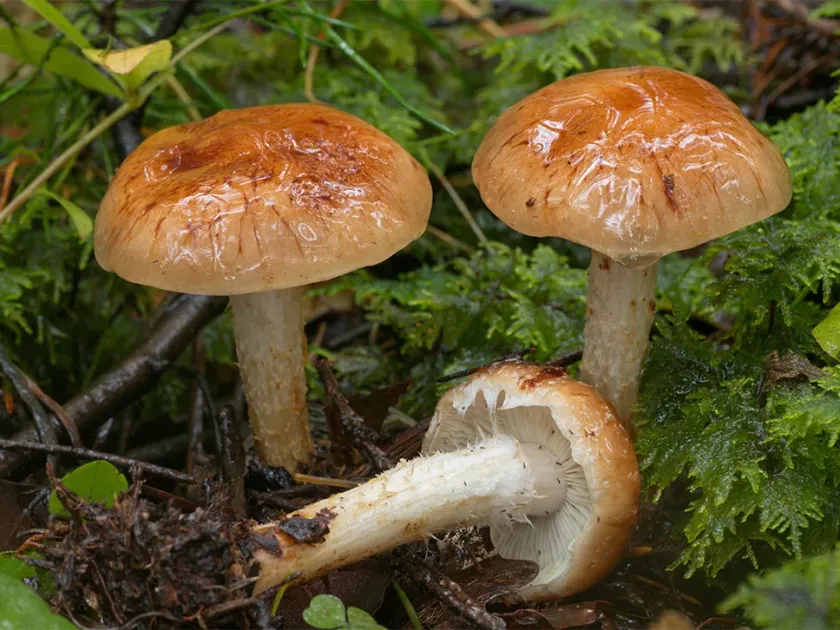
The most visible sign of infection is the emergence of yellowish-brown mushroom clusters on the tree trunk, particularly in crevices or on damaged tissue.
Early symptoms include bark discoloration, cracking, and excessive sap flow (gummosis), which indicates that the internal vascular system is being compromised.
Internally, the wood undergoes a transformation, becoming soft and spongy with a distinct brownish color and a characteristic fungal odor indicative of advanced decay.
The canopy of an infected tree often shows signs of stress, such as thinning foliage, premature yellowing, and stunted annual growth compared to healthy neighboring trees.
As the rot progresses, the tree loses its mechanical resistance, making it prone to sudden structural failure during high winds or heavy storms.
Pathogen
The disease is caused by Pholiota squarroso-adiposa, a wood-decaying basidiomycete fungus that acts as both a saprotroph and a facultative parasite on trees.
The fungal mycelium invades the interior of the wood, where it releases enzymes that break down cellulose and lignin, progressively weakening the internal structure of the trunk and branches.
The fungus produces distinctive fruiting bodies characterized by scaly caps with a slimy surface, which typically cluster around wounds or dead wood on the host tree.
Dissemination occurs via spores, which are carried by wind and rain, allowing the pathogen to colonize new susceptible hosts through cracks in the bark or unhealed pruning cuts.
While often found on dead timber, the species poses a significant threat to long-term tree stability, especially in mature orchard settings where structural integrity is vital.
Conditions for development
High humidity and moderate temperatures provide optimal conditions for spore germination and rapid mycelial growth throughout the growing season.
Trees that have suffered from mechanical injury, sunburn, frost cracks, or infestation by wood-boring insects are significantly more susceptible to colonization.
Densely planted orchards with poor airflow contribute to a microclimate that retains moisture, which is highly favorable for the proliferation of this fungus.
Poor orchard management practices, such as failing to protect large pruning cuts, allow easy access for fungal spores to penetrate the deeper wood tissues.
Environmental stress, including prolonged drought or winter damage, weakens the host's natural defenses, allowing the fungus to establish itself more effectively.
Why it matters
The primary harm is the gradual and irreversible degradation of the woody tissue, which limits the tree's lifespan and eventually leads to its complete death.
Nutrient transport is disrupted as the fungus colonizes the sapwood, resulting in poor harvest quality, reduced fruit yields, and overall decline in tree health.
Infected trees act as continuous reservoirs for fungal spores, facilitating the spread of the disease to adjacent trees throughout the orchard.
Even if the fungus is managed, the structural damage to the heartwood remains, which compromises the tree's ability to withstand environmental stress and physical weight.
Managing this disease involves significant economic costs, including the labor-intensive removal of infected trees and the potential loss of long-term production capacity.
Protection
The most effective strategy involves the prompt removal and destruction of all visible fruiting bodies to reduce the localized spore load in the orchard.
All pruning must be performed with disinfected tools, and large wounds should be immediately sealed with protective wound dressings to prevent pathogen entry.
Maintaining optimal tree health through balanced fertilization and adequate irrigation is crucial for bolstering the tree's natural resistance against fungal infections.
Regular monitoring of tree trunks and the application of lime-based bark protectors can help prevent the development of bark cracks that serve as entry points.
- Regular sanitary thinning to improve crown ventilation.
- Immediate removal of deadwood and infected limbs.
- Complete stump removal for heavily decayed trees to prevent reinfection.
Discussion
No discussions yet — be the first.