
Phlebia
Phlebia
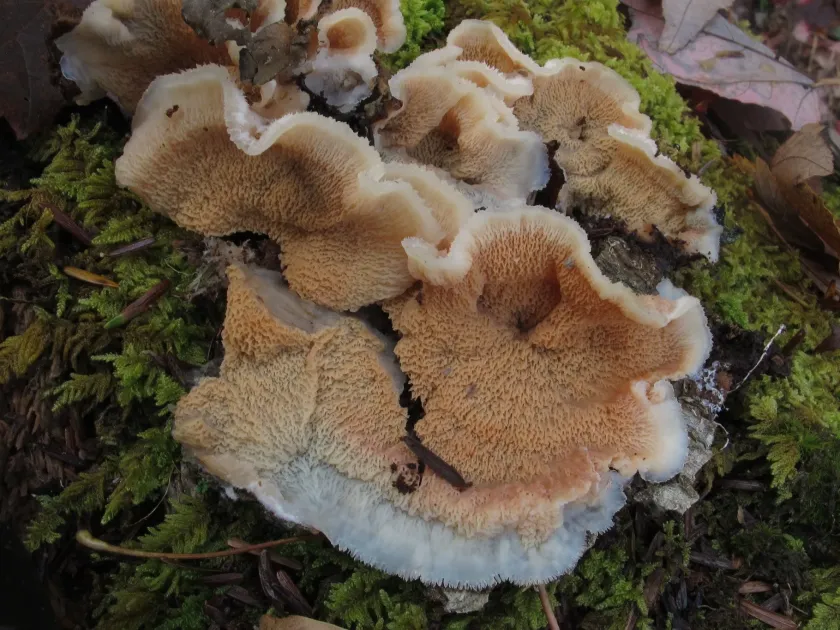
Description
Pathogen
The disease is caused by fungi of the Phlebia genus, belonging to the Phlebiaceae family. These are wood-decay fungi primarily known for causing white rot, where both lignin and cellulose are decomposed.
While often acting as saprotrophs on dead wood, Phlebia species can switch to a parasitic lifestyle when they encounter weakened or stressed living trees, entering through wounds and colonizing the xylem.
The biology of this pathogen involves the production of resilient basidiospores, which are spread by wind, rain, or insect vectors. Once they land on fresh woody tissue, the spores germinate and initiate the development of mycelium.
The fungal growth appears as distinctive, often crust-like or wrinkled fructifications (fruiting bodies) on the surface of the bark or exposed wood, featuring a waxy or leathery texture.
As a white rot fungus, it progressively degrades the structural integrity of the wood, changing its chemical composition and making it increasingly porous and fragile over time.
##signs##The most visible sign of infection is the emergence of Phlebia fruit bodies. These are often characterized by their bright colors, such as orange, yellow, or pinkish hues, appearing as folded, radially wrinkled structures.
Internal wood decay manifests as white rot, where the infected sections lose their strength and turn into a light, fibrous, or stringy mass, contrasting sharply with healthy, dense heartwood.
Affected trees often exhibit external symptoms such as crown dieback, sparse or yellowing foliage, and stunted annual growth, reflecting the compromised state of the tree's vascular and structural systems.
Dark, discolored patches may appear on the bark near the point of infection, sometimes accompanied by the oozing of sap if the tree is still actively fighting to seal off the colonized area.
In advanced stages, the structural weakening of the trunk or major branches becomes evident, increasing the risk of mechanical failure during strong winds or under the weight of snow.
Conditions for development
High humidity and moisture are the primary drivers of Phlebia growth. The fungus thrives in damp, shaded environments where the bark remains wet for extended periods, facilitating spore germination.
Open wounds are essential for the entry of the pathogen. Pruning cuts that are not sealed, frost cracks, sunscald, or injuries from lawn equipment provide easy access for spores to reach the vulnerable woody tissue.
Trees that are already under stress—due to drought, nutrient deficiency, or poor soil drainage—are far more susceptible to infection because their natural defense mechanisms are weakened.
Temperature plays a crucial role, with optimal development occurring between 15°C and 25°C. However, the fungus is highly adaptable and can survive in various climate conditions by staying dormant during cold or dry spells.
Lack of proper pruning and canopy management leads to stagnant air circulation within the stand, which promotes the accumulation of spores and increases the frequency of infection across the population.
Why it matters
The primary harm is the destruction of the wood's structural strength, which turns infected trees into significant safety hazards, especially in urban environments or near structures.
In forestry, Phlebia leads to major economic losses by degrading timber quality. Wood affected by white rot loses its commercial value and is unsuitable for most construction or woodworking purposes.
The disease tends to be progressive and chronic. Once established, the fungus can colonize the tree for years, silently destroying the interior while the exterior remains relatively intact until collapse occurs.
Infestation severely drains the tree's energy reserves, as the host attempts to compartmentalize the rot, leaving it vulnerable to secondary infections by other pests or diseases.
The cumulative impact involves the cost of hazardous tree removal, potential damage to surrounding infrastructure if the tree falls, and the loss of long-term productivity of the stand.
Protection
Sanitation is the most effective management strategy. Regularly prune and remove dead or diseased wood and destroy any visible fruit bodies to reduce the local spore count.
Always seal large pruning cuts or accidental wounds with appropriate wound dressings to create a physical barrier against opportunistic pathogens like Phlebia.
Maintaining tree vitality through consistent watering, proper fertilization, and mulching improves the tree's overall immune system and its ability to resist and compartmentalize fungal growth.
Periodic inspections are vital to detect early signs of decay. Early detection allows for targeted treatments or the removal of infected branches before the fungus reaches the main trunk.
If the infection has compromised a large portion of the trunk, removal of the entire tree, including the stump, is strongly recommended to eliminate the reservoir of infection from the landscape.
Discussion
No discussions yet — be the first.