
Phanerochaete chrysosporium
Phanerochaete chryrosporium
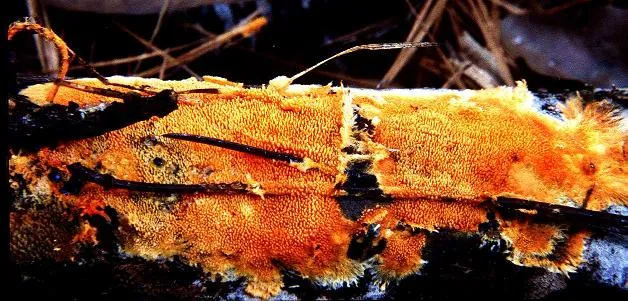
Description
Symptoms
The most visible symptom of an infection by Phanerochaete chrysosporium is the dramatic lightening of the wood, which takes on a bleached or white appearance. This is caused by the selective removal of lignin, leaving the lighter cellulose fibers behind.
Affected wood loses its physical strength and becomes soft, stringy, and spongy to the touch. Unlike other types of rot, the wood does not crack into cubes; instead, it loses its structural coherence and becomes fibrous.
White mycelial mats or films can often be observed on the bark or within cracks in the wood. During reproductive phases, the fungus may produce yellow or ochre-colored spores, which are easily dispersed by wind or water.
In cross-sections of infected trunks, one might observe distinct dark zone lines. These are barrier zones where the fungus has interacted with other microbes or where it has successfully colonized a specific sector of the woody tissue.
As the decay progresses, the internal structure of the tree becomes hollowed out. This makes the wood extremely susceptible to mechanical failure, often leading to limbs breaking or the entire tree collapsing during storms.
Pathogen
Phanerochaete chrysosporium is a basidiomycete fungus renowned for its exceptional ability to degrade lignin, the complex organic polymer that gives wood its structural integrity. It is primarily identified as a saprotrophic organism that acts as a potent agent of white rot.
The fungus is distinguished by its unique enzymatic arsenal, specifically the secretion of lignin-modifying peroxidases. These enzymes allow the fungus to break down the highly recalcitrant structure of wood, gaining access to the carbohydrates trapped within the lignin matrix.
While commonly found in forest ecosystems decomposing dead plant matter, it can also act as an opportunistic pathogen for stressed or wounded trees. Its biology is characterized by rapid growth rates under high-temperature conditions.
Beyond its pathological role, this fungus is a cornerstone of modern white-biotechnology. Its metabolic processes are extensively studied for applications in bioremediation, pulp bleaching, and the transformation of lignocellulosic waste into sustainable fuels.
The fungus thrives in environments where organic matter accumulates. In the absence of proper forest management or orchard sanitation, it can quickly establish itself on debris and spread to living tissues through wounds or root contact.
Conditions for development
Phanerochaete chrysosporium is thermophilic, meaning it prefers elevated temperatures. It shows optimal metabolic activity in the range of +35 to +40 degrees Celsius, making it especially dangerous during hot summer seasons.
High moisture content in the substrate is essential for its development. The fungus requires consistent levels of humidity to maintain the osmotic pressure necessary for the secretion of its specialized degrading enzymes.
Oxygen availability is another critical requirement for the fungal growth. The oxidation of lignin is an oxygen-dependent process, which is why the rot is most severe in areas exposed to air or in the sapwood layers of the tree.
The dispersal of the fungus relies heavily on airborne spores. These spores settle on fresh wounds, frost cracks, or pruning cuts, allowing the mycelium to bypass the protective outer bark and reach the nutrient-rich wood.
Poor orchard or forestry management provides ideal conditions for the fungus. Leaving dead wood on the ground or failing to sanitize pruning sites creates a reservoir of inoculum that increases the risk of infection for healthy trees.
Why it matters
The primary harm caused by this fungus is the rapid degradation of timber quality. Once infected, wood loses its commercial value as it becomes brittle and unable to support structural loads, leading to significant economic losses.
In standing trees, the rot compromises the tree's health and vitality. By consuming the structural integrity of the wood, the fungus renders the tree a hazard to surrounding structures, power lines, and human safety.
The fungus acts as a resource competitor, siphoning off sugars and nutrients that the tree would otherwise use for growth or fruit production. This results in reduced yields, stunted growth, and eventually, the death of the tree.
In nurseries, the fungus poses a grave threat to young stock. Contact between healthy saplings and infected soil or debris can lead to quick colonization and the death of young plants before they reach maturity.
Because the mycelium penetrates deep into the wood, once a tree is heavily infected, it is rarely possible to "cure" it. Consequently, the infection often forces the removal of valuable trees to prevent further spread.
Protection
Strict sanitation is the most effective defense against Phanerochaete chrysosporium. Removing all dead wood, decaying stumps, and pruning debris from the site is crucial to reducing the spore count in the environment.
Pruning must be performed with disinfected tools to prevent the transmission of fungal spores from diseased wood to healthy surfaces. Alcohol or bleach solutions are recommended for tool sterilization after every use.
All large pruning cuts and accidental wounds should be treated with protective sealants or fungicides immediately. This seals the wood surface, preventing the spores from germinating and entering the trunk.
Maintaining tree vigor through proper fertilization, adequate irrigation, and pest management helps the tree maintain its natural defense barriers, making it less vulnerable to opportunistic infections.
- Remove and destroy all decayed plant material.
- Sterilize pruning equipment between trees.
- Protect wounds with professional-grade sealants.
- Monitor trees for early signs of tissue softening.
- Ensure proper spacing to improve air circulation.
Discussion
No discussions yet — be the first.