
Jatropha rust
Phakopsora jatrophicola
Description
Symptoms
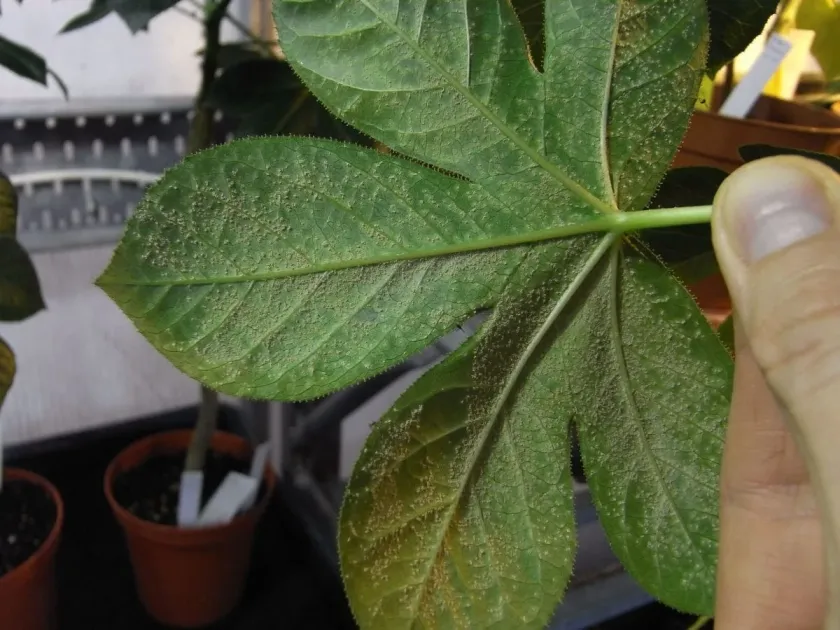
The primary symptom of Jatropha rust is the appearance of small, raised pustules on the underside of leaves, which contain the fungal spores.
These pustules typically exhibit a yellowish-brown or orange coloration, characteristic of the Phakopsora genus and other rust fungi.
As the infection progresses, these pustules can coalesce, leading to extensive yellowing and necrotic patches across the leaf surface.
The upper side of the leaves often displays chlorotic spots or small necrotic lesions, which serve as an early indicator of the fungal colonization.
Severe infections lead to significant defoliation, where leaves wilt and drop prematurely, causing the plant to lose its foliage density.
Pathogen
The disease is caused by the fungus Phakopsora jatrophicola, which is an obligate parasite that specifically infects Jatropha species.
The pathogen utilizes its mycelium to penetrate plant tissues and absorb essential nutrients, directly compromising the host's physiological functions.
The fungal life cycle relies on the production of urediniospores, which are easily disseminated by wind, rain splashes, and human activity.
Under favorable conditions, the pathogen reproduces rapidly, allowing it to move quickly through plantations and infect nearby healthy plants.
The fungus can persist in the environment on fallen leaves and woody debris, which acts as a primary source of inoculum for the next season.
Conditions for development
High relative humidity and frequent rainfall or heavy dew are the most significant factors promoting the rapid spread of Jatropha rust.
The fungus thrives in moderate temperature ranges, typically between +18°C and +25°C, which facilitates optimal spore germination and colonization.
Poor ventilation within dense plantations creates stagnant air pockets, providing the ideal microclimate for the development of the fungal infection.
Overhead irrigation systems can facilitate the spread of spores by splashing contaminated water onto healthy foliage, accelerating the epidemic.
Weakened plants, often resulting from low sunlight or nutrient deficiency, are significantly more susceptible to successful colonization by the fungus.
Why it matters
The most severe impact of this disease is the reduction in photosynthetic capacity, which directly stunts the growth and development of the plant.
For crops cultivated for oil production, Jatropha rust significantly lowers the total seed yield and reduces the quality of the harvested produce.
Prolonged defoliation leads to a depletion of stored reserves, weakening the plant and making it more prone to secondary pests and environmental stressors.
In ornamental settings, the infection drastically reduces the aesthetic quality of the Jatropha plants, rendering them unsuitable for display.
If left unmanaged, a rust outbreak can lead to the total collapse of plantations and substantial financial losses for commercial producers.
Protection
Cultural control measures, such as proper spacing and pruning, are essential to ensure adequate airflow and reduce local humidity within the canopy.
Rigorous sanitation, including the prompt removal and destruction of infected leaf litter, is necessary to minimize the source of primary inoculum.
Chemical control involving systemic or contact fungicides should be applied at the first sign of pustule development to curb the spread.
Integrated pest management strategies, such as rotating different chemical classes, help prevent the development of resistant strains of the fungus.
Maintaining strong plant health through balanced fertilization and appropriate site selection helps enhance the host's natural resistance to the disease.
Discussion
No discussions yet — be the first.