
Phaeosphaeria leaf spot
Phaeosphaeria nigrans
Description
Symptoms
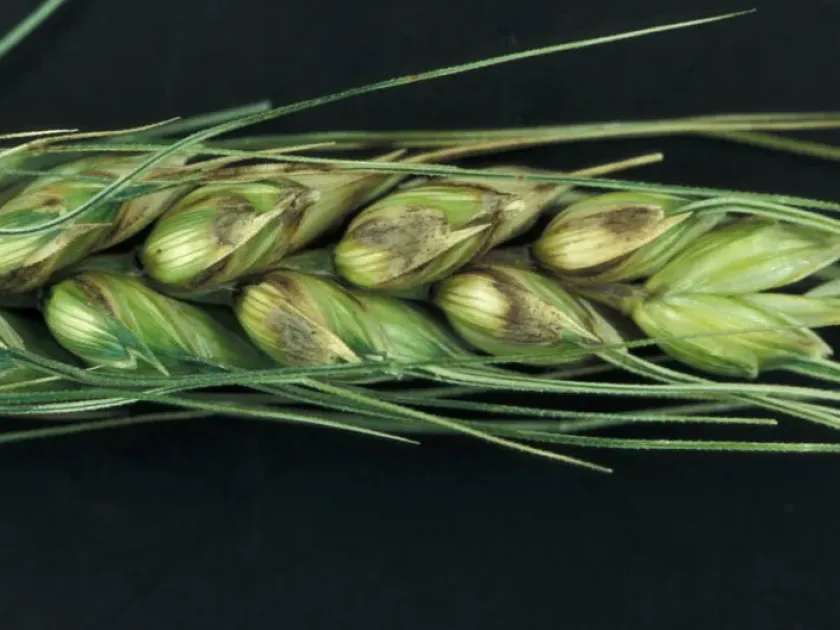
Symptoms typically appear as small, chlorotic spots on the leaf blades and sheaths. As the disease progresses, these lesions expand and may transition into light brown or greyish necrotic patches.
The most diagnostic feature is the emergence of numerous tiny, black fruiting bodies (pseudothecia) scattered across the lesions. These give the affected plant tissue a speckled, "black dot" appearance.
Premature leaf senescence is a common consequence of significant infection. As the fungus consumes the energy of the plant cells, leaves turn yellow and wither, starting from the lower canopy layers.
While often appearing on dying tissues, the fungus can also infect stems, causing epidermal rupture and potentially weakening the structural integrity of the straw during the final grain-filling stages.
- Chlorotic and necrotic lesions on foliage.
- Visible black dots (pseudothecia) on infected tissues.
- Premature yellowing and desiccation of leaves.
- Weakening of stem tissues in severe cases.
- Presence of fungus mainly on mature or stressed plants.
Pathogen
The causal agent of this disease is the ascomycete fungus Phaeosphaeria nigrans (formerly known as Leptosphaeria nigrans). This pathogen acts primarily as a fungus colonizing senescent or damaged plant tissues.
The fungus develops its mycelium within the host tissue, eventually producing ascocarps known as pseudothecia. These structures are dark, spherical, and typically embedded within the epidermal layers of the infected leaves or stems.
Primary infection occurs when ascospores are released from pseudothecia overwintering on crop debris. Wind and rain splash effectively disseminate these spores onto healthy plants during the growing season.
The life cycle of the pathogen is highly dependent on humidity levels. It thrives in temperate climates where moisture allows for the continuous production and dispersal of spores throughout the crop canopy.
Phaeosphaeria nigrans is a widespread pathogen across various grain-growing regions, often appearing late in the season on mature plants, although early infections can occur under specific environmental conditions.
Conditions for development
The development of Phaeosphaeria leaf spot is favored by high humidity, prolonged periods of leaf wetness, and moderate temperatures. Dew, fog, and frequent rainfall are critical for successful infection.
Infectious pressure is largely determined by the amount of crop residue left on the soil surface. Tillage practices that bury debris significantly reduce the primary inoculum load for subsequent crops.
Densely planted fields inhibit proper air circulation, which traps moisture within the lower levels of the crop. This creates an ideal microclimate for the fungus to multiply and spread to higher leaves.
Plant stress, often caused by nutrient deficiencies or previous infestations by insect pests (such as aphids or cereal flies), makes the crops more vulnerable to colonization by Phaeosphaeria nigrans.
The pathogen is particularly active in fields where crop rotation is neglected, leading to a build-up of the fungal population over several consecutive seasons of hosting susceptible cereal crops.
Why it matters
The primary economic damage is caused by the reduction of photosynthetic leaf area. When the leaves die prematurely, the plant is unable to produce sufficient photoassimilates to fill the grains properly.
Infection leads to a decline in thousand-kernel weight, which results in lower grain yields. This impact can be particularly severe in years with prolonged wet weather during the grain-filling stage.
Straw quality is also significantly diminished by the presence of the fungus, rendering it less suitable for use as livestock feed or bedding due to the potential presence of fungal toxins or weakened fibers.
The disease often occurs as part of a complex of leaf-spotting pathogens, making it difficult to differentiate from other fungi and increasing the overall disease pressure within the field.
Furthermore, structural damage to the stems caused by fungal degradation can contribute to lodging, which complicates harvesting operations and may lead to additional grain losses at the time of harvest.
Protection
Crop rotation is the cornerstone of managing Phaeosphaeria leaf spot. Avoiding the continuous planting of susceptible cereals disrupts the life cycle of the fungus by limiting its available host base.
Sanitation practices, such as deep plowing to bury crop residues, are essential to reduce the inoculum level. By removing the primary overwintering source, the initial spread of the fungus is minimized.
Fungicide application during the vegetative phase can be effective if the disease threshold is reached. Systemic fungicides, particularly those belonging to the triazole or strobilurin classes, are commonly used.
Choosing resistant or tolerant crop varieties is a highly recommended strategy. Genetic resistance reduces the need for chemical intervention and provides a stable defense against pathogen colonization.
Balanced nutrient management, especially ensuring adequate potassium levels, helps strengthen plant cell walls and immunity. Healthy, well-nourished plants are significantly more resistant to infection.
Discussion
No discussions yet — be the first.