
Phaeosphaeria leaf spot
Phaeosphaeria avenaria
Description
Symptoms
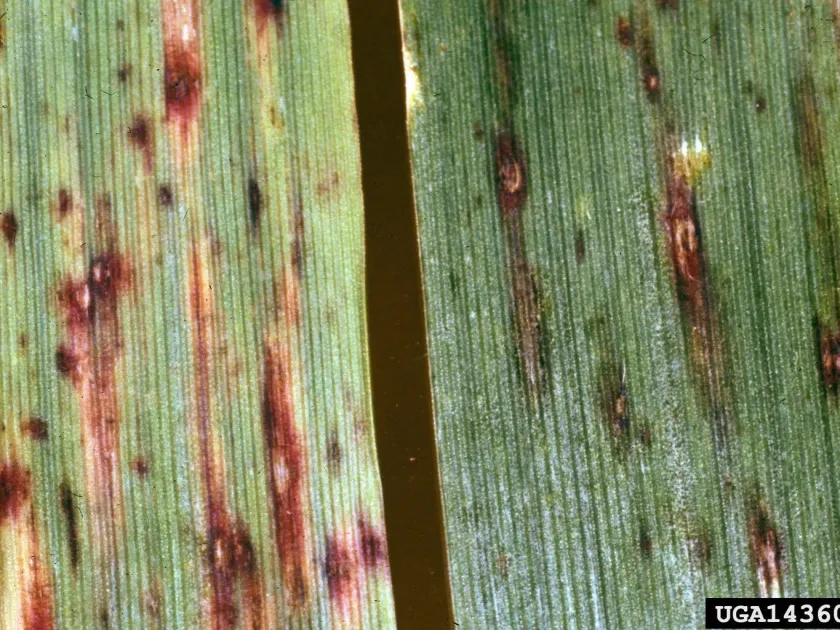
Initial symptoms appear as small, light brown spots on lower leaves, which gradually evolve into elongated, dark brown, or grayish lesions.
A distinct necrotic center with a darker border often characterizes the mature spots, which may merge to cover large areas of the leaf blade.
The presence of tiny black dots, known as pycnidia, within the necrotic tissue is a definitive sign of the disease, visible upon close inspection.
As the infection progresses, severe leaf blight occurs, causing the foliage to wither and die prematurely, significantly reducing the plant's photosynthetic capacity.
In humid conditions, the lesions can extend to the leaf sheaths and culms, resulting in weakened stems and potential lodging of the crop.
Pathogen
The fungus Phaeosphaeria avenaria (anamorph Stagonospora avenae) is the primary causal agent of Phaeosphaeria leaf spot, commonly known as Stagonospora leaf blotch of oats.
This pathogen specifically targets oat crops (Avena sativa), though it can occasionally survive on other wild grasses within the same family.
The fungus overwinters in crop debris as pycnidia or perithecia. These structures serve as the reservoir for primary inoculum in the following spring season.
Dissemination occurs primarily through wind-blown ascospores and rain-splashed conidia, which spread the infection throughout the oat canopy during the growing period.
The biological cycle of the fungus is highly dependent on climate conditions, with peak pathogenic activity occurring during the elongation and heading stages of the host plant.
Conditions for development
High relative humidity and frequent rainfall are the most critical environmental drivers that promote spore germination and fungal colonization.
The disease thrives under moderate temperatures ranging from 18 to 25 degrees Celsius, matching the active growth phases of the oat plant.
Dense stands and high plant populations, which limit airflow and maintain leaf moisture for longer durations, significantly increase the risk of infection.
Continuous cropping of oats without rotation allows for a massive buildup of the fungal inoculum in the field, exacerbating the disease severity each year.
Poorly drained fields with high soil moisture content create a localized microclimate that is conducive to the rapid spread of the Phaeosphaeria pathogen.
Why it matters
The primary impact of the disease is the reduction of the grain filling period due to early leaf senescence, leading to lower yields and shriveled grains.
Infection of the stems compromises structural integrity, leading to severe lodging, which hinders harvest operations and increases field losses.
Significant reductions in the thousand-kernel weight and overall test weight occur when the disease reaches epidemic proportions during the grain development phase.
Estimated yield losses can range from 15% to 30% depending on the susceptibility of the chosen oat variety and the timing of the infection onset.
Beyond yield loss, the quality of straw is diminished, making it less suitable for livestock feed and potentially contaminated with fungal metabolites.
Protection
Crop rotation remains the most fundamental cultural practice, with a gap of at least three to four years between oat plantings to disrupt the pathogen cycle.
Effective management includes deep plowing to bury crop residues, which facilitates the rapid decomposition of infected debris and reduces initial inoculum levels.
The selection and use of resistant or tolerant oat varieties represent the most cost-effective long-term strategy for managing this fungal disease.
Fungicide applications during the flag leaf emergence or heading stages may be necessary in seasons characterized by high rainfall and high disease pressure.
Optimizing nutrient management, particularly avoiding nitrogen over-application, helps maintain balanced growth and reduces the susceptibility of plants to infection.
Discussion
No discussions yet — be the first.