
Phaeosphaeria leaf spot
Phaeosphaeria
Description
Symptoms
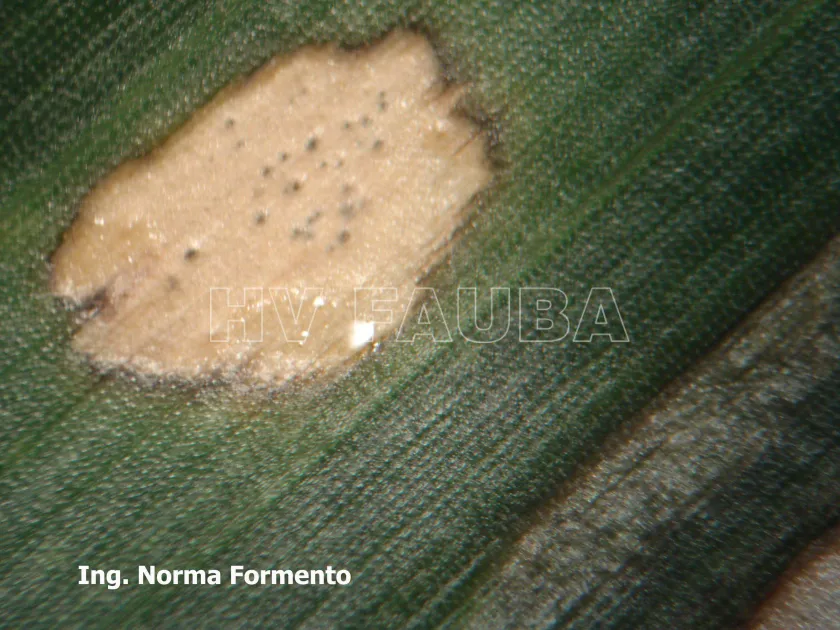
Symptoms typically begin as small, chlorotic spots on the lower leaves. As the disease progresses, these spots expand into brown or dark-colored lesions, often characterized by a yellowish halo surrounding the necrotic tissue.
A diagnostic feature of Phaeosphaeria infection is the presence of pycnidia—small, dark, pimple-like structures—within the lesions. These are the fruiting bodies where asexual spores are produced, and they are usually visible under moderate magnification.
When the stems are infected, the nodes may turn dark brown or black. This condition often results in weakened stems, leading to lodging and reduced nutrient transport to the developing head, which significantly impacts the grain fill process.
Infected heads (spikes) may show browning and general disfigurement. Grain harvested from heavily infested heads is often shriveled, lighter in weight, and displays poor germination characteristics compared to healthy samples.
In highly humid environments, a light-colored or pinkish spore mass may be observed on the surface of the lesions. Severe infestations lead to the merging of spots, causing rapid yellowing and death of the entire leaf tissue.
Pathogen
Phaeosphaeria leaf spot is caused by various species of the fungus Phaeosphaeria (the teleomorph of several important plant pathogens, including Phaeosphaeria nodorum, formerly Septoria nodorum). These fungi belong to the Ascomycota division and are significant pathogens affecting small grain cereals.
The host range includes wheat, barley, rye, and various wild grasses. The pathogen is capable of surviving in infected crop debris and straw left on the soil surface after harvest, as well as being seed-borne in many cases.
The disease cycle involves the production of pseudothecia on dead plant tissues. Under moist conditions, these structures release ascospores, which are dispersed by wind currents over long distances to initiate primary infection cycles in new crop seasons.
During the growing season, the fungus spreads via conidia (pycniospores), which are splashed by rain or dew from the lower leaves to the upper foliage. This rapid spread is often facilitated by high humidity and dense crop canopies.
The fungus produces secondary metabolites, including specific phytotoxins, which disrupt the host plant's cellular functions. These toxins interfere with photosynthesis and enzyme activity, leading to tissue necrosis and weakening the plant's ability to fill the grain.
Conditions for development
High relative humidity and frequent rainfall are the primary environmental drivers for the development of Phaeosphaeria leaf spot. The presence of surface moisture for prolonged periods is essential for spore germination and infection establishment.
The pathogen thrives in moderate temperature ranges, typically between 20°C and 25°C. However, it exhibits a wide tolerance for environmental conditions, allowing it to persist and infect crops across diverse temperate climate zones.
Cultural practices such as continuous cropping (monoculture) contribute significantly to the accumulation of inoculum in the field. Lack of proper tillage allows infected straw to remain on the surface, serving as a reservoir for the fungus.
Dense planting densities restrict airflow, creating a humid microclimate within the crop canopy. This environment prevents the foliage from drying quickly after rain or dew, which provides an ideal window for the fungus to penetrate the plant tissues.
High nitrogen fertilization rates can also exacerbate the disease by promoting succulent, fast-growing foliage that is more susceptible to colonization. The lack of crop rotation creates a repetitive cycle of disease pressure that becomes harder to control over time.
Why it matters
The primary economic impact is the reduction of leaf area, which decreases photosynthetic efficiency. This leads to stunted grain development and significant yield losses, often ranging from 10% to over 30% in severe epidemic years.
Quality parameters are adversely affected as well. The protein content and gluten quality of the grain decrease, making it less suitable for milling and industrial bread production, which lowers its market value.
Seed health is compromised, as infected grain possesses lower vigor and lower germination rates. Using infected grain for future planting perpetuates the disease cycle, leading to stunted initial growth and potential crop failure.
The disease weakens the host plant, making it more susceptible to opportunistic secondary infections, such as root rots or other fungal pathogens, further complicating the plant's overall health and ability to recover.
Management costs are increased due to the necessity of fungicide applications. In regions where the disease is endemic, the reliance on chemical inputs adds significantly to the production cost, putting pressure on farm profitability.
Protection
Integrated disease management starts with long-term crop rotation. By planting non-host crops, farmers can break the life cycle of the pathogen and allow the infected residues to decompose fully, significantly reducing the spore load.
Effective tillage management, including burying crop residues, is a critical preventive measure. Decomposing the straw deep in the soil accelerates microbial breakdown, effectively removing the primary source of initial inoculum for the next crop.
The use of certified, clean seed combined with systemic seed treatments provides an essential buffer against early-season infection. This protects the seedlings during their most vulnerable growth stages and ensures a uniform crop stand.
In-season fungicide applications are necessary when disease pressure is high. Choosing products from different chemical classes, such as triazoles or strobilurins, helps manage the disease effectively and prevents the development of fungicide resistance.
Selecting resistant or tolerant varieties is the most sustainable strategy for long-term control. Breeding programs focusing on resistance to leaf spots provide farmers with the best tools to minimize the impact of the disease without relying solely on chemical sprays.
Discussion
No discussions yet — be the first.