
Phaeophyscia
Phaeophyscia
Description
Symptoms
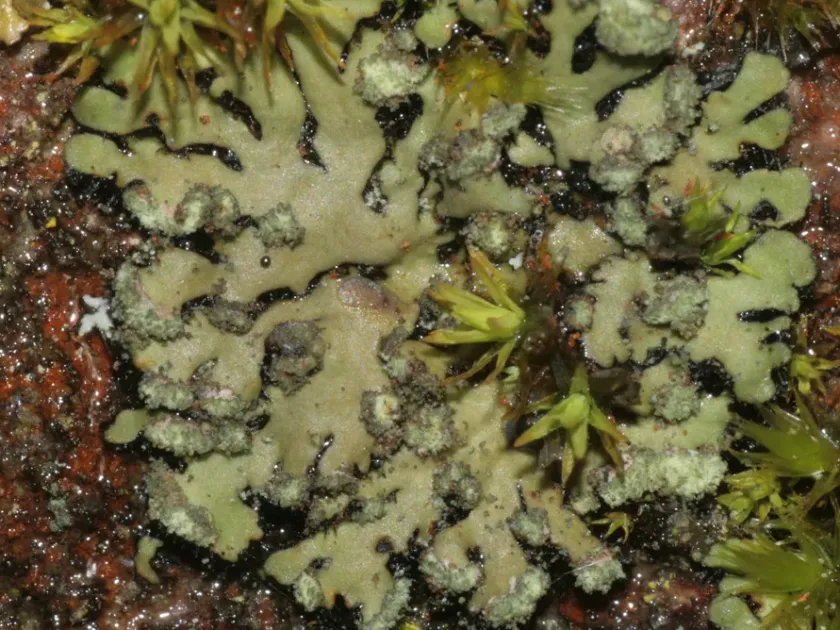
The first signs of Phaeophyscia are small, circular, or star-shaped patches on the bark, ranging from dark brown to grey in color.
These patches grow into distinct leaf-like structures (rosettes) that are tightly pressed against the surface of the bark.
Over time, these individual colonies can coalesce, covering large sections of the trunk and primary branches with a dark, crusty appearance.
Unlike parasitic fungi, these patches do not cause necrotic lesions or decay; however, the bark beneath them remains persistently damp.
An increase in the density of these lichen colonies over a short period is a clear sign that the tree's growth has slowed and the environment has become stagnant.
Pathogen
Phaeophyscia is a genus of foliose lichens often observed on the bark of various trees. It is essential to note that this is not a plant disease in the pathogenic sense.
This organism is an epiphyte, a biological symbiosis between fungi and algae, which uses the tree trunk solely as a substrate for growth and stability.
While often perceived as a disease, the presence of Phaeophyscia is typically an indicator of the tree's physiological state or environmental conditions in the orchard.
The lichen spreads through spores dispersed by wind or water, which colonize suitable bark surfaces under favorable moisture conditions.
Mycologically, it is identified by its dark-colored, rosette-shaped thallus, which can persist for years on the bark without infiltrating the internal tissues of the tree.
Conditions for development
The development of Phaeophyscia is highly dependent on environmental humidity and the structural density of the tree canopy.
Poorly pruned trees with dense foliage create a stagnant, moist microclimate that is ideal for the establishment and proliferation of lichen colonies.
Mature or neglected trees with rough, fissured bark provide the perfect anchor points for spores to settle and grow into visible thalli.
High relative humidity in the orchard, whether due to climate, heavy rainfall, or excessive irrigation, significantly accelerates the growth rate of this lichen.
Low light penetration within the canopy prevents the drying of the bark surface, ensuring the constant moisture required by the lichen to thrive.
Why it matters
Phaeophyscia does not directly feed on the tree, but its accumulation can impede bark respiration, leading to physiological stress.
The dense cover of lichen provides a protected micro-habitat for various pests, such as scale insects or mites, to overwinter and multiply safely.
Persistent moisture trapped under the lichen layer can soften the bark, making it more susceptible to secondary fungal infections or bacterial entry.
Large coverage on the trunk and limbs limits the tree's ability to maintain healthy bark, potentially affecting the long-term vitality of the specimen.
High lichen loads often mask the early symptoms of true tree diseases, making it difficult for growers to monitor orchard health effectively.
Protection
The primary control strategy involves good horticultural practices, specifically regular pruning to increase air circulation and light exposure throughout the canopy.
Mechanical removal of lichen during the dormant season using stiff brushes or scrapers is highly effective for reducing existing populations.
Applying lime wash to the trunks after cleaning helps neutralize the bark surface and prevents the quick re-establishment of spores.
Diluted iron sulfate solutions can be used as a targeted treatment to inhibit lichen growth without damaging the healthy living bark of the tree.
- Improve orchard ventilation through pruning.
- Mechanical cleaning of the tree trunk.
- Regular bark inspection.
- Application of lime wash for protection.
- Maintenance of tree vigor through proper fertilization.
Discussion
No discussions yet — be the first.