
Phaeophleospora
Phaeophleospora
Description
Symptoms
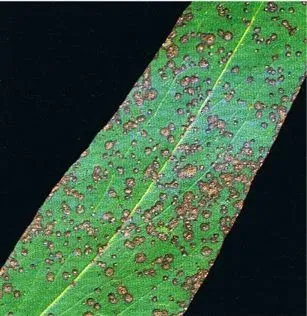
Symptoms typically manifest as small, chlorotic spots that gradually expand into necrotic lesions. These spots are often circular or irregular, displaying brown to gray centers with darker margins.
A distinctive feature of Phaeophleospora infections is the emergence of black, pin-point structures known as pycnidia within the necrotic tissue. These are the fruiting bodies of the fungus and are visible to the naked eye.
Severe infections lead to chlorosis and premature senescence of leaves. In cases where the disease spreads to stems or petioles, the structural integrity of the plant may be compromised.
Lesion coalescence is common under high disease pressure, resulting in large, blighted areas on the leaves. This progression significantly reduces the photosynthetic efficiency of the plant.
While early symptoms may be subtle, they quickly progress under moisture-rich environments, making early and accurate identification crucial for successful management.
Pathogen
Phaeophleospora is a genus of fungi belonging to the Ascomycota division, known for causing various leaf spot diseases in crops. These pathogens function as biotrophs or hemibiotrophs, colonizing plant tissues systematically.
The fungus produces conidia, which serve as the primary inoculum for spreading the disease during the growing season. These spores are typically dispersed by wind, rain splashes, or mechanical contact with infested machinery.
Survival occurs through specialized structures such as mycelia or pycnidia located on crop debris. When conditions become favorable, these structures generate new spores that initiate the infection cycle in the spring.
The pathogen thrives by secreting enzymes that degrade host cell walls, allowing the mycelium to penetrate the intercellular spaces. This metabolic activity leads to the characteristic symptoms observed on the foliage.
Because the fungus is host-specific, managing the disease often requires a deep understanding of the particular species of Phaeophleospora present in a specific agricultural ecosystem.
Conditions for development
High relative humidity and frequent rainfall are the most critical factors for Phaeophleospora development. Moisture provides the necessary environment for conidial germination and penetration into plant tissue.
The fungi generally thrive within moderate temperature ranges, typically between 18°C and 25°C. Excessive heat and dry weather are known to inhibit or stop the spread of the pathogen.
Canopy density plays a significant role in disease progression. Dense planting patterns restrict airflow, creating a humid microclimate that favors the rapid multiplication of the fungal pathogen.
Poor soil management and inadequate debris removal from previous seasons provide an abundant reservoir of spores. This ensures a high level of inoculum at the beginning of the subsequent crop cycle.
Stress factors, such as nutrient deficiencies or insect damage, make the host plants significantly more susceptible to infection, allowing the fungus to establish itself more easily.
Why it matters
The primary impact of Phaeophleospora is the significant loss of photosynthetic leaf area. This reduction directly limits the plant's ability to produce energy, ultimately resulting in reduced biomass.
Reduced crop yields are common in infected fields, as the plant cannot provide sufficient nutrients to its grain, fruit, or tubers. The quality of the harvested product is also often compromised.
In severe epidemics, entire foliage can be destroyed, leading to stunted plant growth or premature death. This can translate into substantial economic losses for the farmer.
The persistence of the fungus in plant residue makes it a recurring problem in fields. If left untreated, the cumulative effect of the disease can lead to long-term soil infestation.
Additionally, the cost of implementing extensive fungicide programs to mitigate the impact of the disease adds to the overall production costs for the agricultural operation.
Protection
Effective management begins with an integrated approach focusing on prevention. The use of certified, disease-free seeds is the first line of defense against the introduction of the pathogen.
Crop rotation is an essential practice, preventing the pathogen from completing its life cycle by alternating host crops with non-host species over several years.
Sanitation measures, including the burial of crop debris through deep tillage, are vital to reduce the primary inoculum load within the field before the next growing season.
Chemical control involving timely applications of systemic fungicides is effective if symptoms are detected at an early stage. Choosing the right fungicide, such as those with triazole or strobilurin active ingredients, is important.
- Implement regular field scouting for early detection.
- Use resistant or tolerant cultivars where available.
- Manage plant spacing to improve airflow and reduce humidity.
- Maintain balanced fertilization to promote strong plant health.
- Apply fungicides according to label instructions during critical growth stages.
Discussion
No discussions yet — be the first.