
Phaeomoniella
Phaeomoniellaceae
Description
Symptoms
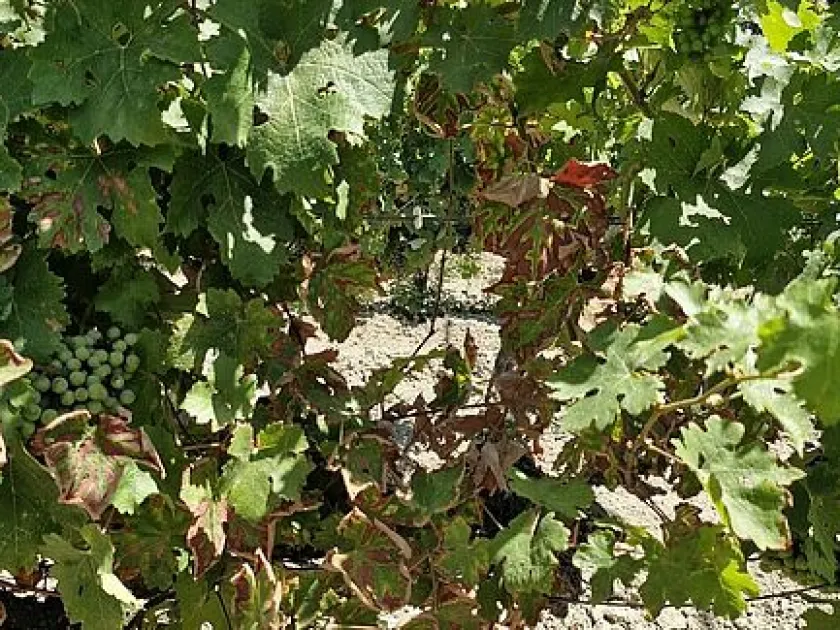
Initial symptoms are often subtle, appearing as stunted growth of shoots and smaller, chlorotic leaves that may show signs of marginal leaf burn.
When infected wood is cross-sectioned, characteristic dark brown or black necrosis appears in the form of spots or streaks, indicating blocked vascular elements.
In severe cases, vines may exhibit "apoplexy," a sudden wilting and death of the entire vine or specific cordons during the hottest period of the growing season.
The foliage may appear pale or yellow, often leading growers to mistake the infection for nutritional deficiencies or environmental stress.
Internal wood symptoms are the most diagnostic feature, showing a distinctive distribution of vascular browning that eventually leads to wood decay.
Pathogen
The disease is caused by the fungus Phaeomoniella chlamydospora, which is a member of the Phaeomoniellaceae family and is primarily known as a pathogen of grapevine wood.
This fungus acts as an endophyte, colonizing the xylem vessels of the vine and obstructing the transport of water and nutrients throughout the plant.
It reproduces by producing conidia, which are easily disseminated by rain splashes, wind, and during standard agricultural practices such as pruning.
The pathogen can survive for long periods within the woody tissue, often showing no visible symptoms, which makes it a persistent threat in many wine-growing regions.
Infection usually initiates through pruning wounds or any other mechanical injuries that expose the internal vascular tissue of the grapevine to the environment.
Conditions for development
The development of the fungus is favored by warm, humid conditions that encourage the production and dispersal of fungal spores on the vineyard surface.
Pruning is the most critical time for infection, as fresh wounds are highly susceptible to colonization by airborne or rain-splashed conidia.
Poorly managed nurseries are a common source of the pathogen, as the fungus can be spread through infected rootstocks or scion wood used in grafting.
Vineyard stress, including drought or waterlogging, can weaken the vine's natural defenses and make it more susceptible to invasion by the fungus.
The presence of water or high humidity shortly after pruning operations significantly increases the risk of successful fungal colonization of the woody tissue.
Why it matters
Phaeomoniella is a major contributor to the decline of vineyards, leading to reduced grape yields and poor wine quality due to physiological stress on the vines.
The disease negatively impacts the long-term productivity of the vineyard, forcing premature replanting which involves significant economic investment and effort.
Reduced vigor of infected vines makes them more susceptible to other secondary pathogens and environmental stresses, further accelerating their decline.
Total vine loss can occur as the accumulation of necrotic lesions permanently restricts the flow of essential nutrients required for fruit ripening and growth.
The hidden nature of the infection means that by the time severe symptoms appear, the economic damage has already been sustained over several previous seasons.
Protection
Sanitation practices are essential, specifically the regular disinfection of pruning tools with alcohol or appropriate chemical agents to prevent cross-contamination.
Applying protective wound sealants or fungicide-containing paints immediately after pruning helps shield the exposed tissue from fungal infection.
Sourcing high-quality, certified disease-free propagation material is the most effective long-term strategy for preventing the introduction of the fungus.
Pruning infected vines during dry weather conditions can help minimize the potential for spore germination and colonization of the fresh wounds.
- Improving vineyard drainage to reduce environmental stress
- Biological control using beneficial microbes to compete with the pathogen
- Systematic monitoring and removal of dead or declining woody vine parts
Discussion
No discussions yet — be the first.