
Phaeolepiota
Phaeolepiota
Description
Symptoms
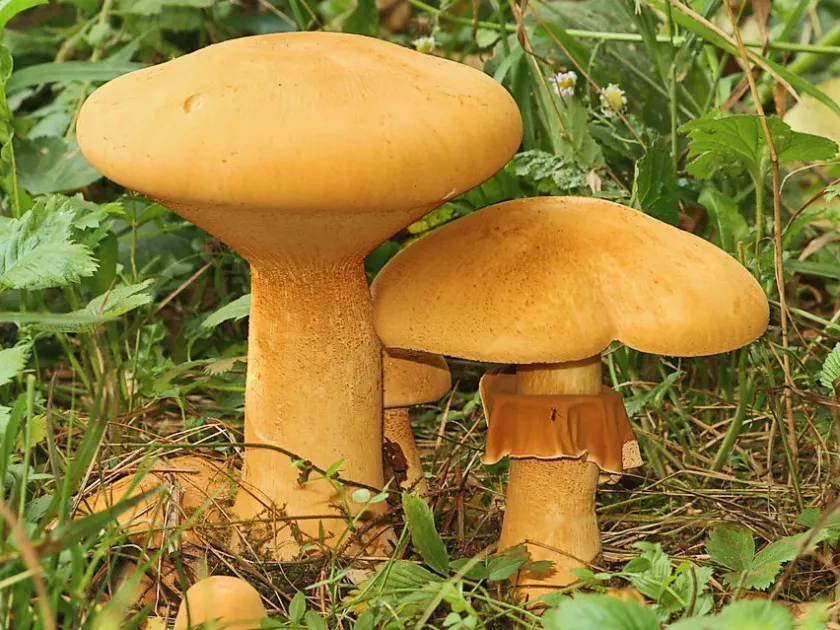
The primary symptom of Phaeolepiota aurea infestation is the development of large, golden-brown mushrooms on plant debris or wood.
The mycelium network manifests as white or yellowish threads spreading through the decaying organic substrate of the affected plant.
Young fruit bodies are characterized by a distinct powdery texture on the cap, which distinguishes this fungus from many other species.
As the infection progresses, the plant tissue undergoes softening and discoloration, indicating advanced decomposition caused by fungal enzymes.
The presence of dense clusters of these mushrooms serves as a clear indicator of a severe fungal colonization of the underlying organic material.
Pathogen
The pathogen is Phaeolepiota aurea, a basidiomycete fungus belonging to the Agaricaceae family, known for its saprotrophic nature.
It thrives by secreting specialized enzymes that break down complex organic polymers like cellulose and lignin within plant tissues.
The life cycle involves vegetative mycelial expansion and reproductive cycles producing basidiospores released into the environment.
While primarily a saprotroph, the fungus can impact plant health by exploiting weakened areas, creating potential for parasitic-like behavior.
Its ability to form persistent mycelial mats allows the pathogen to survive unfavorable conditions and remain active for long periods.
Conditions for development
High humidity levels and moderate temperatures between 15°C and 22°C provide an ideal environment for rapid mycelial growth.
Shaded, poorly ventilated areas with high organic matter accumulation are the most susceptible to widespread colonization by the fungus.
Extended rainy periods facilitate the production and dispersal of spores, significantly increasing the probability of new outbreaks.
Stagnant air and soil moisture saturation around plant roots create optimal niches for the establishment of Phaeolepiota.
Lack of proper sanitation in garden or forest plots is the most significant factor leading to the proliferation of this pathogen.
Why it matters
The fungus causes severe damage by breaking down the structural integrity of plant tissues, ultimately weakening the host plant's stability.
By disrupting water and nutrient transport, the pathogen induces wilting and chlorosis, significantly reducing the plant's overall health.
Affected plants often show reduced growth rates and increased susceptibility to secondary infections by other opportunistic pathogens.
Large-scale infestation can lead to the death of ornamental shrubs and trees, causing both ecological and economic losses.
The cumulative effect of tissue destruction leads to the aesthetic degradation of affected plantations and loss of biodiversity.
Protection
Sanitation is the cornerstone of control; removing decaying wood and plant debris significantly reduces the available substrate for the fungus.
Pruning and thinning vegetation improves air circulation and sunlight exposure, creating conditions unfavorable for spore germination.
Manual removal of fruit bodies before they reach maturity prevents the release of spores and limits the spread of the pathogen.
Implementing proper soil management to prevent waterlogging is essential for maintaining plant vigor and discouraging fungal establishment.
Targeted fungicide applications may be necessary in severe cases to suppress mycelial activity and protect valuable woody plants.
Discussion
No discussions yet — be the first.