
Phaeohelotium umbilicatum
Phaeohelotium umbilicatum
Description
Symptoms
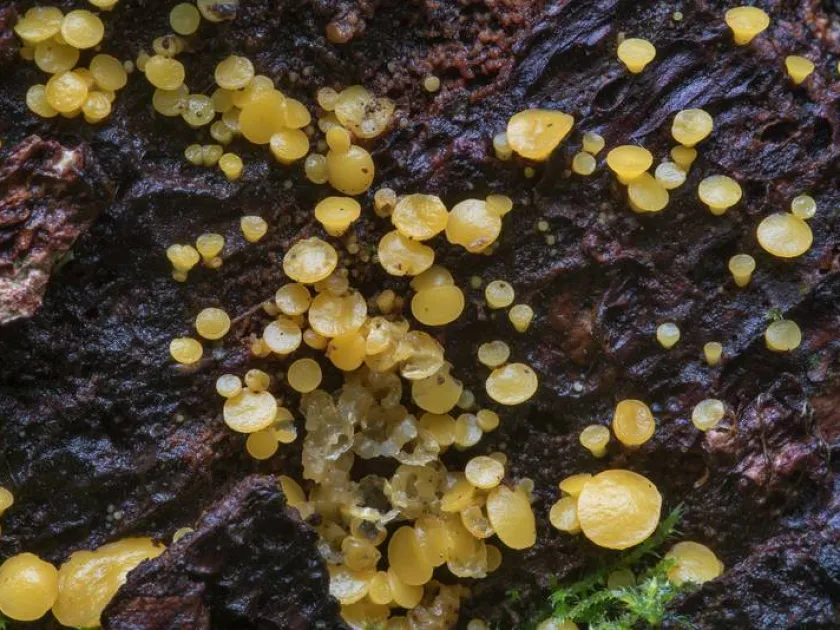
The most diagnostic sign of the pathogen's presence is the emergence of apothecia on the bark or branches. These are small, navel-shaped structures, often brightly colored, that indicate active fungal development.
Early symptoms appear as localized discoloration of the bark. In areas where spores have penetrated, the tissue may darken or develop an unusual hue, signaling the initial stages of cellular decay and structural collapse.
As the infection progresses, bark cracking and necrosis become visible. These dead zones often provide entry points for secondary pathogens, which can exacerbate the overall damage to the tree's health.
Internal examination of infected branches or trunks reveals significant structural changes. The wood loses its original color and density, becoming soft and brittle, which is a clear indicator of systemic mycelial colonization.
Over time, external symptoms manifest as a general decline in the tree's vitality. This includes premature leaf or needle drop, dieback of the crown, and a noticeable reduction in annual growth, eventually leading to mortality.
Pathogen
The causal agent of this disease is the ascomycete fungus Phaeohelotium umbilicatum, which belongs to the order Helotiales. It typically acts as a weak parasite, exploiting the compromised tissues of woody plants.
The fungus completes its lifecycle by producing small, cup-shaped apothecia, which have a distinct navel-like appearance. These fruiting bodies are responsible for the dispersal of ascospores, which are the primary means of spreading the infection.
The fungal mycelium can penetrate deeply into the bark and sapwood, where it secretes enzymes to break down lignin and cellulose. This enzymatic activity gradually destroys the structural integrity of the affected wood.
This pathogen is well-adapted to environments with high humidity, typical of temperate forest ecosystems. It can survive in a dormant state within woody debris, allowing it to persist even when a primary host is not immediately available.
The genetic adaptability of this species allows it to thrive on various tree species, particularly targeting areas weakened by mechanical injury, environmental stress, or insect activity.
Conditions for development
The development of Phaeohelotium umbilicatum is strongly favored by high ambient moisture levels. Prolonged periods of rainfall, high fog frequency, and stagnant air contribute significantly to the successful germination of spores.
Mechanical damage serves as a crucial factor for infection. Wounds caused by broken branches, pruning, or insect feeding provide the necessary access for the fungus to bypass the natural protective layers of the plant.
Areas with dense planting or poor ventilation create a microclimate that keeps bark surfaces wet for longer periods. This moisture persistence is ideal for the colonization and subsequent spread of the pathogen within the canopy.
Active growth of the mycelium occurs within the temperature range of +15 to +22 degrees Celsius. While extreme temperatures may inhibit growth, the fungus remains viable, ready to resume activity when conditions improve.
Human intervention, specifically improper pruning techniques without subsequent disinfection, frequently leads to localized outbreaks. Failing to seal cuts allows the fungus to gain an easy foothold in the exposed wood.
Why it matters
The primary harm involves the severe reduction of a tree's physiological vigor. By weakening the tree's immune system, the pathogen makes it highly susceptible to secondary infections and opportunistic pests.
In forestry and nursery settings, this disease can cause substantial economic losses. Large batches of seedlings may need to be discarded due to infection, making them unsuitable for replanting or sale.
In mature trees, the fungus contributes to wood decay, significantly reducing the timber quality and mechanical strength. This renders the wood unsuitable for structural or high-value industrial applications.
Ecological impacts include the disruption of forest ecosystem services. Heavily infected stands may lose their protective, climate-regulating, and aesthetic values as individual trees gradually die off.
Delayed detection often leads to rapid escalation of the infection across a site. Once established in a stand, the pathogen increases the long-term management costs and complicates conservation efforts.
Protection
The primary control measure is the strict adherence to good arboricultural practices. Regular sanitary pruning to remove infected branches is essential to reduce the inoculum load in the environment.
All pruning cuts and mechanical wounds must be treated with appropriate antiseptic agents or wound dressings. This creates a protective barrier that prevents spores from colonizing the exposed plant tissue.
Maintaining optimal stand density through thinning helps improve air circulation. Reducing humidity within the canopy limits the ability of the fungus to produce fruiting bodies and spread throughout the grove.
In high-risk scenarios, such as nurseries or ornamental landscapes, preventive fungicide applications can be effective. These treatments act to protect healthy tissues from infection during peak spore-dispersal periods.
- Regular inspections to detect and remove early symptoms.
- Proper disposal of infected wood by burning or deep burial.
- Maintaining tree vigor through proper fertilization and watering.
- Using only certified disease-free stock for new plantings.
Discussion
No discussions yet — be the first.