
Phaeocystis antarctica
Phaeocystis antarctica
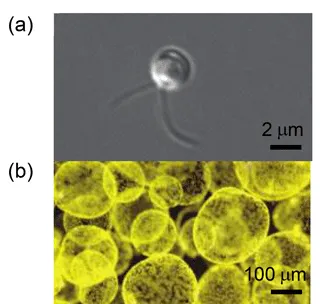
Description
Pathogen
Phaeocystis antarctica is a species of marine phytoplankton that plays a critical role in the Southern Ocean's carbon cycle and food web.
The organism is characterized by a biphasic life cycle, alternating between solitary flagellated cells and large, spherical, mucilaginous colonies.
While not a plant pathogen in agricultural terms, it is a dominant primary producer in polar waters, capable of massive biomass accumulation.
The colonies are embedded in a complex matrix of polysaccharides, which serves as a defensive mechanism and a substrate for associated microbial communities.
It remains a major focus of marine research due to its capacity to fix significant amounts of inorganic carbon and influence global climate patterns.
Conditions for development
The growth of this species is primarily triggered by the seasonal retreat of sea ice, which increases light availability for photosynthesis in the water column.
Iron availability is the most critical limiting nutrient in the Southern Ocean, controlling the bloom intensity and geographical extent of the population.
Stratification of the upper ocean layer, caused by ice melt, prevents the cells from being mixed too deeply into the dark, aphotic zone.
Optimal water temperatures for Phaeocystis antarctica are near the freezing point of seawater, reflecting its polar specialization.
Variations in regional wind patterns and freshwater input from glaciers can significantly alter the timing and duration of the annual bloom cycles.
Why it matters
During massive blooms, the excessive production of mucous colonies can significantly alter the optical and chemical properties of the seawater.
The degradation of large quantities of Phaeocystis antarctica biomass creates high biological oxygen demand, leading to transient oxygen depletion.
The sheer amount of organic matter can clog filtration equipment in scientific sensors and any water intake systems located in polar research stations.
By dominating the phytoplankton community, the species alters the availability of food for zooplankton, which may have cascading effects on higher trophic levels.
The release of secondary metabolites during the bloom phase can inhibit the growth of competing phytoplankton species, leading to a temporary loss of biodiversity.
Discussion
No discussions yet — be the first.