
Phaeocystis
Phaeocystis
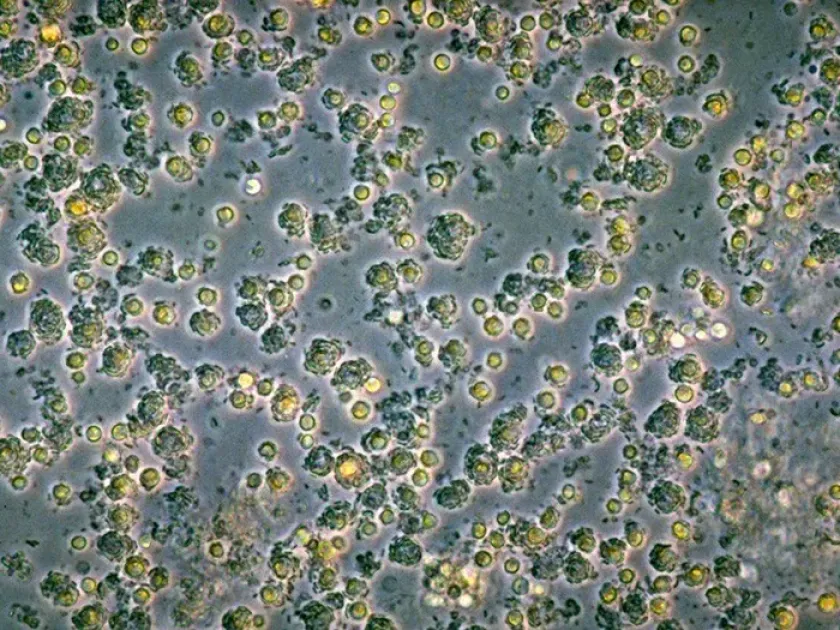
Description
Symptoms
The primary symptom of a Phaeocystis bloom is a dramatic change in water color, which shifts toward brownish or greenish hues during active growth.
Large amounts of persistent, thick foam typically form on the water surface and can accumulate along coastal areas, creating visible white or tan streaks.
The water clarity decreases significantly, becoming opaque due to the density of the colony-forming cells and their abundant mucous secretions.
Microscopic examination reveals the presence of large spherical colonies, which are characteristic of this genus and clearly distinguishable from other phytoplankton.
A distinctive odor, often compared to rotten cabbage or sulfur, is detected in the air when colonies degrade, caused by the release of dimethyl sulfide.
Pathogen
Phaeocystis is a genus of marine phytoplankton belonging to the haptophytes class. While not a plant disease in the terrestrial sense, it is a significant biological factor in aquatic environments.
The organism is characterized by a complex life cycle that involves a transition from solitary flagellated cells to large, colonial stages embedded in a thick mucilaginous matrix.
Massive blooms are typically caused by species such as Phaeocystis globosa or Phaeocystis pouchetii, which rapidly multiply under favorable environmental conditions.
These organisms are known for producing large quantities of extracellular polysaccharides, which accumulate as foam and affect the physical properties of the water column.
The biology of Phaeocystis is extensively studied due to its role in the global carbon cycle and its significant influence on marine ecosystem productivity.
Conditions for development
Bloom development is strongly correlated with nutrient enrichment, specifically the increased availability of nitrogen and phosphorus in marine waters.
Environmental factors such as specific seasonal temperature windows and high light intensity are critical for triggering the switch to the colonial form.
Stratified water columns, often caused by calm weather conditions, provide the stability required for these colonies to proliferate into large-scale blooms.
The presence of essential trace elements and vitamins in the water serves as a catalyst for the rapid division and growth of the phytoplankton population.
Eutrophication from land-based agricultural and industrial runoff remains the most significant driver for the increased frequency of Phaeocystis blooms worldwide.
Why it matters
For aquaculture, the accumulation of Phaeocystis foam clogs filtration systems and covers the gills of farmed fish, leading to stress and potential mortality.
The decay of massive blooms consumes vast amounts of dissolved oxygen, creating hypoxic conditions that threaten local fish and invertebrate populations.
Coastal tourism and recreation are heavily impacted by the buildup of foul-smelling foam on beaches, leading to significant economic losses for local communities.
Toxins produced during some bloom events can disrupt the local food web, negatively affecting the growth and survival of zooplankton and larval fish.
The alteration of the aquatic environment can lead to a shift in biodiversity, favoring opportunistic species over ecologically important marine life.
Protection
Effective management begins with reducing nutrient runoff from land, which is the most sustainable approach to preventing mass algal proliferation.
Advanced monitoring programs, including satellite imagery and real-time sensor networks, are essential for the early detection and management of bloom events.
In high-value aquaculture zones, mechanical mitigation and aeration systems are utilized to manage oxygen levels and reduce the impact of mucous clogging.
Restoration of natural seagrass beds and shellfish populations can help stabilize water chemistry and naturally filter excess nutrients from the environment.
Comprehensive regional policies focused on water quality and integrated coastal zone management are vital for long-term ecological protection.
Discussion
No discussions yet — be the first.