
Phaeocryptopus needle cast
Phaeocryptopus nudus
Description
Symptoms
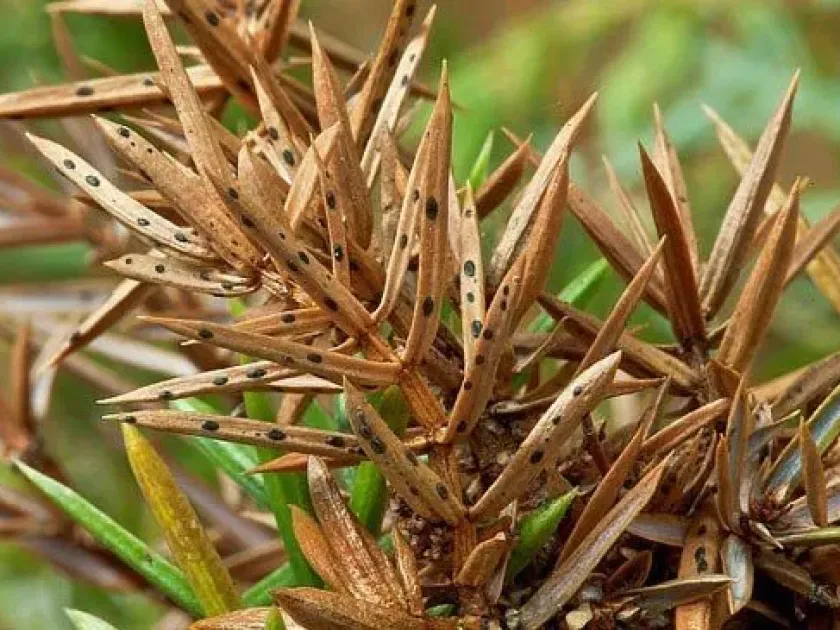
The earliest symptom is the yellowing or browning of needles, typically starting on the lower parts of the canopy and gradually moving upwards.
A definitive diagnostic feature is the presence of tiny black dots — the fruiting bodies — arranged in rows along the stomatal lines on the underside of the needles.
Affected needles gradually lose their luster, become brittle, and drop prematurely, leading to a sparse, thinning canopy appearance.
While the disease is sometimes mistaken for natural needle senescence, the specific arrangement of fungal structures allows for accurate identification.
The duration of infection can vary, but in chronic cases, the loss of foliage significantly affects the visual appeal and health of the tree.
Pathogen
The disease is caused by the ascomycete fungus Phaeocryptopus nudus, which primarily attacks the needles of various coniferous tree species.
The life cycle of the pathogen is closely tied to the needle tissues, where it develops and prepares for the release of spores during favorable seasons.
The fungus produces minute fruiting bodies, known as pseudothecia, which break through the needle surface to release spores into the air current.
Infected needles, whether fallen on the ground or still attached to the lower branches, serve as the primary reservoir for the fungus to overwinter.
Biological monitoring indicates that Phaeocryptopus nudus can persist within the needles for an extended period, silently colonizing the host before symptoms become apparent.
Conditions for development
The development of Phaeocryptopus needle cast is favored by cool, moist conditions with prolonged periods of high relative humidity.
Dense stand structures and high-density planting in nurseries significantly increase the risk of infection by limiting airflow and promoting humidity.
Frequent rainfall and persistent fog during the needle-expansion phase provide the perfect environment for spore germination and colonization.
Stressed trees, particularly those suffering from nutrient deficiencies or drought, are significantly more susceptible to successful fungal penetration.
In forest environments, stagnant air pockets within thick foliage contribute to the rapid spread of the disease within individual trees and across stands.
Why it matters
The primary impact of the disease is premature needle abscission, which reduces the tree's photosynthetic capacity and slows overall growth rates.
Severe and repeated infections cause tree decline, leaving the plants vulnerable to secondary attacks by wood-boring insects or other pests.
For ornamental and nursery conifers, the disease causes significant loss of aesthetic value, making the trees unsuitable for market or landscaping.
Reduced foliage density impairs the tree's ability to store resources for winter, making it less resilient to harsh weather and spring frosts.
Economic losses in the timber and nursery industries are largely driven by the costs of management and the loss of marketable tree volume.
Protection
The foundation of management is silvicultural practice: maintaining proper spacing between trees to ensure adequate air circulation and rapid needle drying.
Sanitation is crucial; collecting and destroying fallen needles effectively removes the primary source of the inoculum for the next growing season.
Fungicide applications, when timed correctly during the needle-elongation period, can suppress the spread of the disease in high-value plantations.
- Thinning of canopy branches to increase light and airflow.
- Balanced fertilization to boost the tree's natural defense systems.
- Rigorous monitoring and removal of highly infected nursery stock.
Effective control requires an integrated approach that combines careful monitoring of weather patterns with timely chemical or cultural interventions.
Discussion
No discussions yet — be the first.