
Swiss needle cast
Phaeocryptopus
Description
Symptoms
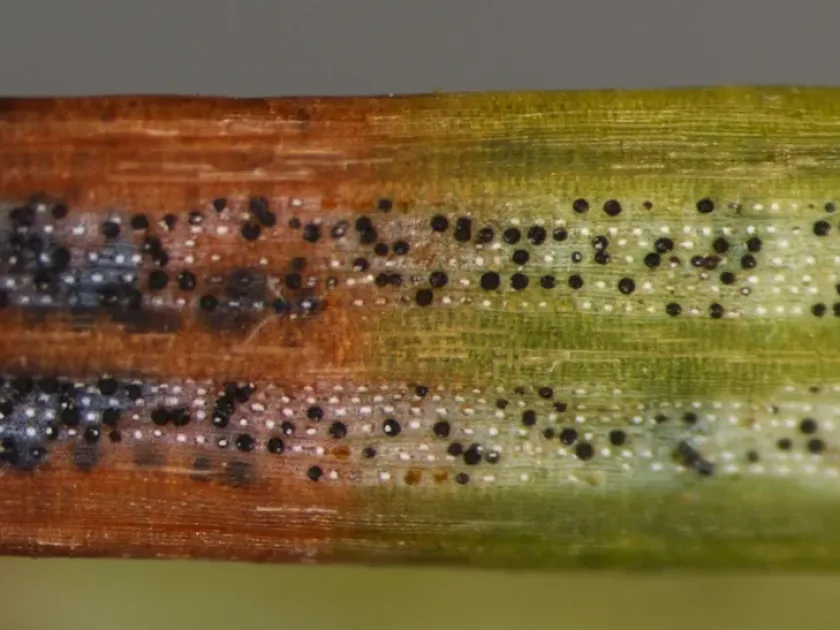
The most distinctive symptom is the presence of small, black, pinhead-sized fruiting bodies emerging from the stomatal rows on the underside of the needles.
Needle yellowing (chlorosis) usually begins on the oldest needles. These yellowed needles often drop prematurely, leading to thinner foliage in the lower crown.
Trees infected for several years may exhibit a "thin-crowned" appearance, where only the newest needles remain, and the interior of the tree appears sparse.
While the tree may look green from a distance in the early stages, closer inspection with a hand lens will reveal the black dots clogging the stomatal lines.
Unlike some other needle blights, the discoloration tends to be more gradual, often appearing as a uniform yellowing rather than sudden browning or spotting.
Pathogen
The disease is caused by the ascomycete fungus Phaeocryptopus gaeumannii. This pathogen is an obligate parasite that specifically targets the needles of Douglas-fir trees.
The fungus develops its mycelium within the needle tissues, primarily colonizing the stomata. This specialized habitat allows the pathogen to remain protected while causing damage.
The lifecycle relies on the production of fruiting bodies called pseudothecia. These structures emerge through the stomatal openings, giving the characteristic dotted appearance.
Spores are dispersed by wind and rain splash, particularly during the wet spring and early summer months. They land on new needles and initiate the infection process through the stomata.
The fungus does not kill the tree immediately but reduces the photosynthetic capacity of the foliage by blocking the stomata, leading to a long-term decline in tree vigor.
Conditions for development
High humidity and mild temperatures are the primary drivers of fungal development. Areas with persistent coastal fogs and high rainfall are particularly susceptible.
Poor air circulation within dense forest stands creates an ideal microclimate for the fungus. When moisture stays on the needles for long periods, infection rates increase significantly.
The optimal temperature range for fungal colonization is between +15°C and +22°C. Periods of dry, hot weather can temporarily inhibit spore germination.
Nursery environments are high-risk zones due to the proximity of plants, which allows for rapid, uncontrolled spread of spores throughout the entire seedling stock.
Site conditions, such as poor soil drainage or excessive nitrogen levels, can stress the tree and exacerbate the severity of the infection.
Why it matters
The primary impact is the premature loss of needles, which significantly reduces the tree's ability to produce energy through photosynthesis.
Reduced photosynthetic activity leads to decreased radial growth and shorter shoot elongation. Over time, this makes the tree weaker and more prone to other stressors.
For commercial timber producers, Swiss needle cast causes significant growth losses, reducing the yield and quality of wood production over the rotation period.
Severe infestations render nursery stock unmarketable and can contribute to the decline of trees in urban landscapes or Christmas tree farms.
Trees severely weakened by the disease are often more vulnerable to secondary attacks by bark beetles and other opportunistic wood-boring insects.
Protection
Cultural management is the first line of defense. Ensuring proper spacing during planting helps improve airflow and reduces humidity around the needles.
Sanitation practices, including the removal and destruction of heavily infected fallen needles, can help reduce the local spore load for the following season.
In high-value nurseries, the application of fungicides during the needle expansion phase can be an effective strategy to prevent primary infection.
Selecting disease-resistant provenances or varieties of Douglas-fir is the most effective long-term solution for forest management.
- Thinning stands to improve air circulation and sunlight penetration.
- Monitoring crown health annually using magnification tools.
- Applying fungicides during periods of active shoot growth if necessary.
- Removing debris and infected foliage from the nursery environment.
- Promoting tree health through appropriate fertilization and site selection.
Discussion
No discussions yet — be the first.