
Phaeocollybia lateraria
Phaeocollybia lateraria
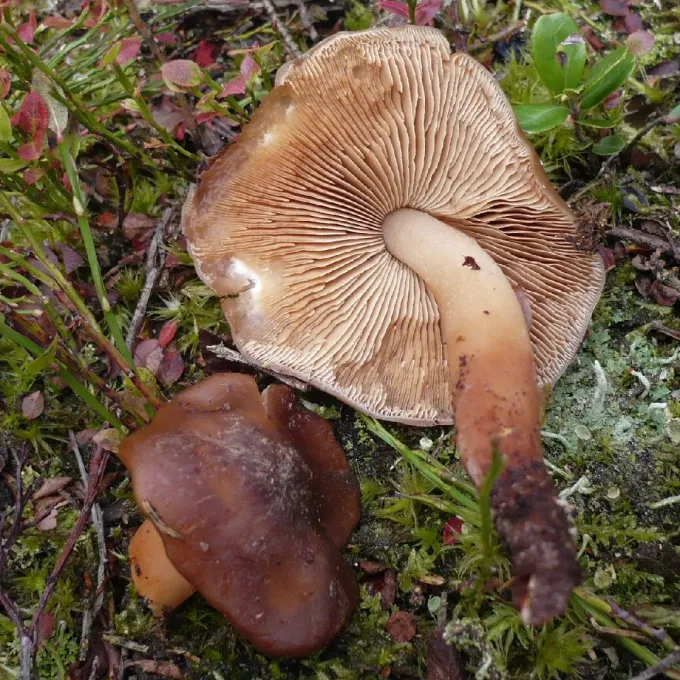
Description
Symptoms
The most distinctive sign of Phaeocollybia lateraria infection is the emergence of mushroom-like fruiting bodies near the base of the infected tree or directly from the soil above damaged roots.
Canopy thinning and premature leaf or needle drop are typical symptoms observed as the infection progresses. This decline is usually uneven, affecting specific branches before spreading.
Examination of the roots reveals necrotic, discolored wood, often accompanied by a visible mat of mycelium beneath the root bark. The tissues lose their structural integrity and become soft.
Wind-throw is a common consequence of infection, as the weakened root system can no longer anchor the tree against external stressors or strong winds.
Chlorosis, or yellowing of the foliage, serves as a systemic indicator of the tree's inability to uptake essential minerals due to extensive root damage caused by the fungal mycelium.
Pathogen
Phaeocollybia lateraria is a basidiomycete fungus belonging to the Hymenogastraceae family. While many species in this genus are mycorrhizal, this specific fungus exhibits pathogenic traits, capable of compromising the root systems of various woody hosts.
The pathogen utilizes basidiospores for reproduction, which are released during humid conditions. These spores land in the soil and, under favorable circumstances, germinate to produce a mycelium that invades the root tissue.
Biologically, the fungus functions by colonizing the cortex and vascular cambium of the roots. This disruption of tissue structure effectively halts the transport of water and nutrients throughout the tree.
Laboratory identification relies on the microscopic examination of spores, which possess unique ornamentation patterns distinctive to the Phaeocollybia genus.
The fungus is often characterized as a stress-related pathogen, meaning it frequently exploits trees that are already vulnerable due to environmental factors or root damage.
Conditions for development
The development of Phaeocollybia lateraria is highly dependent on environmental humidity and temperature. Moist, damp conditions with moderate temperatures are optimal for mycelial growth and fruit body formation.
The fungus thrives in organic-rich, acidic soil environments. These conditions provide a stable substrate for the pathogen to persist, even when the primary host is partially compromised.
High planting density significantly increases the risk of transmission. When root systems overlap, the fungus can easily spread from one host to another via direct contact.
Environmental stress, such as prolonged drought followed by heavy rainfall, disrupts the host's natural resistance, making it an ideal target for fungal colonization.
Mechanical injuries to the root system during soil cultivation or animal activity provide entry points that allow the pathogen to penetrate deeply into the root vascular system.
Why it matters
The primary harm caused by Phaeocollybia lateraria is the destruction of the tree's root architecture. Without intervention, this lead to the gradual death of the host plant.
Economic losses in forestry and arboriculture are significant, as infected trees often require removal to prevent the spread of the pathogen to neighboring healthy specimens.
In nurseries, an outbreak of this pathogen can destroy entire stocks of seedlings, resulting in substantial financial losses and site-wide contamination issues.
The presence of the fungus promotes secondary infections by other wood-decay organisms and attracts bark beetles, which accelerate the mortality rate of the infected trees.
The pathogen is difficult to eradicate from soil once established, creating a long-term threat for any replanting efforts in the affected area.
Protection
Management strategies emphasize rigorous sanitation. Removing infected trees, including the main root ball, is essential to minimize the concentration of inoculum in the environment.
Installing physical barriers or trenches can help isolate infected zones, preventing the mycelium from reaching the root systems of healthy, adjacent trees.
Systemic fungicides may be applied as a preventive or curative measure in high-value areas, though they are most effective when applied at the earliest signs of colonization.
Improving soil drainage and maintaining tree vigor through proper fertilization helps the plants maintain a higher resistance against the pathogen.
- Perform routine visual inspections for fruiting bodies.
- Avoid damaging tree roots during landscaping or maintenance work.
- Clean and disinfect all pruning tools thoroughly between uses.
Discussion
No discussions yet — be the first.