
Phaeochora palm spot
Phaeochora steinheilii
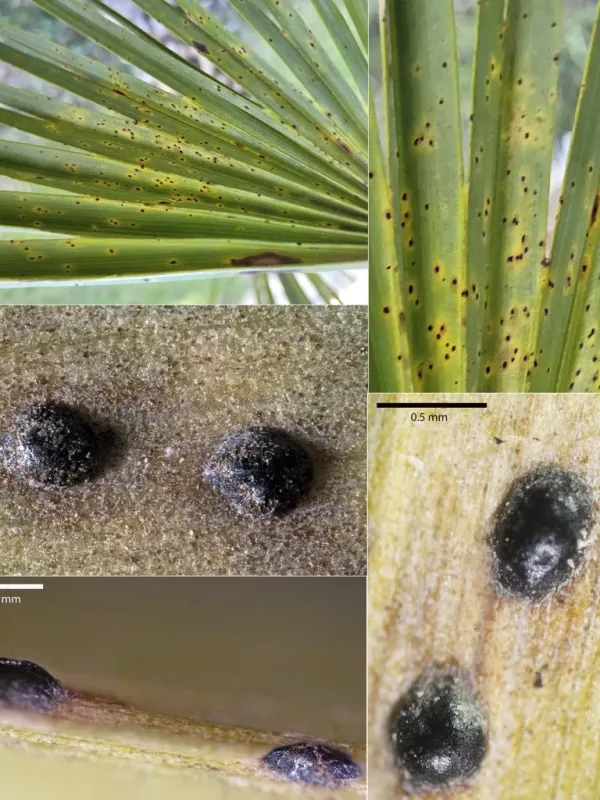
Description
Symptoms
The disease is manifested by the development of distinct spots on the palm fronds, often starting as small, discolored areas.
A hallmark sign of Phaeochora steinheilii is the presence of minute black fruiting bodies (stromata) emerging from the leaf surface.
These spots often progress and merge, leading to extensive chlorosis and necrosis of the leaf blades.
In advanced stages, the foliage may lose its structural integrity, appearing ragged, yellowed, and wilted before eventually dying off.
Early diagnosis is challenging as the symptoms can mimic other physiological disorders or fungal leaf spots prevalent in palm cultivation.
Pathogen
The causative agent of this disease is the ascomycete fungus Phaeochora steinheilii, a specialized pathogen affecting palm species.
The fungus colonizes the leaf tissue, where it develops its characteristic stromata, which are dense structures containing fungal spores.
The life cycle of the pathogen is highly dependent on humidity and moisture, facilitating the dissemination of spores through water droplets.
It typically survives in decaying plant tissues or fallen leaves, which serve as the primary reservoir for new infections.
This fungus is recognized for its specific association with palm hosts, adapting to their particular anatomy and physiological rhythms.
Conditions for development
The spread and proliferation of this disease are driven by high atmospheric humidity and frequent rainfall or overhead irrigation.
The development of the fungus is favored by moderate to warm temperatures, common in tropical and subtropical regions.
Poor air circulation, often found in crowded nursery environments, creates a stagnant microclimate that allows fungal spores to germinate easily.
Prolonged leaf wetness is a critical factor that determines the severity and speed of the infection cycle on the host plant.
Greenhouse settings with inadequate ventilation are particularly susceptible to rapid outbreaks of the pathogen across the plant collection.
Why it matters
The primary concern with this disease is the severe reduction in the ornamental and commercial value of palm trees.
By damaging the photosynthetic machinery of the leaves, the infection stunts the tree's growth and diminishes its long-term vigor.
Plants affected by the fungus become more susceptible to secondary infestations by pests and other opportunistic pathogens.
In severe cases, the loss of foliage can lead to the total decline and death of the palm, requiring costly removal and replacement.
Outbreaks within commercial plantations can result in significant financial losses due to the degradation of the plant material.
Protection
Effective management begins with strict sanitation practices, including the removal and destruction of infected leaf material.
It is vital to improve cultural practices by spacing plants appropriately to ensure optimal air circulation and reduce leaf wetness.
Preventive application of fungicides may be necessary during periods of high humidity or when conditions favor disease spread.
Disinfecting pruning equipment between different plants helps prevent the mechanical transfer of fungal spores within the nursery.
- Regular monitoring for early spot detection.
- Avoidance of overhead irrigation.
- Application of systematic fungicides as prescribed.
Discussion
No discussions yet — be the first.