
Phacidium blight
Phacidium abietinum
Description
Symptoms
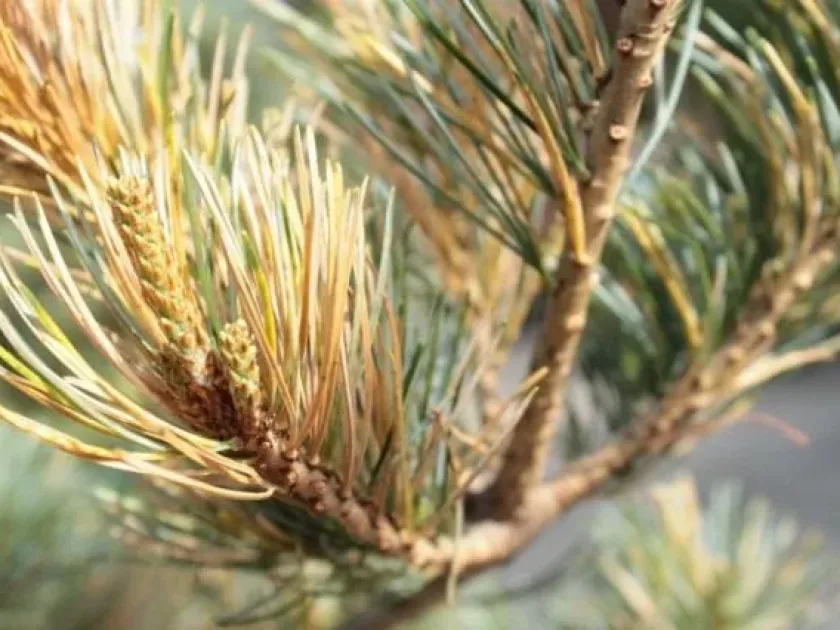
The primary symptom, commonly referred to as "snow blight," manifests after the snow melts in early spring. Infected needles lose their green color, turning yellowish-brown and eventually grayish.
A distinctive sign of the disease is the presence of small, dark, oval-shaped apothecia on the underside of the needles. These structures burst through the epidermis as they mature.
Infected shoots often exhibit a thin layer of gray mycelium. Over time, the affected needles become brittle, lose their structural integrity, and eventually fall off, leaving the branches bare.
Severe infestations lead to the death of entire branches, particularly in the lower part of the canopy where the microenvironment is cooler and more humid.
Young trees in nurseries are especially vulnerable, as the disease can rapidly kill the primary needles, stunting growth and ruining the commercial value of the seedling.
Pathogen
The disease is caused by the ascomycete fungus Phacidium abietinum (synonym Potebniamyces abietinus). It is a well-known pathogen that specifically targets conifers, particularly silver firs, causing needle drop and twig necrosis.
The fungus produces apothecia, which are small reproductive structures that appear on the needles. These structures release spores that spread via wind and rain, infecting new needles, primarily during the autumn season.
A key biological feature of this fungus is its ability to grow at low temperatures, near the freezing point. This allows the mycelium to remain active during the late autumn or mild winter months, when many other fungi become dormant.
Once the spores germinate, the mycelium penetrates the needle tissues through the stomata. It then begins to colonize the interior, consuming the host's resources and eventually leading to the death of the needle tissue.
The fungus shows a preference for dense growth patterns, which provide the stable, humid microclimate necessary for its life cycle to progress efficiently.
Conditions for development
The development of Phacidium blight is heavily influenced by prolonged cool, damp conditions. These environments are essential for the survival and germination of the fungal spores.
High planting density is a critical factor in disease severity. Crowded trees lack proper air circulation, which prevents the needles from drying out after rainfall, creating an ideal incubation chamber for the pathogen.
Heavy snow cover serves as an incubator for the fungus. It creates a stable, cold, and moist environment near the ground level, which significantly boosts the spread of the disease on lower branches.
Trees stressed by poor soil conditions, waterlogging, or nutrient deficiencies are significantly more susceptible to infection compared to healthy, vigorous trees.
Site selection plays a major role; planting sensitive species in low-lying areas where cold air and moisture collect increases the probability of annual outbreaks.
Why it matters
The primary damage caused by Phacidium blight is the massive premature needle drop. This significantly reduces the tree's photosynthetic capacity, leading to severe physiological stress.
In forest stands, the cumulative effect of the disease is a measurable reduction in annual growth increments and the overall decline of the forest's biological resistance.
The disease is particularly destructive in ornamental conifer production. The loss of needles destroys the aesthetic appearance, making the plants unsalable.
Persistent infections weaken trees over several years, making them susceptible to secondary infestations by bark beetles and other wood-boring pests, which can kill the trees.
Economic losses in nurseries can be significant, as infected stocks may need to be culled to prevent the spread of the fungus to healthier areas of the plantation.
Protection
Good silvicultural practices are the most effective control measures. This includes maintaining proper spacing between trees to ensure optimal ventilation and rapid needle drying.
Regular sanitation, including the pruning and removal of infected branches or heavily diseased individuals, is essential to reduce the local inoculum pool of the fungus.
Chemical control can be achieved through the application of copper-based fungicides or systemic alternatives during the critical infection window in late autumn and early spring.
Maintaining high tree vigor through proper site selection and appropriate fertilization can help the trees resist infection and recover faster from minor outbreaks.
Continuous monitoring of nurseries and young stands is crucial. Early detection allows for immediate intervention, which is much more effective than trying to manage a fully established infection.
Discussion
No discussions yet — be the first.