
Peziza
Peziza
Description
Symptoms
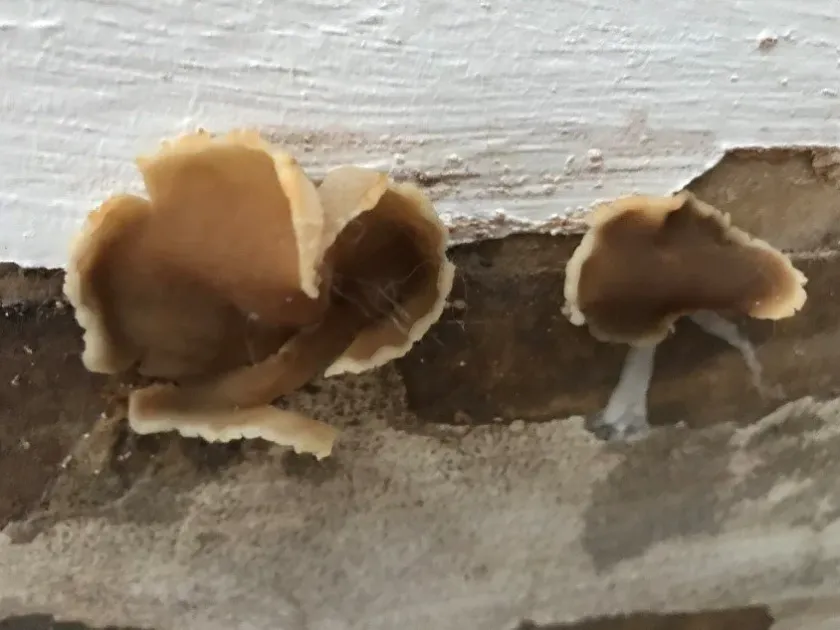
Peziza manifests as distinctive fruiting bodies that resemble a cup, saucer, or ear. These structures most often lack a stem or have a very short base, attaching directly to the substrate with their lower part.
The color of the fruiting bodies can range from cream and light brown to a rich chestnut shade. The surface of the fungus is often smooth or slightly granular, and the edges can be either even or slightly wavy.
Externally, the fungus is often found on the soil surface, on rotting wood, or in areas with an excess of organic fertilizers. Fruiting bodies usually appear in groups, forming noticeable clusters that can cover significant areas.
When the spores mature, a light whitish coating may form on the inner surface of the cup, which is then carried away by the wind. This indicates that the fungus is ready to spread further to new areas of your garden or greenhouse.
Although the fungus itself is often a saprotroph, its massive appearance on beds can indicate violations of agricultural techniques, excessive moisture, or the presence of large amounts of undecomposed organic matter in the soil.
Pathogen
The pathogen is a fungus from the genus Peziza, belonging to the Ascomycota division. These are sac fungi that reproduce by spores maturing inside specific structures called asci, located on the inner side of the cup.
Biologically, this organism is a saprotroph, which means it feeds on dead organic debris. It actively participates in the process of decomposing plant residues, cellulose, and woody material found in the soil.
The mycelium permeates the substrate, breaking down complex organic compounds into simpler forms. This allows it to quickly colonize soils rich in humus or fresh organic matter.
The primary method of spread is wind-borne dispersal of spores over long distances, as well as transport with soil particles when using non-sterile gardening tools. The high viability of spores allows the fungus to persist in the soil for a long time.
Despite its saprotrophic nature, under certain conditions, the fungus can develop in dense plantings, creating competition with crop plants for space and nutrients.
Conditions for development
The main condition for the development of Peziza is increased humidity of the substrate or soil. The fungus prefers places with water stagnation, where organic residues begin to decompose slowly without access to oxygen.
The presence of undecomposed organic fertilizers, such as fresh manure or an excess of wood chips, plays an important role. These environments are ideal nutrient substrates for the active growth of the mycelium.
The temperature regime plays a secondary role; however, the most intense fruiting is observed during periods of moderately warm weather with frequent precipitation. Shading the area also helps retain moisture, which is favorable for the fungus.
Disturbed air circulation in plantings creates a specific microclimate in the surface layer that maintains high humidity. This is a critical factor triggering the appearance of fruiting bodies on the soil surface.
The use of heavy soils prone to waterlogging without proper aeration also creates conditions for the active colonization of the area by this type of fungus.
Why it matters
The main danger of Peziza lies in the inhibition of crop plant development due to their colonization of the root zone. The fungus can prevent normal oxygen access to the roots, causing hypoxia.
The massive appearance of fungi on beds signals a violation of the biological balance of the soil. In such conditions, beneficial microflora is often suppressed, which negatively affects the overall immunity of the grown crops.
Although this fungus is rarely a primary pathogen, it can create conditions for the development of secondary infections. Damaged or weakened root systems become easy targets for true phytopathogens.
In greenhouses, the active growth of the fungus can lead to increased humidity indoors, which provokes the development of other fungal diseases, such as gray mold or downy mildew.
The aesthetic appearance of the site and the cleanliness of the beds suffer significantly from the presence of extraneous fungal structures, making harvesting and plant care less comfortable and more labor-intensive.
Protection
The main protective measure is establishing an optimal water regime for the soil. Regular loosening and ensuring high-quality drainage allow for avoiding water stagnation and reducing the humidity of the substrate.
It is necessary to avoid adding large amounts of undecomposed organic matter to the soil. It is recommended to use only fully composted fertilizers where the decomposition process is complete.
Preventive soil treatment with specialized fungicides or bio-preparations based on Trichoderma helps suppress the development of mycelium. Biological agents are particularly effective when applied regularly.
Sanitary measures include the mechanical removal of fungal fruiting bodies along with the adjacent layer of soil. This prevents the spread of spores around the site and reduces the overall infectious load.
- Optimization of lighting and ventilation of the area.
- Timely disinfection of gardening tools.
- Application of liming agents if necessary, as the fungus prefers an acidic environment.
- Mulching the soil only with disinfected materials.
Discussion
No discussions yet — be the first.