
Pezicula bark canker
Pezicula sporulosa
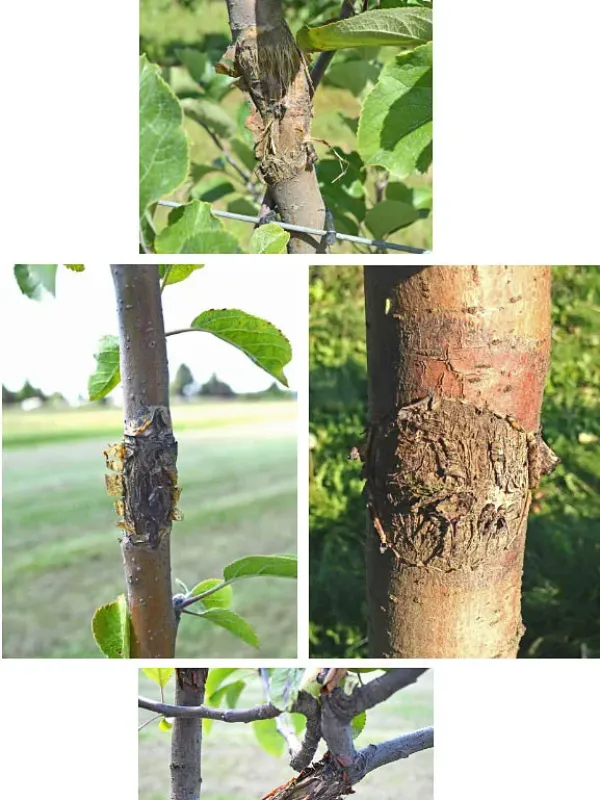
Description
Symptoms
Early symptoms include small, depressed spots on the bark that gradually develop into open, ragged cankers over time.
A distinctive feature is the darkening and cracking of the bark, which exposes the underlying wood to potential rot and further colonization by the fungus.
Callus tissue often forms around the perimeter of the canker as the tree attempts to isolate the pathogen, but this is rarely successful.
During humid conditions, tiny fruiting bodies of the fungus may appear on the dead bark surface as small, pale-colored bumps or disks.
Visible decline in the tree's health, such as leaf yellowing, premature wilting, and branch dieback, occurs as the flow of water and nutrients is blocked.
Pathogen
The disease is caused by the fungus Pezicula sporulosa, which is a specialized parasite affecting the bark and cambium of fruit trees.
The fungus develops within the woody tissues, causing significant structural damage and disrupting the vital physiological processes of the host plant.
The life cycle includes the production of apothecia, which are small fruiting bodies where spores develop for dispersal throughout the orchard.
This pathogen survives within infected bark and dead branches throughout the year, ensuring the infection persists in the environment.
Spores are dispersed by wind, rain splashes, and insects, landing on damaged bark areas of healthy trees to initiate new infection sites.
Conditions for development
High humidity and frequent rainfall are the primary factors that favor the germination of Pezicula sporulosa spores and the spread of the disease.
The fungus thrives in moderate temperature ranges, making spring and autumn periods especially critical for active infection development.
Trees weakened by drought, waterlogging, or poor soil nutrition are significantly more susceptible to the disease than vigorous, healthy specimens.
Mechanical damage from pruning or frost cracks creates ideal entry points for the pathogen to penetrate the bark of the host tree.
Poor orchard management, including inadequate ventilation due to overly dense planting, allows moisture to linger and accelerates fungal growth.
Why it matters
The disease causes localized necrosis which, if left unchecked, can lead to the girdling of stems and branches, resulting in total dieback of affected parts.
Productivity is significantly reduced due to impaired circulation of nutrients, leading to poor fruit set and reduced quality of the harvest.
Cankers on the main trunk represent a critical threat to the tree's lifespan, potentially leading to the death of the entire plant.
The weakening of the tree's immune system makes it more vulnerable to secondary opportunistic pathogens and insect pests.
Economic losses involve both reduced fruit yields and the high cost associated with tree surgery, chemical control, or eventual removal of infected trees.
Protection
Rigorous sanitation, including the prompt pruning and burning of all infected wood, is the most essential step in managing this disease.
All pruning wounds and physical injuries to the bark must be disinfected and sealed with protective wound dressings to prevent fungal entry.
Whitewashing trunks and the base of major branches with lime-based mixtures helps prevent frost damage and inhibits spore colonization on the bark surface.
Copper-based fungicide sprays applied at key developmental stages, such as before and after flowering, effectively suppress the inoculum pressure.
Maintaining optimal tree vigor through balanced fertilization and correct irrigation helps the plants resist infections more effectively.
Discussion
No discussions yet — be the first.