
Pezicula bark rot
Pezicula corticola
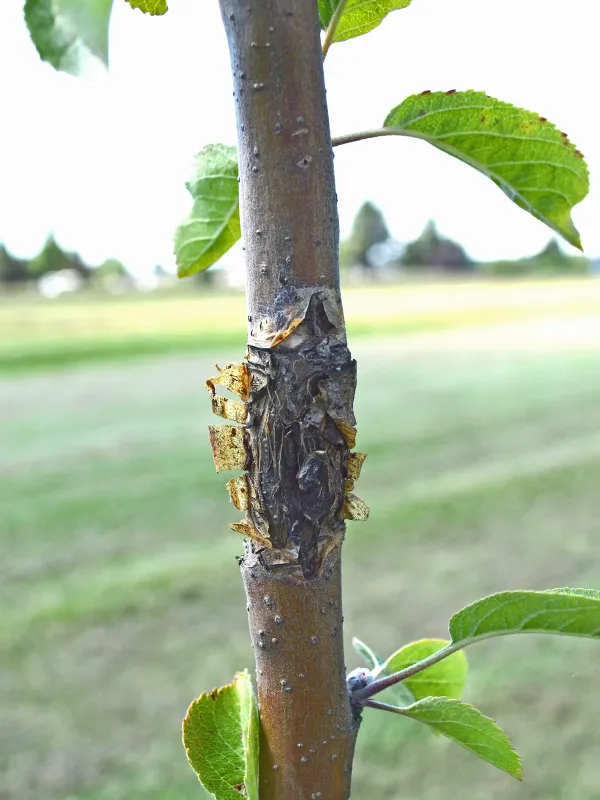
Description
Symptoms
The initial symptoms include the appearance of small, depressed, oval, or elongated spots on the bark. Over time, these areas darken and become necrotic, turning brown or dark reddish-brown.
As the infection progresses, the bark in the affected areas starts to crack, forming open lesions or cankers. In the center of these lesions, tiny, cream-colored fungal fruiting bodies may appear.
Foliage on the infected branches often turns yellow and falls prematurely. This happens because the fungal damage to the cambium disrupts the transport of nutrients and water to the leaves.
Severe infestations lead to the peeling of the bark, which exposes the underlying wood. In dry conditions, these necrotic areas become brittle, and the branch may eventually die back completely.
Close inspection during pruning is essential for early diagnosis. A visual check for discoloration and bark texture changes can help identify infected branches before the disease spreads further.
Pathogen
The disease is caused by the fungus Pezicula corticola (formerly identified as Neofabraea corticola). This pathogen is a member of the ascomycetes and is known for attacking the bark and cambium of fruit trees.
The fungus acts as a parasite, infecting trees through wounds, frost cracks, or pruning sites. Once established, the mycelium spreads within the bark layers, causing progressive tissue death.
Pezicula corticola produces fruiting bodies (apothecia) on dead or dying bark, which release spores during humid conditions. These spores can spread across the orchard via wind or rain splashes.
Biological studies show that the fungus can persist in a latent state, waiting for the tree's defense mechanisms to weaken before initiating severe tissue necrosis.
The pathogen is highly specialized and thrives in temperate climates. It is recognized as one of the significant contributors to bark necrosis and lesion formation in various pome fruits.
Conditions for development
High humidity and moderate temperatures are the most critical environmental conditions for the development of Pezicula corticola. Frequent rainfall promotes the production and dispersal of spores.
The presence of open wounds or cracks in the bark is necessary for the fungus to enter the host plant. Frost injury during the winter creates perfect entry points for the pathogen.
Trees under stress, whether from nutrient deficiency, drought, or poor soil conditions, are significantly more susceptible to the fungal infection than healthy, vigorous trees.
Poor orchard sanitation, such as failing to remove dead wood or inadequate airflow in the canopy, promotes a microclimate that allows the fungus to flourish on the bark surface.
Contaminated pruning tools are a major vector for spreading the disease within an orchard. If not cleaned properly between cuts, tools can inadvertently inoculate healthy branches.
Why it matters
The primary damage is the disruption of the tree's vascular system, which prevents essential nutrients from reaching the upper branches, leaves, and developing fruit.
Fruit quality is significantly reduced on infected trees. Fruits often remain undersized, lack flavor, and may show poor keeping quality if the infection is widespread.
Pezicula bark rot can shorten the overall lifespan of an orchard. Continued necrosis leads to the gradual decline of the tree, eventually necessitating its removal and replacement.
The disease causes substantial economic losses due to the cost of fungicide treatments, the labor involved in pruning diseased wood, and the loss of overall harvest volume.
Untreated infections serve as a constant source of inoculum for the entire orchard, making it increasingly difficult to manage the disease and maintain a healthy, productive tree canopy.
Protection
Rigorous sanitation is the most effective control method. All infected branches must be pruned away, ensuring that cuts are made well into the healthy tissue, and the material must be removed and destroyed.
Always disinfect pruning tools between trees using alcohol or a strong fungicide solution to prevent the transfer of fungal spores. Cleanliness is paramount during the pruning process.
Preventive sprays with copper-based fungicides during the dormant season (late autumn after leaf fall and early spring before bud break) are highly effective in reducing spore levels.
Maintain tree vigor through proper fertilization and irrigation. Strong trees have better natural defenses and are more capable of resisting initial infections and localized necrosis.
Protect the trunk and main branches from sunscald and frost damage by applying white tree paint. This prevents the physical bark damage that provides the primary access for the fungus.
Discussion
No discussions yet — be the first.