
Petractis clausa
Petractis clausa
Description
Symptoms
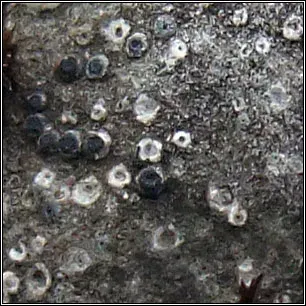
The lichen appears as a thin, crust-like growth, often mimicking the color and texture of the underlying limestone substrate.
The diagnostic feature is its apothecia, which are immersed in the rock surface, appearing as small, often cryptic structures.
The thallus is typically inconspicuous, making the presence of the lichen difficult to identify without careful inspection of the substrate.
Growth patterns often include forming irregular, patchy colonies that expand slowly over the surface of carbonate rocks.
The overall appearance is that of a weathered, granular coating that may be easily overlooked by non-specialists.
Pathogen
Petractis clausa is not a plant pathogen or a disease agent affecting agricultural crops, but rather a species of crustose lichen belonging to the Stictidaceae family.
It exists as a symbiotic organism, integrating fungal hyphae with algal cells to survive on exposed surfaces.
In biological terms, this organism is categorized as an epilithic species, meaning it specifically colonizes rock surfaces, particularly limestone.
It does not possess the mechanisms to parasitize vascular plants, nor does it cause any known agricultural infections or diseases.
The study of this organism falls under lichenology, focusing on its ecological interactions within natural lithic habitats.
Conditions for development
The primary requirement for Petractis clausa is a carbonate-rich substrate, which is essential for its attachment and metabolism.
It thrives in environments that provide sufficient moisture, even if those conditions are intermittent, as is common on rock faces.
Exposure to light is necessary for the algal component to conduct photosynthesis, supporting the energy needs of the entire lichen complex.
The organism is well-adapted to temperate climates, where it can withstand varying temperature ranges while remaining attached to stone.
Spore dispersal, primarily driven by wind, allows the lichen to colonize new limestone formations whenever conditions are favorable.
Why it matters
There is no economic damage or threat to crop production associated with Petractis clausa in any agricultural context.
The lichen does not compete with crops for nutrients, water, or light, as it is strictly limited to mineral substrates.
Any perceived harm would be limited to the slow weathering of ornamental stonework, which is irrelevant to agricultural yields.
Since it lacks pathogenic capabilities towards plants, it is not considered a pest and does not affect the health of orchard or field crops.
The species acts as a neutral component of the ecosystem, posing no risk to farmers or agricultural output.
Protection
No control measures are necessary, as Petractis clausa is not a target for agricultural management or pest control programs.
Chemical control, such as fungicide application, is neither effective nor recommended, as it would cause unnecessary environmental impact.
Physical removal using non-abrasive tools is the only recommended approach if cleaning stone surfaces is desired for aesthetic reasons.
Good agricultural practices do not need to account for this species, as it does not interact with the lifecycle of common cultivated crops.
For research or management of cultural heritage sites, physical cleaning or maintenance to prevent excessive humidity remains the primary strategy.
Discussion
No discussions yet — be the first.