
Pestalotiopsis versicolor
Pestalotiopsis versicolor
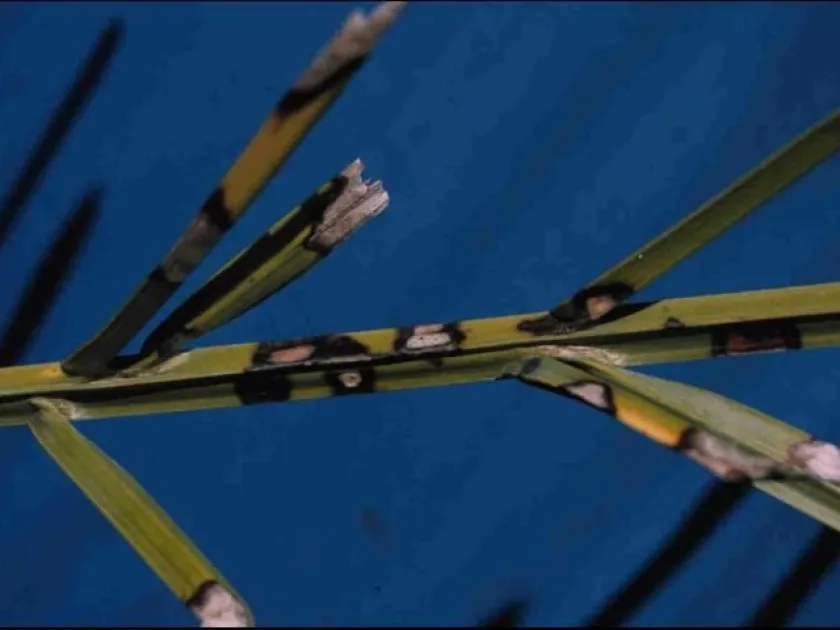
Description
Symptoms
The primary symptom is the appearance of characteristic spots on leaves, needles, or stems. Initially appearing as light or yellowish discolored areas, these spots eventually turn brown or dark grey with a distinct border.
As the disease progresses, numerous tiny black dots appear on the affected areas. These are the conidial fruiting bodies (pycnidia), which serve as a primary diagnostic feature visible to the naked eye upon close inspection.
In conifers, the infection often causes yellowing and subsequent needle dieback, typically starting from the tips. Branches may wither due to the restriction of fluid conduction following deep tissue necrosis in the bark.
On fruits, the fungus causes rot characterized by tissue softening and the development of spore masses on the surface. These fruits quickly lose their marketability and become unsuitable for consumption or long-term storage.
Chronic infection results in premature leaf drop, distortion of young shoots, and general stunting of the plant. Without timely intervention, the disease can lead to the death of the specimen within one or two seasons.
Pathogen
The causal agent of this disease is the mitosporic fungus Pestalotiopsis versicolor (order Melanconiales). It is a plant pathogen known for causing necrotic lesions across a wide variety of plant species.
The fungus persists in infected plant debris, soil, and the tissues of perennial plants through mycelium and conidia. It spreads primarily via conidiospores, which are transported by rain splashes, wind, insects, or contaminated gardening tools.
This pathogen exhibits high adaptability to various environmental conditions, making it a persistent threat to ornamental and agricultural crops. It typically enters plant tissue through mechanical wounds or natural openings such as stomata.
The biological cycle of the fungus is closely linked to environmental humidity. Under optimal conditions, the pathogen rapidly colonizes weakened or stressed plants, effectively overcoming their natural immune defenses.
Pestalotiopsis versicolor is a polyphagous pathogen, affecting trees, shrubs, and many herbaceous plants. It is frequently reported in conifers, citrus, palms, and various fruit-bearing crops.
Conditions for development
The development of the fungus is promoted by high relative humidity (above 80%) and moderate temperatures between +20°C and +28°C. Overwatering or poor drainage significantly increases the risk of infection.
Crowded plantings with poor air circulation create a microclimate favorable for the pathogen. In such environments, fungal spores germinate more rapidly and colonize plant tissues with greater efficiency.
Plants that are stressed due to nutrient deficiencies, improper light conditions, or recent transplanting are highly susceptible to Pestalotiopsis versicolor. Healthy, vigorous plants possess greater resistance to the pathogen.
Failure to maintain sanitary conditions, such as leaving fallen leaves under the plant canopy, is a critical factor in the disease cycle. Debris serves as a major reservoir for the pathogen to accumulate over time.
In greenhouses and nurseries, the disease spreads faster when there is a lack of regular ventilation. Condensation on leaf surfaces provides the ideal environment for the germination of fungal spores.
Why it matters
The primary impact of this disease is the loss of aesthetic value, which is particularly devastating for landscape design and the ornamental nursery industry. Damaged specimens are often discarded due to poor appearance.
The fungus causes significant economic damage to agricultural crops by inducing the death of productive parts. For fruit-bearing plants, yields are reduced, and the quality of the produce is compromised, leading to financial loss.
In nursery settings, the rapid spread of Pestalotiopsis can result in large-scale seedling mortality. The infection can quickly jump between nursery rows, rendering entire batches unmarketable.
Infected perennial plants often suffer from reduced winter hardiness, making them more vulnerable to frost damage. Disruption of photosynthesis due to leaf tissue death leads to the depletion of vital energy reserves.
Because the disease may be difficult to detect in its early stages, it often spreads unnoticed throughout a planting. By the time symptoms become obvious, the plant may have already sustained significant internal damage.
Protection
Strict sanitary practices are the first line of defense. It is crucial to regularly remove and destroy fallen leaves, infected branches, and all plant debris to reduce the spore load in the immediate environment.
Preventive applications of contact and systemic fungicides are recommended. Copper-based compounds or specific systemic fungicides targeting fungal leaf spots are effective in managing the pathogen.
Maintaining proper plant spacing is essential. Pruning and canopy thinning improve air circulation, which prevents moisture from accumulating on leaves and needles, thus inhibiting the development of the fungus.
Disinfecting gardening tools after every use is critical to prevent the spread of spores from infected to healthy plants. This is especially important during pruning operations.
Maintaining optimal plant health through balanced fertilization (avoiding excessive nitrogen) and proper irrigation practices strengthens the plant's immune system, allowing it to better resist pathogen colonization.
Discussion
No discussions yet — be the first.