
Pestalotiopsis glandicola
Pestalotiopsis glandicola
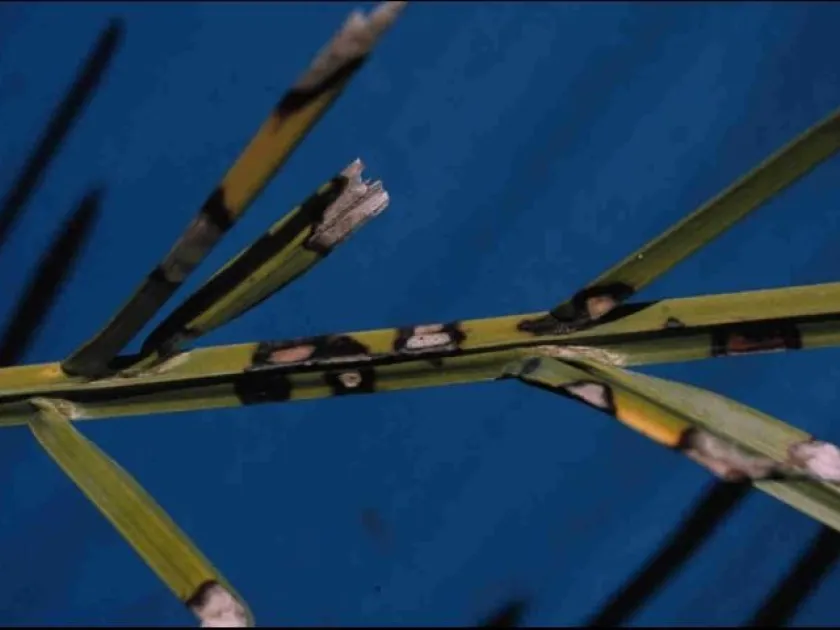
Description
Symptoms
The primary symptom includes the development of brown, necrotic spots on leaves, young shoots, and developing fruit or acorns.
As the disease progresses, small black dots emerge on the necrotic tissue; these are the fruiting bodies of the fungus producing spores.
When acorns or fruits are infected, they often show premature browning, shriveling of the skin, and rapid tissue degradation.
Under high humidity conditions, a whitish or olive-colored fungal growth (mycelium and conidial masses) may be observed on the affected areas.
Severe infestations lead to premature leaf drop, dieback of branches, and a general decline in the tree's overall vigor.
Pathogen
The causal agent of this disease is the fungus Pestalotiopsis glandicola, which belongs to the class of deuteromycetes.
The pathogen produces specialized fruiting structures known as acervuli, which develop beneath the epidermal layer of the host tissue.
The conidia (spores) of the fungus are spindle-shaped and possess characteristic apical appendages, facilitating efficient dispersal via wind and rain splashes.
This fungus exhibits high survival capabilities and can persist for extended periods in plant debris, bark, and fallen fruits.
The fungal lifecycle is closely linked to the host's condition; it acts as an opportunistic parasite, primarily targeting stressed or weakened trees.
Conditions for development
The spread of Pestalotiopsis glandicola is highly favored by warm, rainy, and humid weather conditions throughout the growing season.
Dense canopies and poor air circulation within the stand promote moisture retention on leaf surfaces, creating perfect conditions for infection.
Wounds in the bark, whether caused by insects, wildlife, or mechanical pruning, act as primary entry points for the fungal spores.
Nutrient deficiencies and other environmental stressors weaken the tree’s natural defenses, making it much more susceptible to colonization.
Transmission primarily occurs through wind and water, but contaminated pruning tools can also easily spread the pathogen between trees.
Why it matters
The primary damage is the disruption of the photosynthetic process, leading to stunted growth and diminished energy storage in the tree.
In nursery settings, the pathogen poses a significant threat to seed quality, reducing the germination rate and vigor of seedlings.
Chronic infection results in the gradual dieback of scaffold branches, significantly reducing the aesthetic and ecological value of landscape trees.
By weakening the host, the disease often acts as a precursor to secondary infections or infestations by wood-boring insects, further endangering the tree.
The necessity for ongoing management, including sanitary pruning and chemical applications, increases the cost of maintaining healthy forests and orchards.
Protection
Sanitation is the most critical management practice; removing and destroying fallen leaves and infected fruit significantly reduces inoculum levels.
Regular pruning of dead or diseased branches improves air circulation and removes existing sources of the fungus from the canopy.
Chemical control involving copper-based sprays or systemic fungicides can be applied preventatively during periods of high disease pressure.
- Maintaining optimal spacing between trees to improve ventilation.
- Providing adequate soil fertility to strengthen the tree's natural immune system.
- Sterilizing all pruning equipment with alcohol or bleach after each use.
Consistent monitoring and early detection allow for prompt intervention, preventing the disease from reaching epidemic proportions in the nursery or orchard.
Discussion
No discussions yet — be the first.