
Persimmon pestalotia
Pestalotia diospyri
Description
Symptoms
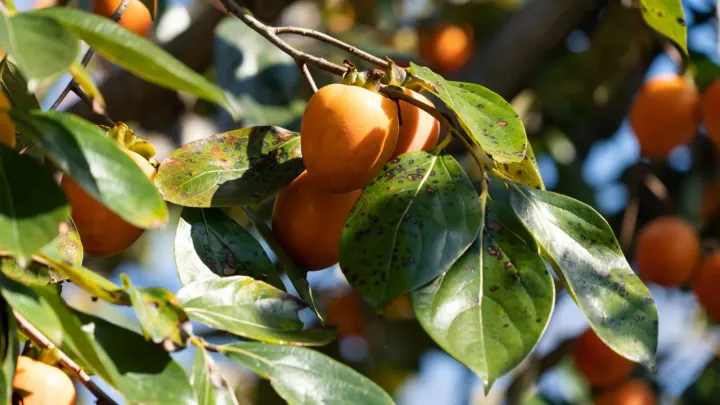
The primary symptoms of persimmon pestalotia are the appearance of brown or greyish spots on the leaves, which expand rapidly over time.
Small black dots, known as pycnidia, often emerge on the surface of these spots, indicating the fungal fruiting bodies that release spores under humid conditions.
The disease frequently attacks shoots as well, causing sunken lesions that can lead to tissue dieback and the deformation of new growth.
When the infection spreads to the fruits, dark spots develop on the skin, eventually penetrating the flesh and making the fruit prone to rot.
Severe infestations cause premature defoliation, which severely stresses the tree and limits its ability to produce energy through photosynthesis.
Pathogen
The causative agent of this disease is the fungus Pestalotia diospyri, a member of the deuteromycetes class that specifically targets Diospyros species.
The fungus overwinters primarily in dead leaf litter, infected twigs, and other plant debris remaining in the orchard throughout the dormant season.
Spores are dispersed by wind, splashing rain, or contact with contaminated pruning equipment, allowing the disease to spread quickly across the orchard.
The fungus enters the plant tissues through wounds, natural openings like stomata, or cracks caused by environmental stress or previous injury.
Once inside, the mycelium begins to colonize the host tissues, eventually producing more spores to continue the infection cycle during the growing season.
Conditions for development
High humidity and consistent rainfall are the most critical factors for the rapid development and spread of Pestalotia diospyri within the orchard.
Optimal growth temperatures for the fungus typically range from 20 to 28 degrees Celsius, which often coincides with the peak growing season for persimmons.
Poor airflow caused by overcrowding or lack of proper pruning creates a microclimate that traps moisture, making trees highly susceptible to infection.
Trees that are weakened by poor soil quality, nutrient deficiencies, or drought stress are more likely to suffer from severe fungal attacks.
Improper hygiene, such as failing to remove infected material during pruning, ensures that a high inoculum load is present at the start of the season.
Why it matters
This disease causes significant economic loss by ruining the visual quality of the fruit, making them unsellable and reducing yields.
Premature leaf drop prevents the tree from storing enough carbohydrates for the winter, leading to poor cold hardiness and increased mortality.
Chronic infections lead to stunted growth, distorted branches, and overall tree decline, eventually requiring the removal of severely affected plants.
Infected fruits often develop internal rot, which can lead to post-harvest losses even if the fruit appeared healthy at the time of picking.
The necessity for frequent fungicide applications and extra labor for orchard cleanup significantly increases the costs of persimmon cultivation.
Protection
The cornerstone of management is strict orchard hygiene, which includes the thorough removal and destruction of all infected leaves and twigs.
Applying fungicides is recommended during the early stages of infection, focusing on systemic products that can penetrate tissues and stop fungal growth.
Proper pruning and thinning are essential to maintain good light penetration and air circulation throughout the tree canopy to reduce moisture retention.
- Early spring applications of copper-based fungicides.
- Systemic fungicides during the vegetative period for active control.
- Sanitizing pruning tools with alcohol or bleach between trees.
Integrated pest management strategies, such as maintaining soil fertility and plant health, provide the best defense against fungal outbreaks.
Discussion
No discussions yet — be the first.