
Philippine downy mildew of maize
Peronosclerospora philippinensis
Description
Symptoms
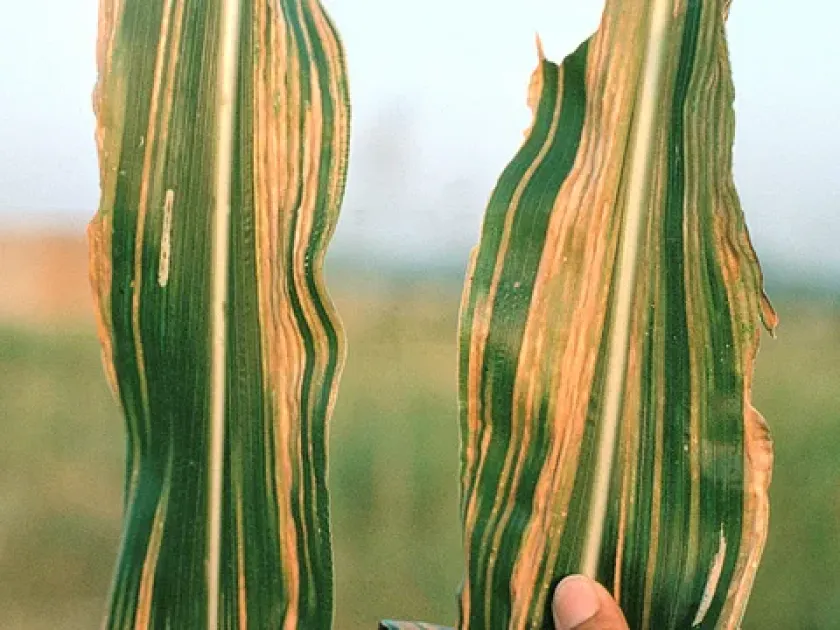
Initial symptoms include the appearance of yellow or chlorotic streaks on the leaves of young corn plants, which later turn white and necrotic.
A dense, downy white or greyish growth, consisting of conidiophores and conidia, appears on the underside of the leaves, especially during high humidity.
Stunted growth, shortened internodes, and a bushy appearance are characteristic of systemically infected plants, indicating impaired hormonal balance.
Affected plants often fail to produce ears, or if they do, the ears are typically deformed, small, and contain few or no healthy kernels.
In severe cases, plants may die prematurely before reaching the tasseling stage, which leads to significant gaps in the field population.
Pathogen
The causative agent of this disease is the oomycete Peronosclerospora philippinensis. It is an obligate parasite that specifically infects maize and other grasses.
The fungus survives as oospores in soil and plant debris, which are highly resilient and serve as the primary source of infection in the following seasons.
Conidia are produced on the leaf surface under favorable conditions and are easily dispersed by wind, leading to rapid spread throughout the field.
The pathogen is known for its systemic growth within the plant, colonizing tissues and disrupting the normal development of the host from seedling to maturity.
Genetic diversity among pathogen populations can lead to the emergence of strains that overcome the resistance of some commercially grown corn hybrids.
Conditions for development
High relative humidity and moderate temperatures are the most critical factors favoring the development and spread of Philippine downy mildew.
The optimal temperature for conidial germination and infection typically falls between 20°C and 25°C, requiring free water on the leaf surface.
Fields with poor drainage or those utilizing overhead irrigation during humid weather are particularly susceptible to severe outbreaks.
High planting density contributes to a microclimate that traps moisture within the canopy, facilitating the transmission of spores between neighboring plants.
Long periods of dew or frequent rainfall events significantly increase the risk of an epidemic by providing perfect conditions for the pathogen lifecycle.
Why it matters
Philippine downy mildew is one of the most destructive diseases for corn, capable of causing yield losses ranging from 50% to over 80% in heavy infections.
The disease directly reduces grain yield by preventing normal cob formation and causing infertility in the affected corn plants.
In addition to direct losses, the weakened state of infected plants makes them susceptible to various secondary stalk rots and insect pest attacks.
The economic impact is compounded by the high costs of management, including the need for specialized seed treatments and crop rotation strategies.
Global trade and movement of germplasm require strict quarantine regulations to prevent the introduction of this pathogen into new, non-endemic regions.
Protection
The primary control measure is the deployment of resistant or tolerant corn hybrids, which is the most reliable way to sustain production.
Seed treatment with systemic fungicides is crucial to protect young seedlings during the most susceptible early growth stages.
Effective crop rotation, typically a 2-3 year cycle, helps to reduce the concentration of oospores in the soil and lowers the risk of primary infection.
Sanitation practices, such as removing infected crop residues and controlling alternative grass hosts, can minimize the inoculum potential.
Optimizing plant spacing and field drainage management can reduce the humidity levels within the canopy, making the environment less favorable for the fungus.
Discussion
No discussions yet — be the first.