
Peniophora incarnata
Peniophora incarnata
Description
Symptoms
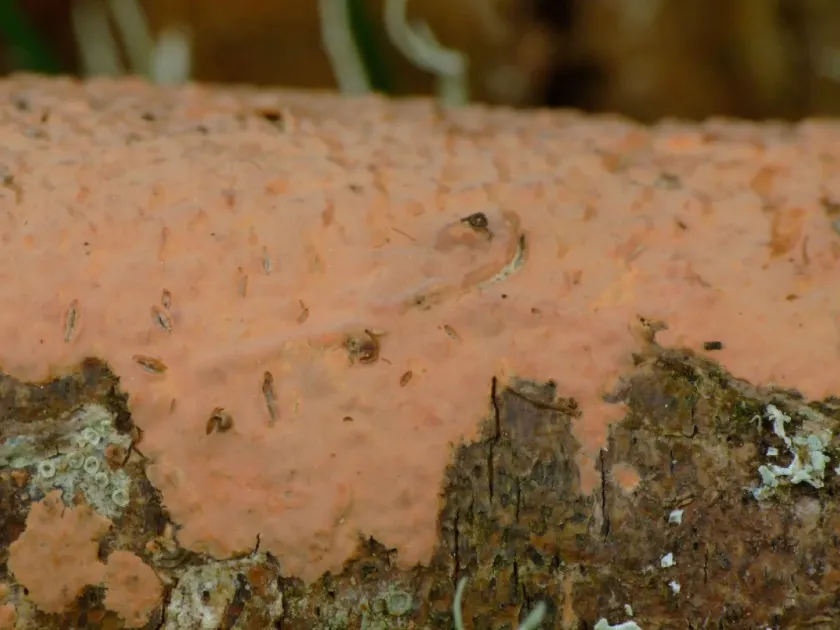
The most distinctive symptom is the appearance of flat, encrusting, flesh-colored to pinkish-orange fruiting bodies on the surface of the bark. These structures are often seen on trunks or thick branches.
During dry weather, the fruiting bodies may shrink, harden, and fade to a pale brown. However, they rapidly revive and regain their vibrant color and fleshy texture after periods of rain or high humidity.
Localized bark necrosis is another common sign. The bark in the infected area may become brittle, crack, and eventually slough off, revealing the underlying woody tissue, which often shows signs of decay.
Internal wood decay, characterized by a white rot, often develops behind the point of infection. This rot compromises the structural integrity of the wood, making branches vulnerable to snapping under moderate pressure.
In advanced cases, one might observe the wilting of foliage or the premature death of specific limbs. The presence of these symptoms often indicates that the fungus has already caused significant damage to the plant's internal system.
Pathogen
The fungus Peniophora incarnata is a saprotrophic, sometimes parasitic basidiomycete responsible for wood decay in various tree species. It thrives by breaking down the structural components of wood, such as cellulose and lignin.
The fungus typically enters a host plant through open wounds, pruning cuts, or frost cracks in the bark. Once inside, the mycelium spreads through the woody tissue, slowly colonizing the internal structures.
As a biological agent, it functions primarily as a decomposer, but in weakened trees, it acts as a pathogen that contributes to the breakdown of living tissue, often preceding death or structural failure of the plant.
The reproductive strategy of the fungus involves the formation of crust-like basidiocarps, which release numerous spores into the environment. These spores are wind-dispersed and can settle on any suitable host during damp conditions.
The pathogen is commonly found on deciduous trees, including fruit species like apple and plum, as well as forest trees like maple and ash. It prefers hosts that are already under physiological stress or have suffered previous damage.
Conditions for development
Peniophora incarnata is highly dependent on humidity. Extended periods of rainfall or moist conditions create an ideal environment for the activation of fungal spores and the expansion of the mycelial network.
Poorly ventilated garden areas with high canopy density are more prone to infection. Stagnant air prevents the drying of bark, allowing the fungus to establish itself more easily on the wood surface.
Host trees suffering from drought, poor nutrition, or previous mechanical injuries are the primary targets for colonization. A tree with a strong immune system and intact bark is significantly more resistant to initial infection.
The lack of proper wound protection after pruning provides a direct entry point for the pathogen. Freshly exposed wood is highly susceptible to infection if it is not immediately treated with an appropriate sealant.
Insects, particularly those that bore into the bark, facilitate the spread of the fungus. They can carry spores from infected to healthy trees, while simultaneously providing new entry sites through their own damage.
Why it matters
The primary threat posed by this fungus is the internal destruction of the tree's vascular system. This impairs the transport of nutrients and water, leading to a decline in growth and overall vigor.
Structural damage is a significant concern, as the white rot weakens branches and trunks, making them prone to breakage. This can result in the loss of major branches, disfiguring the canopy and reducing fruit yield.
In cases where the infection spreads to the main trunk, the tree's overall survival is threatened. The continued decay process can eventually lead to the total collapse of the plant.
Beyond direct damage, the presence of the fungus makes the tree a source of inoculum for the rest of the orchard or garden. Surrounding plants become at a higher risk of being infected if sanitary measures are ignored.
The economic cost is significant, especially in fruit production, as infected trees produce lower yields and may require costly removal and replacement if the decay reaches critical levels.
Protection
Sanitary pruning is the most critical control measure. All infected branches must be cut back to healthy wood and removed from the site. It is vital to dispose of these materials by burning to destroy the spores.
Any pruning wounds or accidental injuries to the bark should be treated immediately with protective fungicidal pastes or wound sealants to prevent the entry of fungal spores.
Maintaining tree vigor through proper irrigation, balanced fertilization, and avoiding overcrowding is essential. Healthy trees are better equipped to produce antifungal defenses and compartmentalize infection.
Routine application of copper-based fungicides during the dormant season can help reduce the spore load on the bark. This is particularly useful in orchards that have shown a history of fungal presence.
For minor surface infections, physical removal of the fungal fruiting bodies and localized cleaning of the bark, followed by disinfection, can help stimulate the tree's natural healing process and contain the infection.
Discussion
No discussions yet — be the first.