
Peniophora aurantiaca
Peniophora aurantiaca
Description
Symptoms
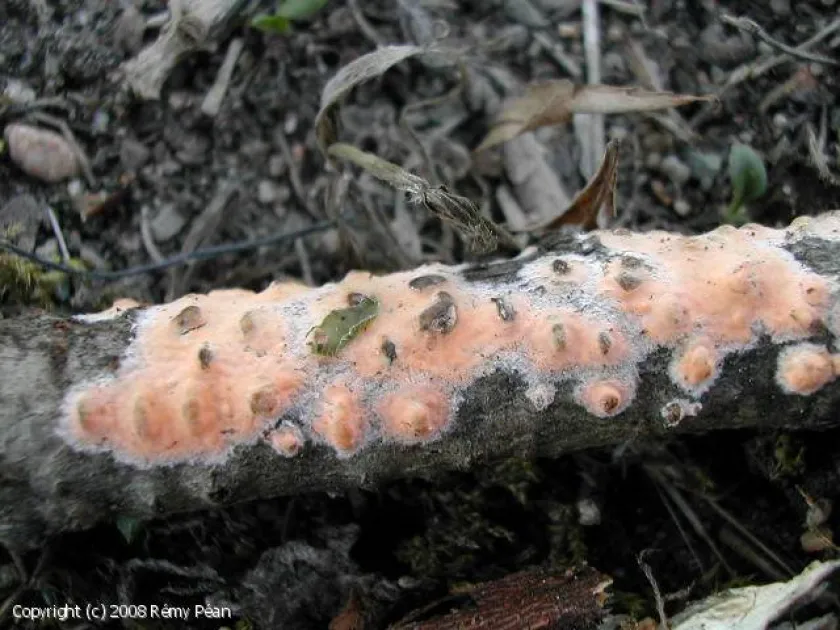
The most visible sign of Peniophora aurantiaca is the appearance of distinct fruiting bodies. These are thin, crust-like formations that adhere tightly to the bark, featuring a bright orange or reddish-orange color.
As they dry, these fruiting bodies often turn a deeper brick-red color and become brittle. They are most commonly observed on dying branches or the trunks of older, stressed trees.
In the affected areas, the wood texture changes significantly, becoming soft and friable. This degradation of wood integrity frequently leads to branch breakage under wind or snow loads.
Internal symptoms include localized discoloration of the wood, where the infection has penetrated the bark. These spots are indicators of the initial stages of wood decay.
Prolonged exposure to the fungus results in large necrotic zones, resembling deep lesions where the bark may eventually peel off, exposing the rotting wood beneath.
Pathogen
The causative agent of the disease is the wood-decaying fungus Peniophora aurantiaca from the Peniophoraceae family. It is a basidiomycete that functions primarily as a saprotroph but can act as a weak parasite on various deciduous tree species.
The fungal mycelium invades the tree through wounds in the bark, pruning cuts, or frost cracks. Once inside, it colonizes the xylem, secreting enzymes that degrade wood fibers and structural components.
Reproduction occurs through spores released from the fruiting bodies found on the tree surface. These spores are wind-dispersed, allowing the fungus to spread rapidly across tree stands during favorable conditions.
Classified as a xylotroph, the fungus specializes in breaking down cellulose and lignin. Its presence is typically a sign that the tree’s natural defenses have been compromised.
The pathogen’s biology is closely linked to the lifecycle of alder trees, which serve as its primary host in many forest ecosystems across the temperate zone.
Conditions for development
High relative humidity is the primary driver for the growth of fruiting bodies and spore germination. Damp, rainy weather provides the optimal environment for the fungus to thrive.
Mechanical damage is essential for the fungus to establish itself. Bark wounds from wildlife, human activity, or environmental stressors provide the entry point for the pathogen.
Moderate temperatures favor fungal growth, with activity peaking during the moist conditions of spring and autumn. Extremely hot or dry weather can slow down its expansion.
Dense, poorly ventilated forest stands create a stagnant microclimate with high humidity, which significantly increases the risk of infection spreading between adjacent trees.
Tree age and overall vitality are significant factors. Overmature or stressed trees with reduced wound-healing capabilities are far more susceptible to colonization than healthy specimens.
Why it matters
Peniophora aurantiaca causes white rot, which destroys the internal structural integrity of the wood. This dramatically reduces the economic and technical value of the timber.
The gradual decay of the trunk and primary branches weakens the tree's health, making it increasingly vulnerable to secondary attacks by insects and other pathogens.
The risk of structural failure, such as windthrow or branch snap, increases in infected stands. This creates safety hazards in forest areas, parks, and managed woodlands.
The fungus accelerates the decline of the host tree by depleting nutrients and disrupting the transport of water, eventually leading to premature tree mortality.
Financial losses occur due to the reduction in timber yield and the high costs associated with managing diseased forest stands and performing sanitation measures.
Protection
The primary control strategy involves regular sanitation harvesting. Removing infected branches and dead trees is critical to reducing the inoculum level in the area.
Protecting the bark from mechanical damage is vital. Any necessary pruning or accidental wounds should be treated with appropriate sealants to prevent fungal entry.
Managing the density of tree stands helps improve air circulation and reduce humidity around the trunks, creating an environment that is less favorable for fungal growth.
Maintaining tree vigor through proper site selection and soil management helps trees develop natural resilience against wood-rotting pathogens.
- Regular sanitation pruning of dead branches.
- Sealing wounds with protective agents.
- Thinning stands to improve aeration.
- Removing severely infected trees.
Discussion
No discussions yet — be the first.