
Penicillium rot
Penicillium vulpinum
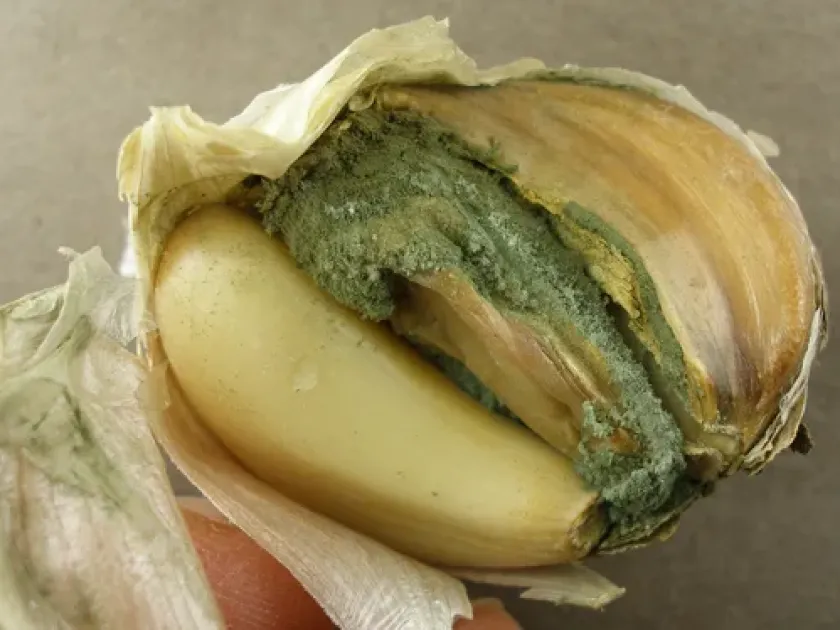
Description
Symptoms
The primary symptom is the appearance of a powdery, white to bluish-green growth on the surface of the affected plant part, which represents the fungal sporulation stage.
Infected tissues gradually lose their firmness, developing a soft, water-soaked appearance. A strong, earthy, or musty odor often accompanies the development of the rot.
As the infection advances, necrotic lesions form on the surface, rapidly expanding and causing the total collapse of the plant tissue structure.
When an infected fruit or root is sliced open, a distinct demarcation between healthy and decayed tissue is usually visible. The affected internal area becomes friable and brownish.
In high humidity, droplets of liquid exudate may appear on the surface of the moldy areas, which is a classic indicator of the fungus's active vegetative growth.
Pathogen
The causative agent of this disease is the fungus Penicillium vulpinum, belonging to the genus of imperfect fungi. It is a cosmopolitan fungus that thrives as a saprotroph but frequently acts as a pathogen when the host plant is weakened.
The fungus propagates mainly via conidia, which are easily disseminated by air currents, water, insects, and contaminated tools. These spores are highly resistant to environmental stress and can persist for long periods.
Mycelium penetration usually occurs through physical wounds, cracks, or natural openings in the plant tissue. Once inside, the fungus secretes potent enzymes to break down the host cell walls.
This pathogen is characterized by its high enzymatic versatility, allowing it to utilize a wide array of organic substances as food sources in various environmental conditions.
The life cycle of Penicillium vulpinum is remarkably fast under favorable conditions, allowing the fungus to colonize organic matter in just a few days if high humidity is present.
Conditions for development
High relative humidity is the most critical factor for the development of Penicillium rot, with optimal levels typically ranging between 80% and 90%.
The fungus thrives in moderate temperature ranges, specifically between +15°C and +25°C. However, its ability to grow at lower temperatures makes it a major threat during cold storage.
Poor ventilation in warehouses and storage facilities creates a stagnant microclimate that encourages spore accumulation and rapid infection spread between healthy units.
Physical injuries sustained during harvesting, cleaning, or transit serve as the primary entry points for the pathogen, dramatically increasing the susceptibility of the crop.
Lack of proper sanitation in storage areas allows the pathogen to persist from one season to the next, as spores can survive in cracks, wooden pallets, and storage containers.
Why it matters
The economic harm caused by Penicillium rot is primarily associated with significant post-harvest losses, as the infection can render entire storage batches unsalable.
Besides physical spoilage, the fungus produces harmful mycotoxins. These toxic substances make the crops unsafe for human or animal consumption, leading to complete product disposal.
The disease drastically reduces seed quality. Infected seeds exhibit poor germination rates, resulting in patchy crops and a decrease in the overall yield potential of the field.
Increased operational costs arise from the need for frequent labor-intensive sorting of stored goods to prevent the rot from spreading from infested units to healthy ones.
When plants are infected in the field, it leads to root systems' deterioration and stunted plant growth, resulting in decreased market weight and quality of the final harvest.
Protection
The foundation of effective control is careful harvesting techniques designed to minimize mechanical damage, as intact skin is a vital physical barrier against the fungus.
Thorough cleaning and drying of harvested products prior to storage are essential to reduce surface moisture and prevent the onset of fungal growth.
- Maintenance of precise climate control (temperature and humidity) in storage.
- Sanitation and disinfection of storage rooms, bins, and transport equipment.
- Usage of high-quality, fungicide-treated seeds.
- Regular monitoring and rapid removal of decayed units.
The application of biological control agents, such as beneficial Trichoderma species, can help create a protective barrier on the surface of harvested crops, suppressing the development of Penicillium.
Implementing a proper crop rotation strategy helps reduce the soil-borne inoculum pressure, ensuring that fields are less likely to carry high concentrations of spores into the next growing season.
Discussion
No discussions yet — be the first.